Where Weaving Meets Science: Johns Hopkins University’s Fiber Arts Program
Cami Smith
| Organizations
Here’s something you might not expect from one of the world’s leading research universities: a thriving fiber arts program with a wait list. At Johns Hopkins University, weaving has quietly become one of the most talked-about electives on campus—and the story of how it got there is worth telling.
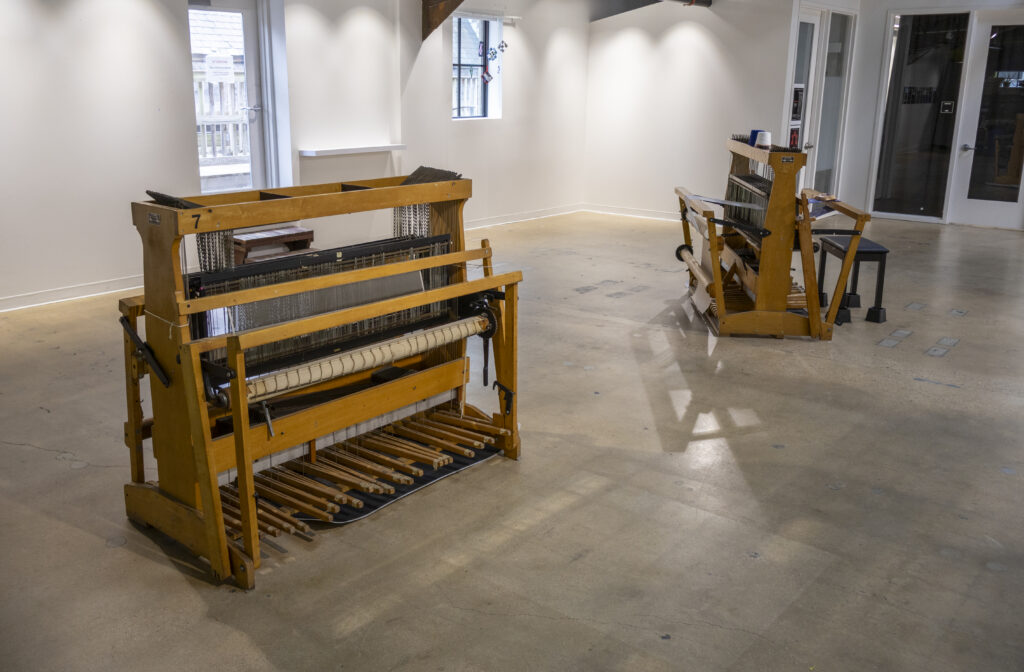
When Margaret Murphy, director of the visual arts program, arrived at Hopkins, the curriculum was focused largely on painting, drawing, and photography. She saw an opportunity to introduce something that would get students off the two-dimensional surface and working physically with materials. Fiber felt like “a natural fit—something students might already be familiar with yet offering lots of possibilities for material and conceptual experimentation.” When Sasha Baskin, now the program’s full-time fibers instructor, reached out with a course proposal, one section quickly became two. Five years later, the program has five floor looms and up to 45 students a semester, this while art departments at other institutions were closing their doors.
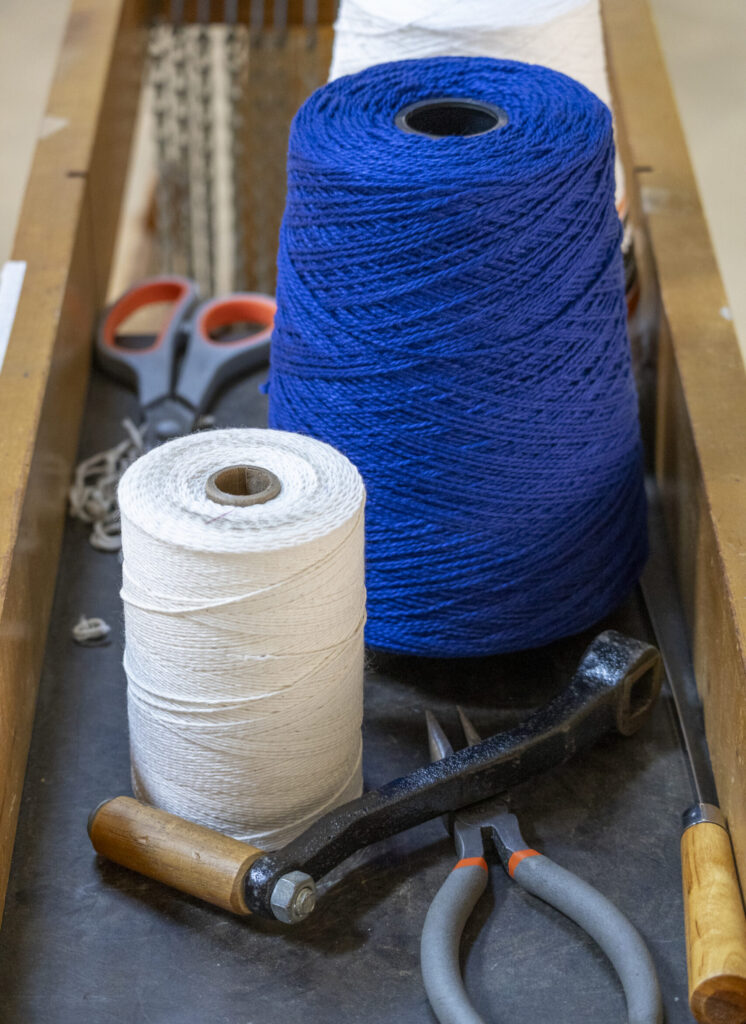
Materials for overshot weaving for Iheoma Anaemeribe’s performance “Threading the Semester"; 2026
So, what are these science and pre-med students hungry for? Many have grown up so immersed in technology that they’ve stopped thinking about the systems underneath it. In her first-year seminar, Baskin reframes weaving as something they already understand—binary code, which is simply the over-and-under of a tabby weave structure. The history of Ada Lovelace, Charles Babbage, and the Jacquard Loom suddenly feels relevant. “A weaving draft is a beautiful drawing,” said Baskin, “but it is also an analog version of computer code.”Because they understand the value of learning a language before seeing what it can make, students begin designing their own drafts before they ever sit down at a loom.
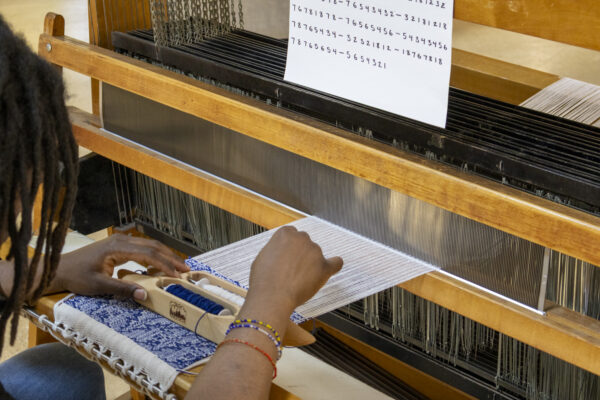
Documentation of Iheoma Anaemeribe’s performance “Threading the Semester"; 2026; overshot weaving
Perhaps the most surprising thing Baskin has noticed: Her students often don’t realize they’re doing homework. And many keep weaving long after the semester ends—through graduate school, through medical school, and beyond. She thinks it’s the discovery that learning doesn’t have to be hard to be meaningful. “A weaving can be like a sheet of math homework,” she said. “It exists as a document of how you learned and worked through a problem. It does not even need to be pretty.” Not everything has to become a side hustle.
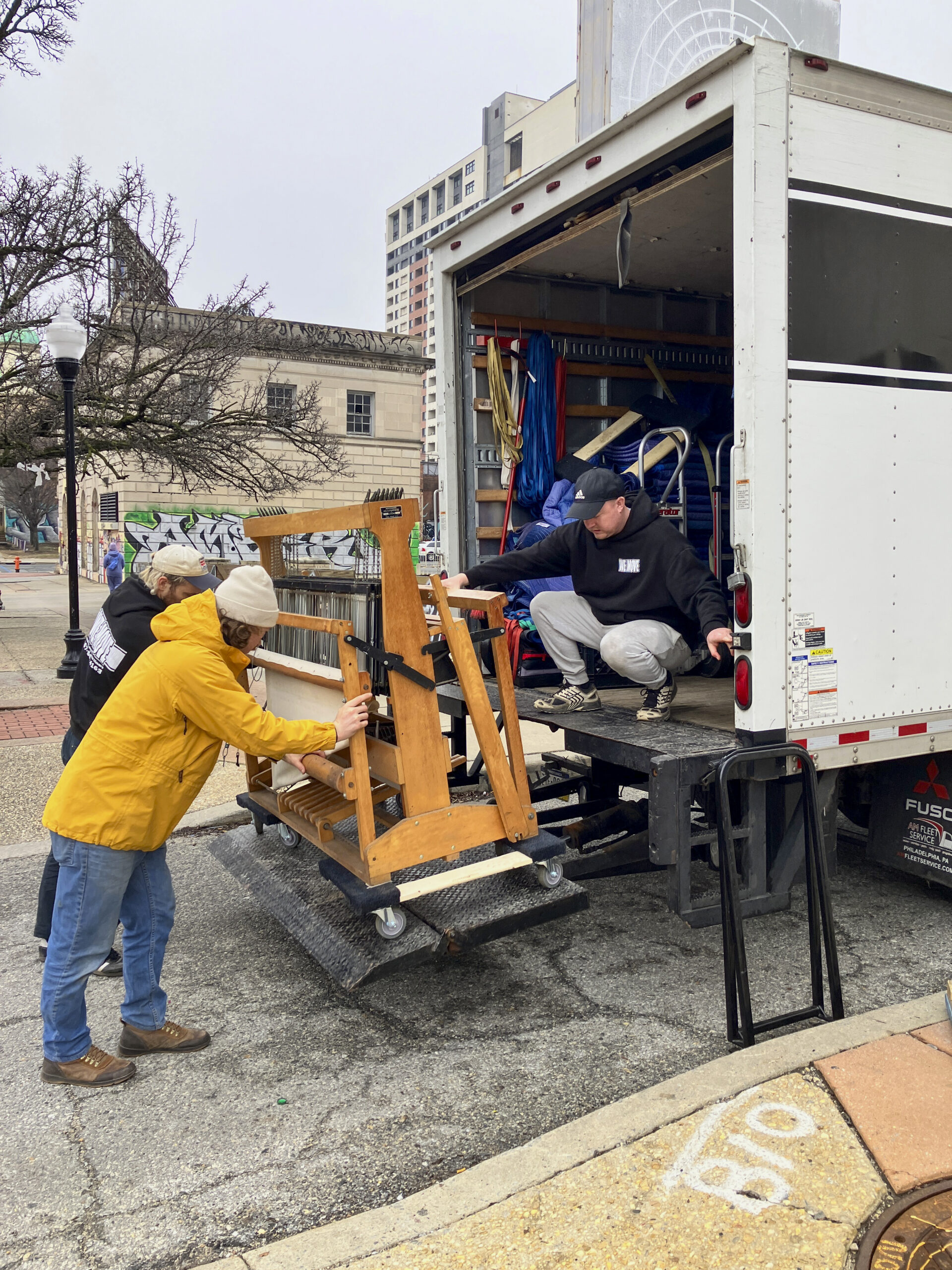
WeMove movers from Philadelphia unloading looms shipped from Weaver House to Johns Hopkins University Visual Arts; 2026
The program recently received four floor looms from the University of the Arts in Philadelphia after it closed in 2024—a loss that shook the arts community. Giving those looms a new home at Hopkins felt important. Baskin is restoring them with her students as part of the curriculum. “These looms are more than tools,” she said. “They have their own personalities and peculiarities—and it is a privilege to get to know them.”
These are students carrying enormous pressure—studying medicine, conducting research, preparing for careers where the stakes are high. The arts give them room to process complex ideas through an individual lens, developing a more holistic way of seeing and thinking. As Murphy put it, “The methodical, slow, repetitive rhythm of weaving has a grounding effect on students in this rigorous academic environment.” That perspective, brought back into the lab or the clinic, becomes something quietly invaluable. Baskin hopes a future doctor or scientist who learned to really look at a weaving will carry that habit into everything they do.
Johns Hopkins University is grateful to Rachel Snack and Weaver House, whose dedication ensured these looms found a new educational home following the closure of the University of the Arts — and whose commitment to keeping these tools in the hands of students made this program possible.