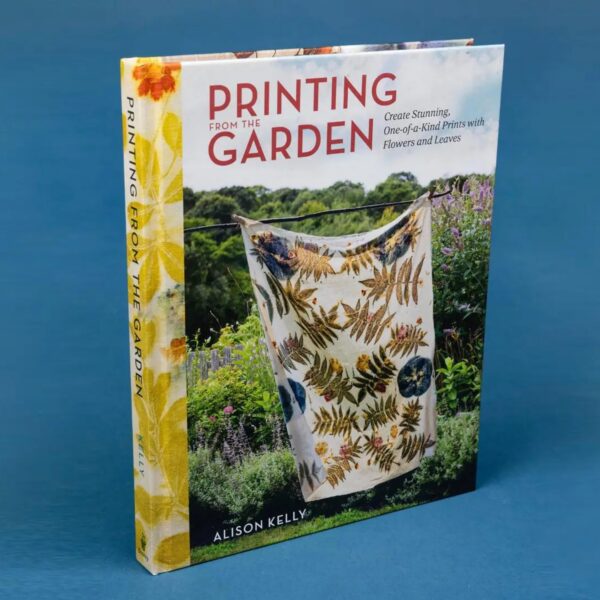
Some artists work with nature, and then there are artists who let nature lead. Alison Kelly—textile artist, author, and founder of Flora Obscura—belongs firmly in the second camp. Through the ancient alchemy of botanical printing and natural dyeing, Kelly has built a practice rooted in curiosity, collaboration, and the quiet intelligence of plants. Her newly released book, Printing from the Garden (Storey/Hachette), documents 30 distinct plants and their effects on fiber—a field guide to a world most of us walk past every day without seeing.
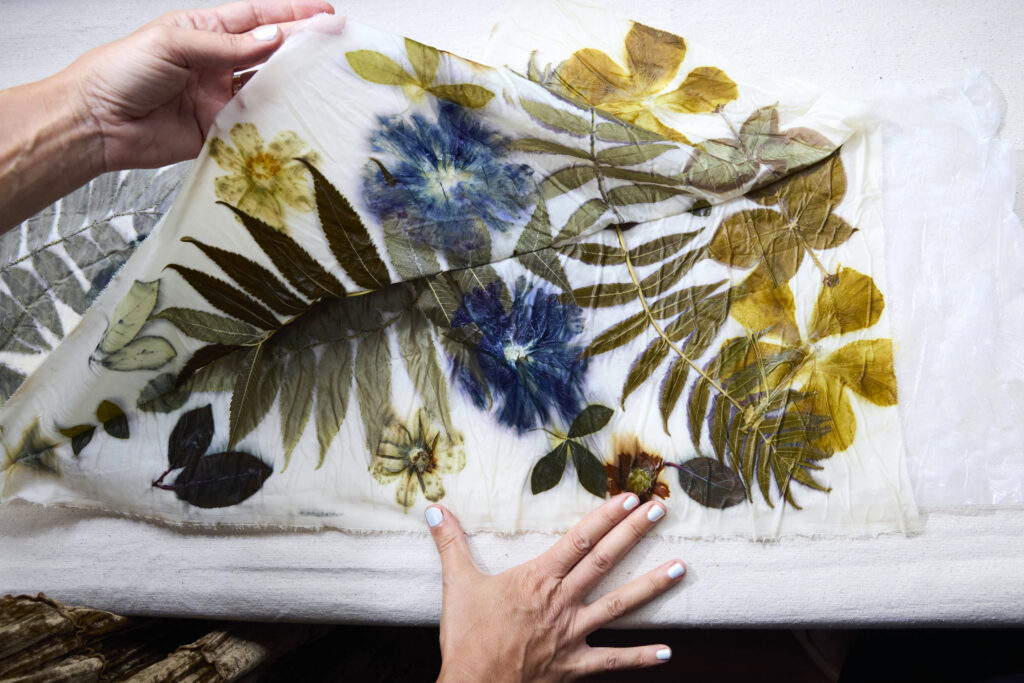
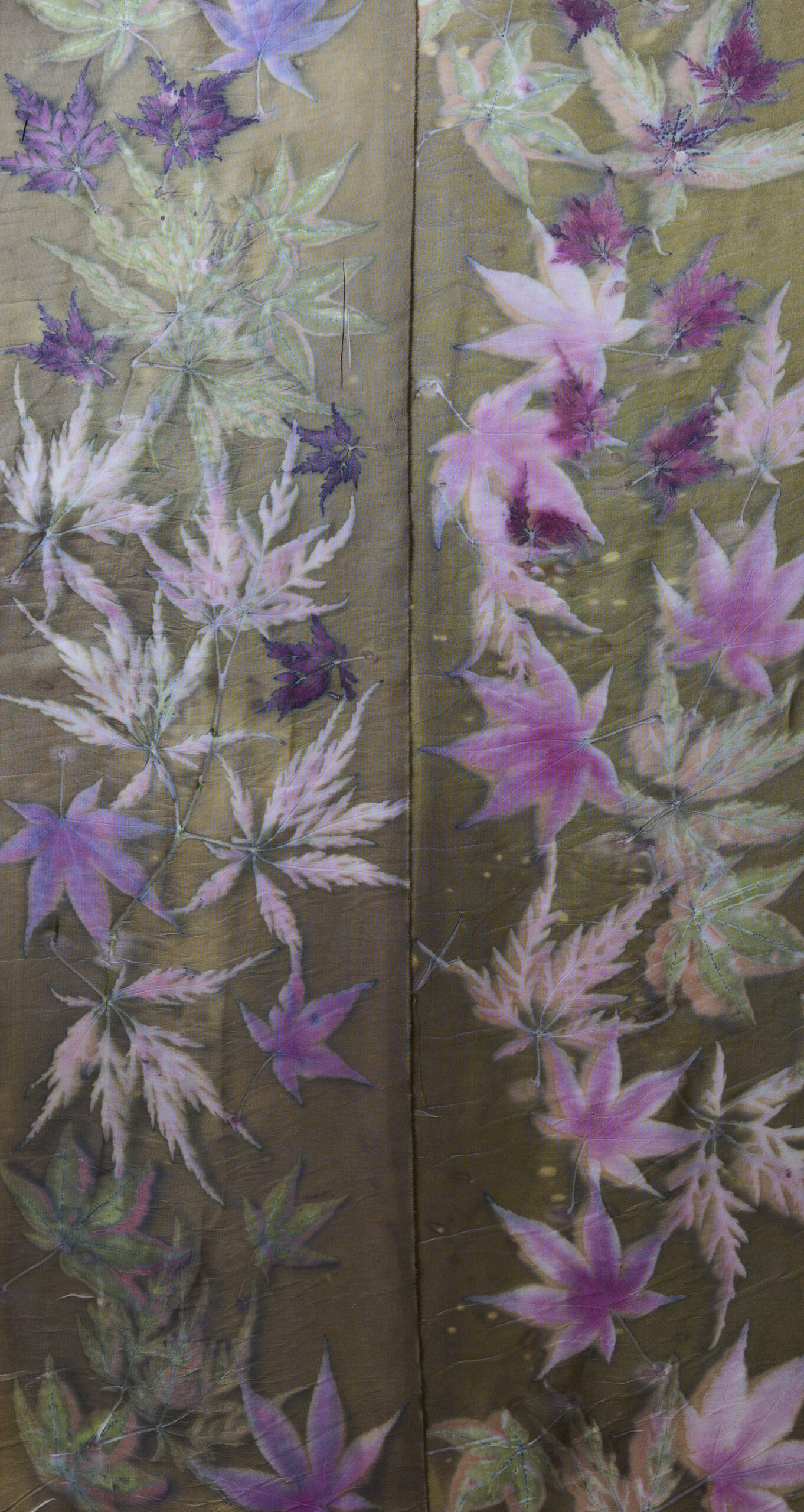
A silk/hemp panel botanically contact printed with hibiscus flowers, Staghorn sumac leaves, impatiens, cosmos, and dahlias.
Kelly’s path to botanical printing wound through fine art in San Miguel de Allende, natural dyeing in Oaxaca, fashion school in Florence, and a season on Project Runway. But it was a quieter moment that changed her direction entirely. It was during her pregnancy with her daughter—when she was bedbound and had long stretches of time to think—that she began researching natural dyes. She had been working with shibori and growing uneasy about the toxicity of even so-called low-impact dyes. Then she discovered India Flint’s Eco-Colour, and a world opened up.“Here was an artist using eucalyptus leaves to create these incredibly detailed, organic imprints simply by steaming them into fabric.” From there, Kelly began experimenting with the plants in her own environment—roses, hibiscus, marigolds, and sumac. A decade later, the process still fills her with the same sense of discovery.
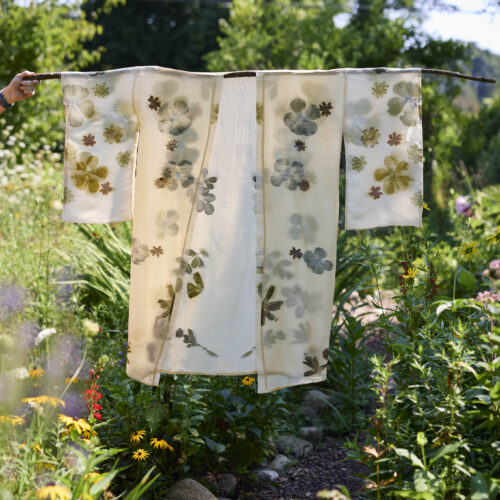
A silk/wool gauze kimono botanically printed with hibiscus, rose of Sharon, coreopsis, and cosmos.
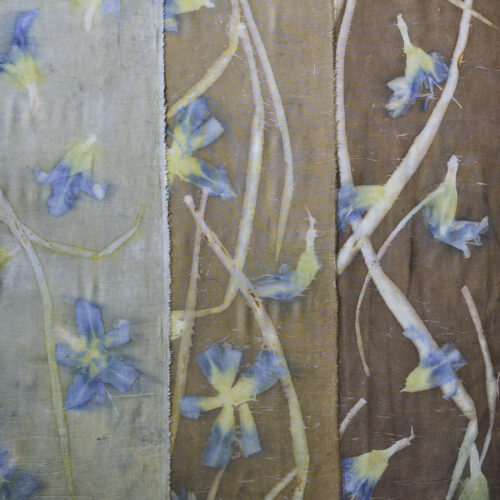
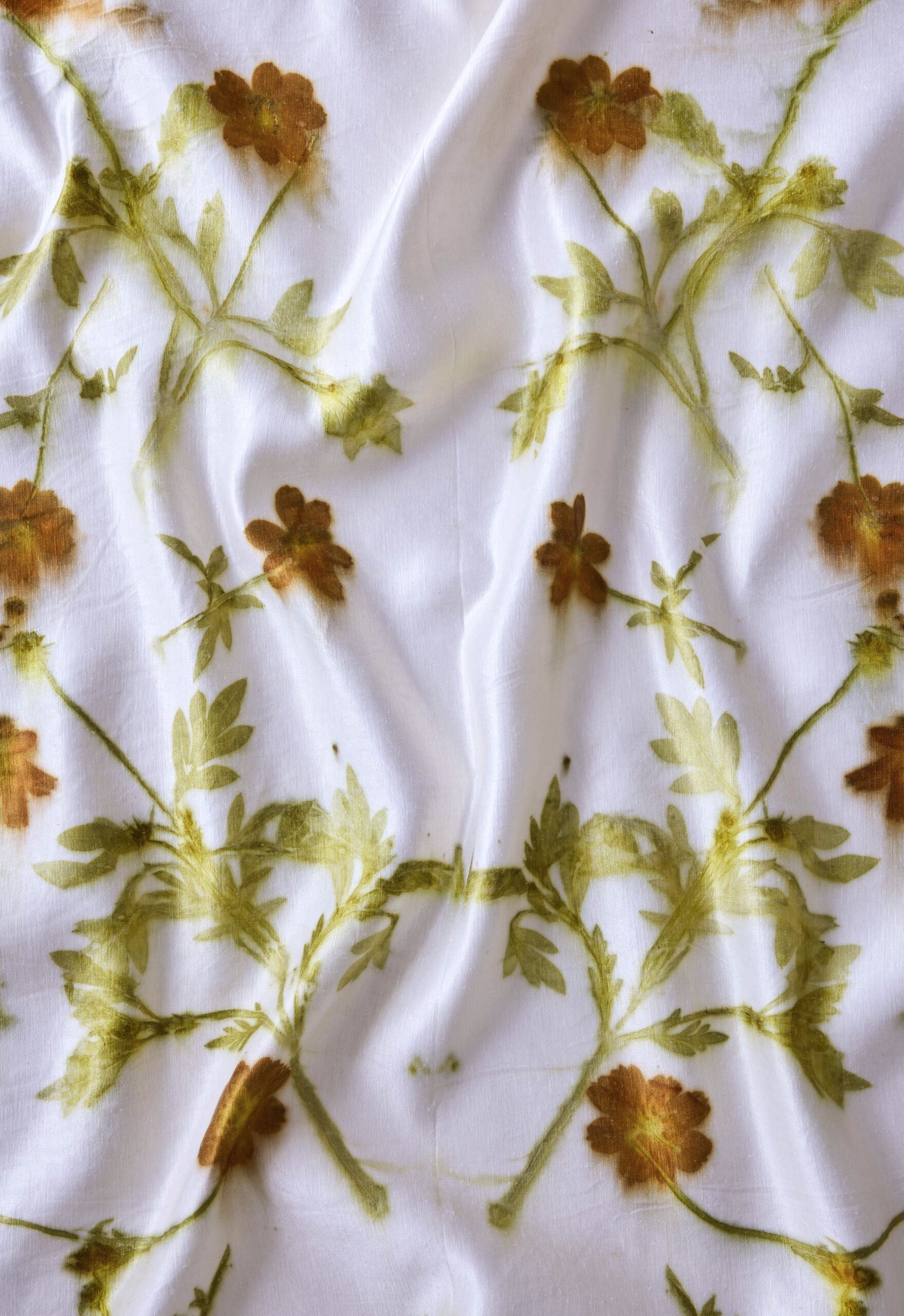
Variations of Daylily printed on silk broadcloth with a tannin carrier blanket.
Botanical printing, Kelly said, feels like genuine alchemy—and 10 years in, she still feels like she has barely scratched the surface. Hibiscus, in particular, continues to astonish her. A cherry-red dinner plate hibiscus once printed a deep royal blue. A dark orange variety in Mexico produced rich copper tones. Her mother’s soft pink hibiscus printed a stunning green. “Those kinds of transformations are what keep me curious and constantly exploring, she said.”
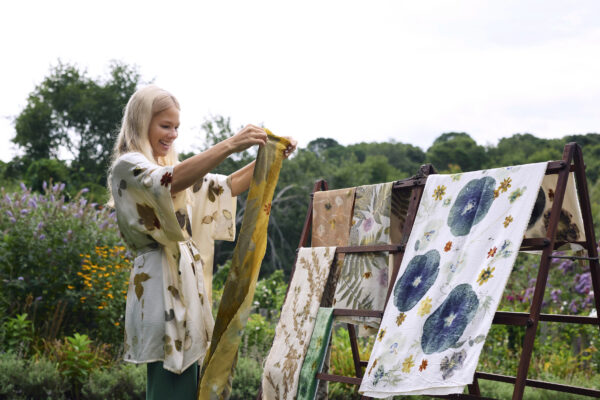
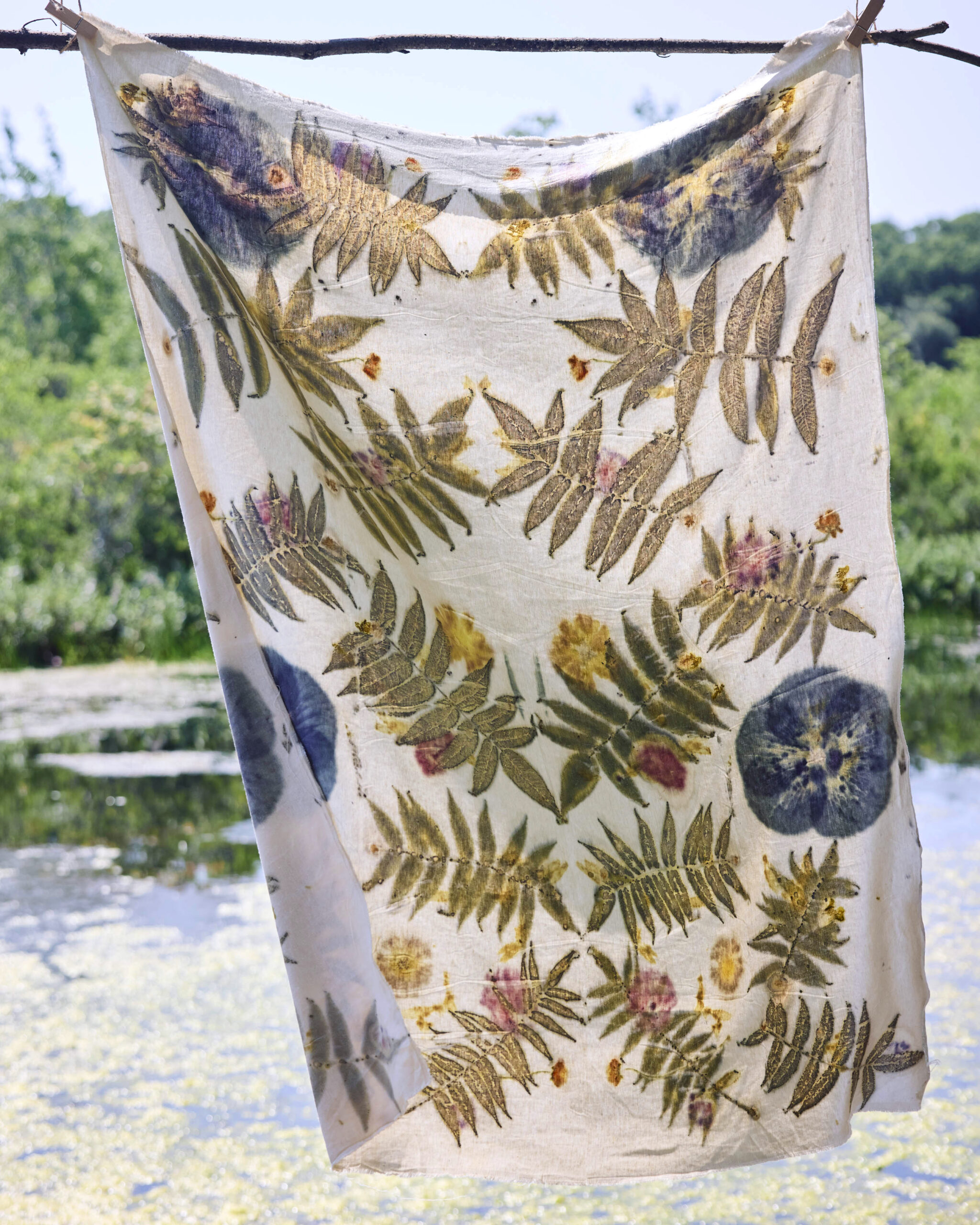
Alison Kelly in the garden with naturally dyed panels of silk and linen.
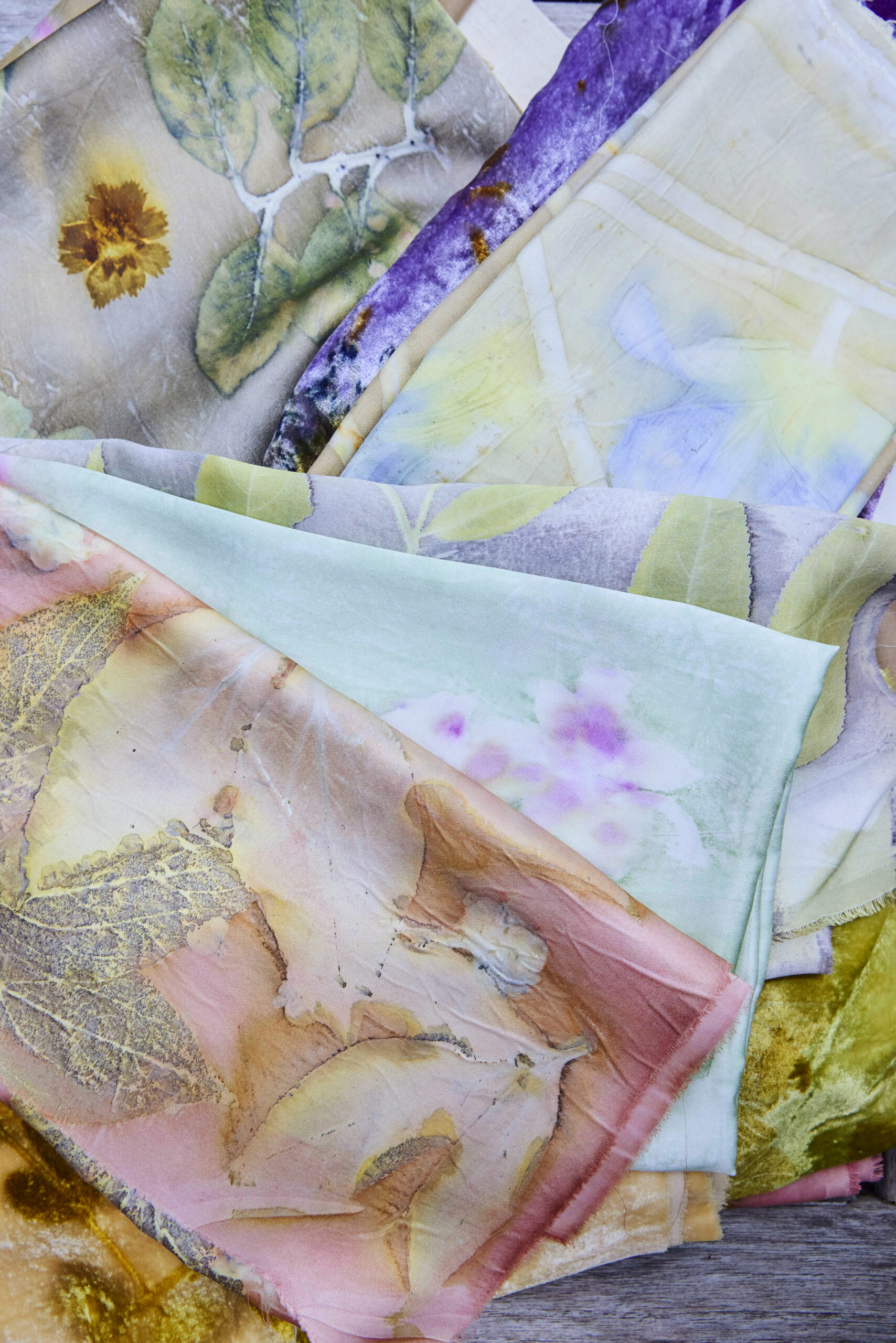
Not every plant cooperates. Kelly spent years trying to make roses work—a nod to her Cape Cod childhood spent surrounded by rosa rugosa (beach roses). The blooms refused to give up their color and actually stripped it away. But persistence paid off. She eventually discovered, dried rose petals produce a beautiful pop of pink. Plum leaves surprised her in the opposite direction—their deep purple foliage prints aqua, teal, and green depending on how the fabric is treated.
For Kelly, botanical printing belongs not just on gallery walls but in everyday life—the pillowcase you sleep on, the robe you reach for in the morning, the skincare ritual that starts your day. “I’ve never really seen a hard line between fine art and functional objects,” she said. Through her Flora Obscura Atelier subscription series, she invites others into the practice—not just to learn technique, but to shift how they pay attention. “What I really want people to experience is a different way of noticing—of slowing down enough to see what a plant is doing in a specific moment, in a specific season.” The technique, she said, is just the entry point. The real transformation is learning to collaborate with your materials rather than control them—and discovering that beauty, color, and meaning are already growing right outside your door.
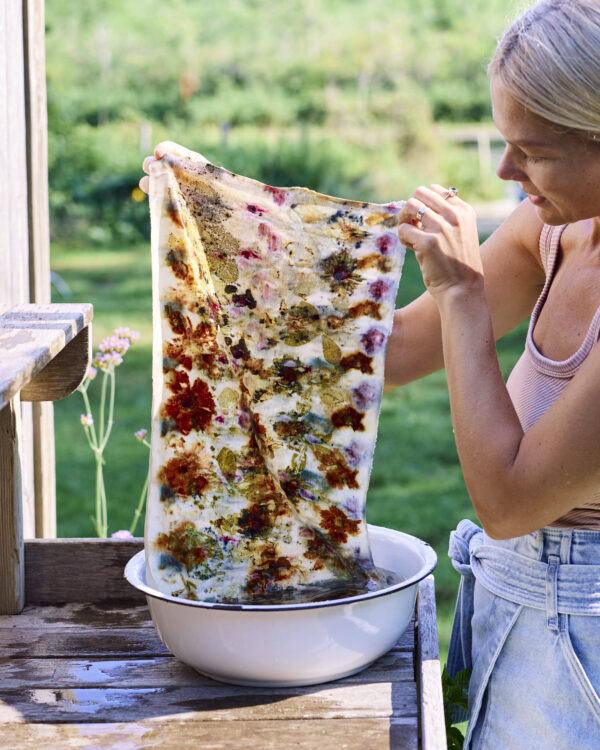
The unbundling of silk charmeuse printed with sumac leaves, hollyhocks, hibiscus, cosmos, and plum leaves