Michelle Vossen makes textiles that answer back. A pillow that plays music when you squeeze it. A sofa that reacts when you sit down. A woven surface that can control a machine. The Utrecht-based designer builds soft sensors from conductive and insulating threads using hand and loom techniques, then wires them to sound, light, and motion. She discovered electronic textiles during an internship at the FabLab and TextileLab of Waag Futurelab in Amsterdam, where, she said, “I basically fell in love.”
Why soft
For Vossen, the appeal is what cloth does to circuitry. “The inherent softness in textiles allows for technology to become warmer, personal, and approachable.” She came to electronics with a fashion degree and very little engineering experience, learning by trial and error with the help of patient people. That, she said, “is honestly pretty empowering.”
Objects with a will of their own
Her instruments start from things we already know how to use, then they refuse to behave. A sofa is for sitting, “but what if it doesn’t want to be sat on?” Her Textunes instruments, built with music technologists Roald van Dillewijn and Dianne Verdonk, look like a pillow, and a tube with handles. A handle suggests picking up; a soft form suggests hugging. The object gives clues but never instructions, and the player must work out how to make it sing.
She doesn’t sketch on paper. Rather, she sketches in material, starting with an existing object, a length of fabric off the loom or a bit of leftover yarn, then documents each experiment in photos and video.
The hand stays in
Vossen works with machines, and sometimes builds and hacks her own, but she doesn’t want them to be the last step. She treats the machine process as something to react to, “a back-and-forth dance with the machine where the result is not fixed.” The machine becomes a paintbrush, and the maker’s hand stays visible.
The same thinking shapes her sensors. She’s after tactility, “something nice or interesting for your fingertips,” she said, something that responds as you press, caress, or tap. Or something that asks for the whole body to be involved— stretching, pulling, bending. So much of today’s technology is a smooth screen or a voice command, and she thinks that flattens the experience. “I feel the most alive when I’m touching something interesting,” she said.
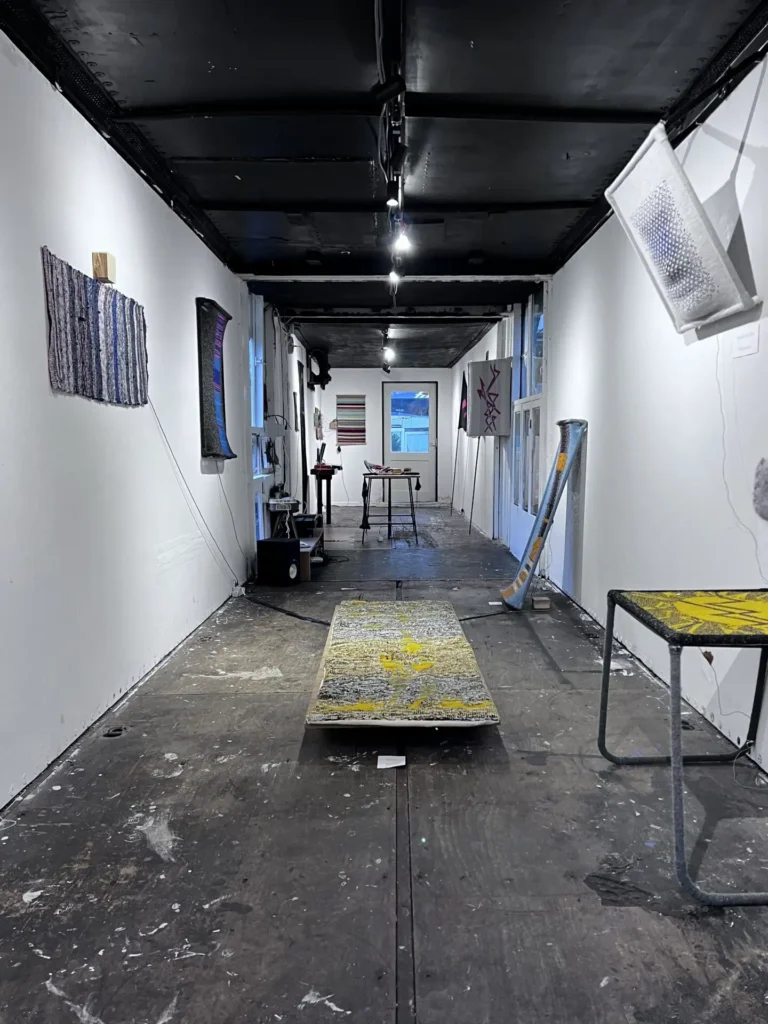
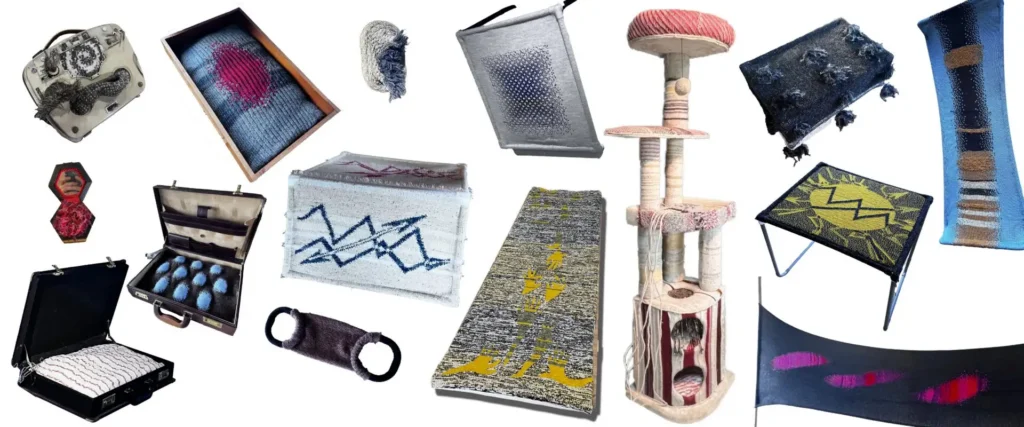
Textile Orchestra; 2024; wool, cotton, polyester, stainless steel; shaft loom weaving, knitted on a domestic knitting machine; variable dimensions. Exhibited at de Nijverheid, Utrecht, the Netherlands
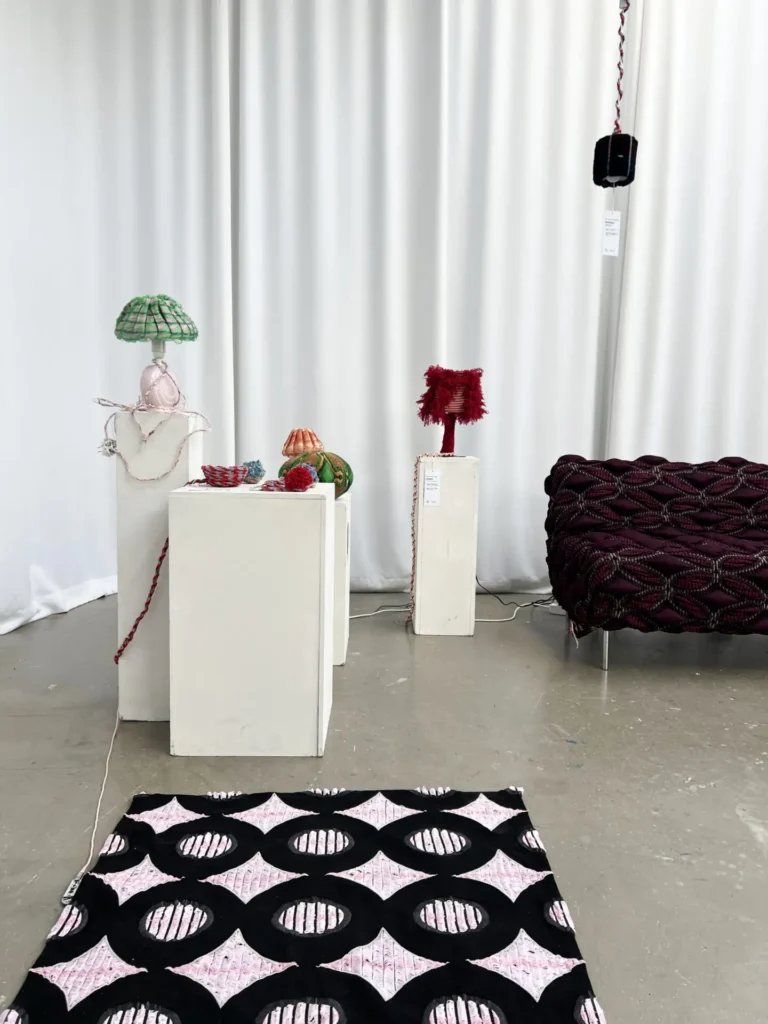
Control Freaks; 2026; wool, cotton, polyester, monofilament, stainless steel; Jacquard weaving, sewing; variable dimensions. Exhibited at de Nijverheid, Utrecht, the Netherlands
Learning by making
A lot of what she builds is documented open-source, and she teaches the same way, through workshops and DIY kits like the MIDI Madness Maker (developed together with Veerle Pennock from Acid Solder Club). Her hope is that participants leave with more confidence in their ability to figure things out as they go. Time spent making with your hands, she said, is time spent thinking with materials.
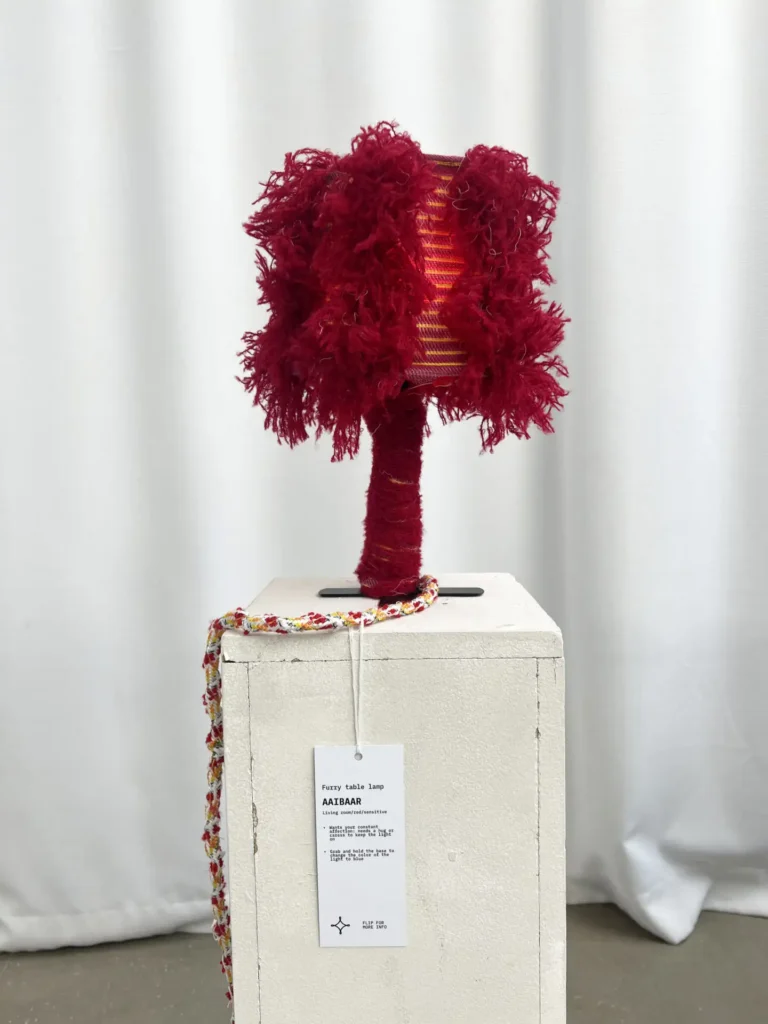
Control Freaks_Aaibaar (touch-sensitive lamp); 2026; cotton, polyester, monofilament, stainless steel; Jacquard weaving, sewing; 10 x 10 x 15 in. Exhibited at de Nijverheid, Utrecht, the Netherlands
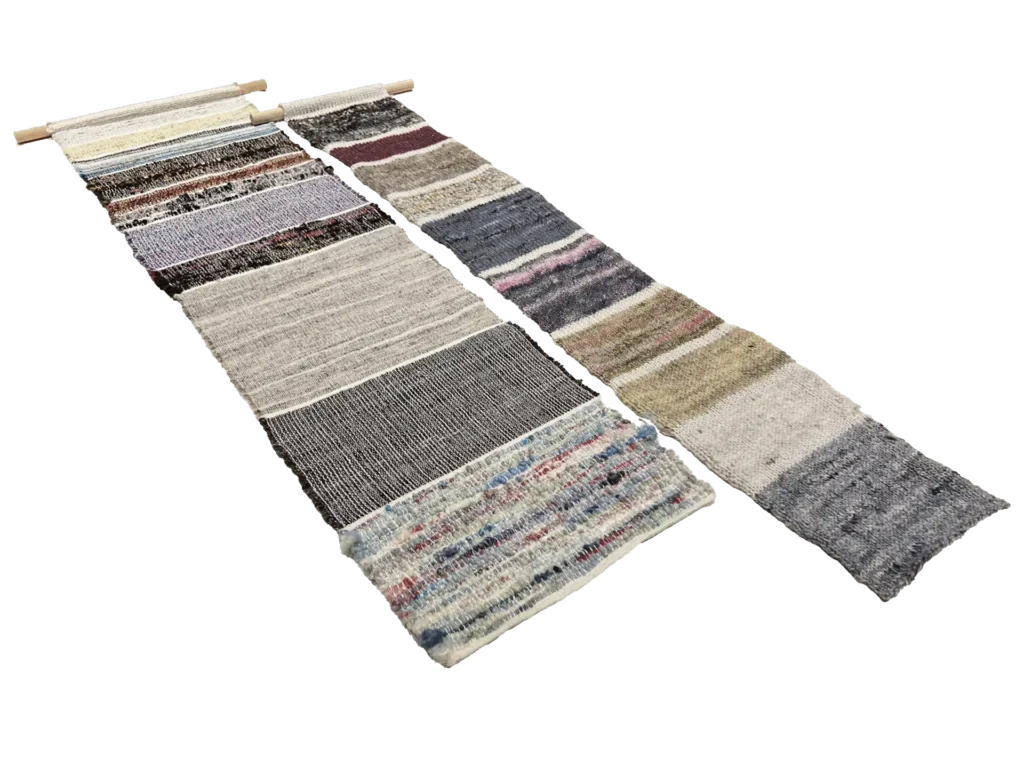
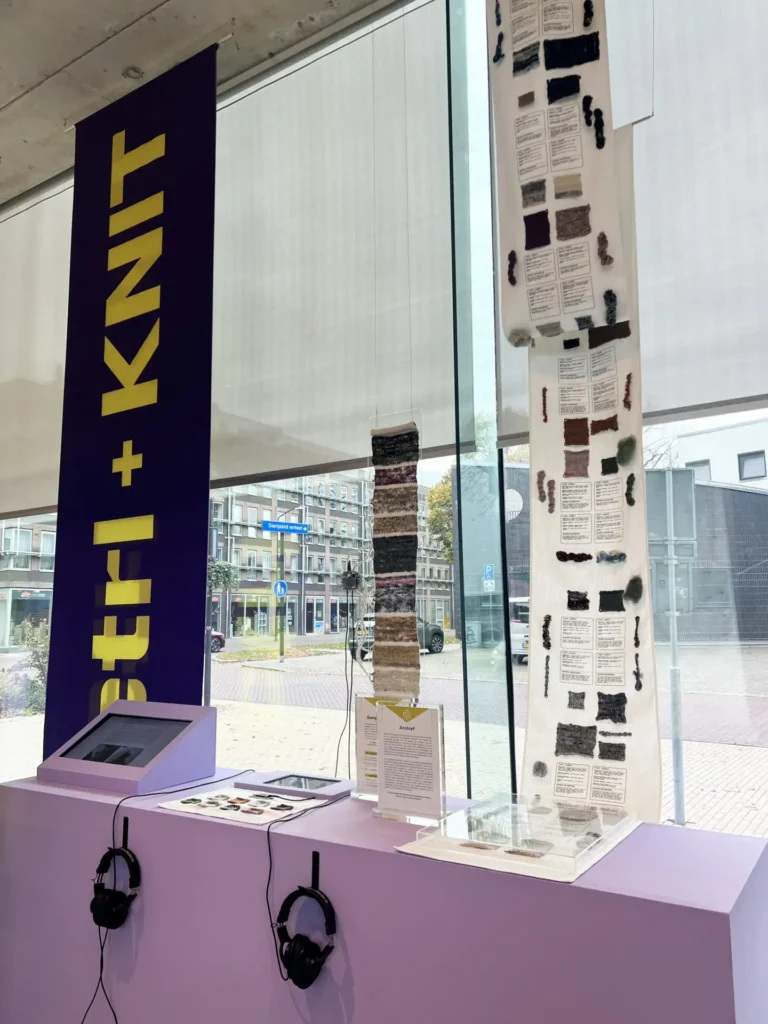
Sensor Spinster Scrolls; 2025; sheep and alpaca wool, stainless steel; knitted, woven, hand spun, shaft loom weaving, knitted on a domestic knitting machine; knitted scroll:47 x 8.5 in., woven scroll: 47 x 12.25 in.
Sensor Spinster;2025; sheep and alpaca wool, stainless steel; hand spinning, knitted on a domestic knitting machine; knitted scroll:47 x 8.5 in., archive scroll: 220 x 17.75 in. Exhibited at CODA Apeldoorn, the Netherlands
What's next
After six years of practice, Vossen is back in school, in the second year of a master’s in Textile Interaction Design at the Swedish School of Textiles. Her current project treats the smart home as a design space for textiles that push back, worked mainly through jacquard weaving and braiding. The degree work is due in April 2027. Stay tuned.