French artist Brigitte Amarger builds human figures out of materials other people have thrown away. Her best-known works, the Humanoïdes, are life-size silhouettes seven-feet tall, cut and stitched from discarded X-rays. When Fiber Art Now featured Amarger (Vol. 9, Issue 4, 2020), those figures were already startling. Since then, she has added printed circuit boards, smart textiles, and now felted wool salvaged from the Gobelins to her materials. We wanted to know how her process has grown.
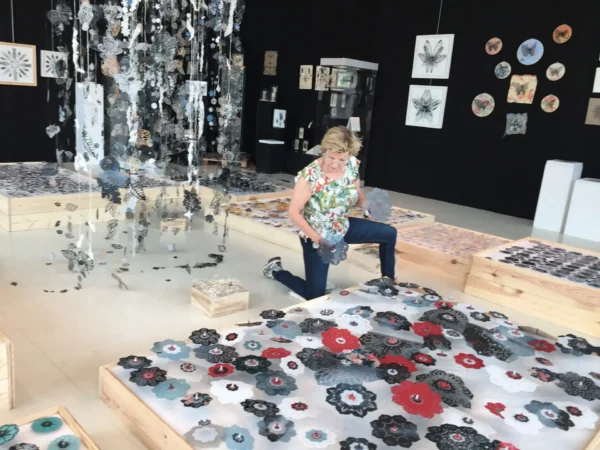
Brigitte Amarger; 2029; Carre-d’art, Montgeron, France
Starting with X-rays
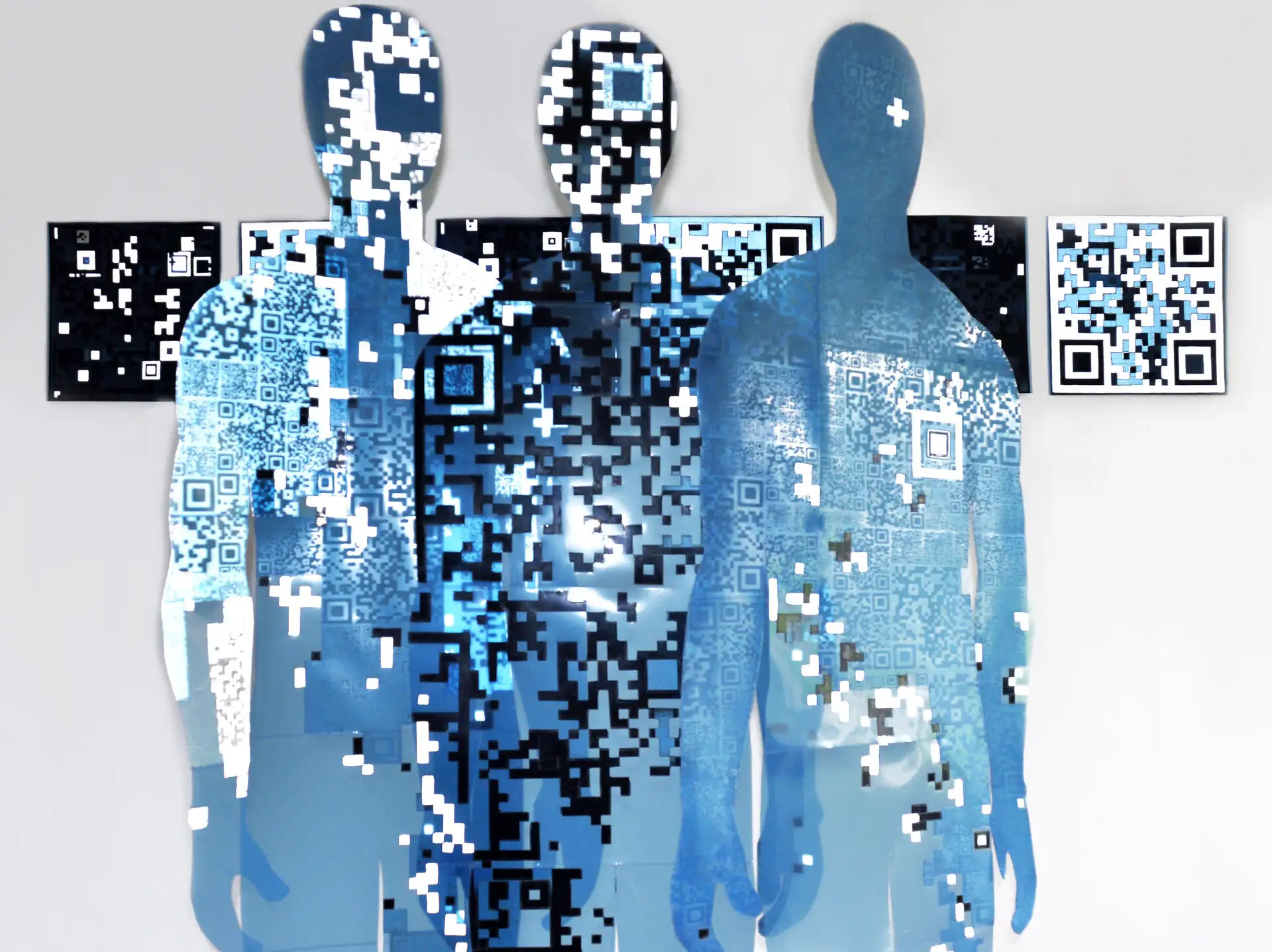
Amarger collects X-rays for two reasons: They are waste, destined for the bin, and they are traces of real people’s lives, records of one precise moment in a story that would otherwise vanish. She sorted her first films by category—feet, hands, brains, and stitched them into bodies. She is quick to say she can’t read a scan and isn’t trying to tell the stories of the people who were X-rayed. What drew her was the material— “fragile and solid like the human being,” transparent and full of subtle tones.
A turning point came when she found films showing prostheses, the metal pins and joints added to repaired bodies. Those became the Corps Étrangers series, and the X-rays took on new weight for her, “the trace of an intimate story, sometimes of pain, but also of hope or rebirth.”
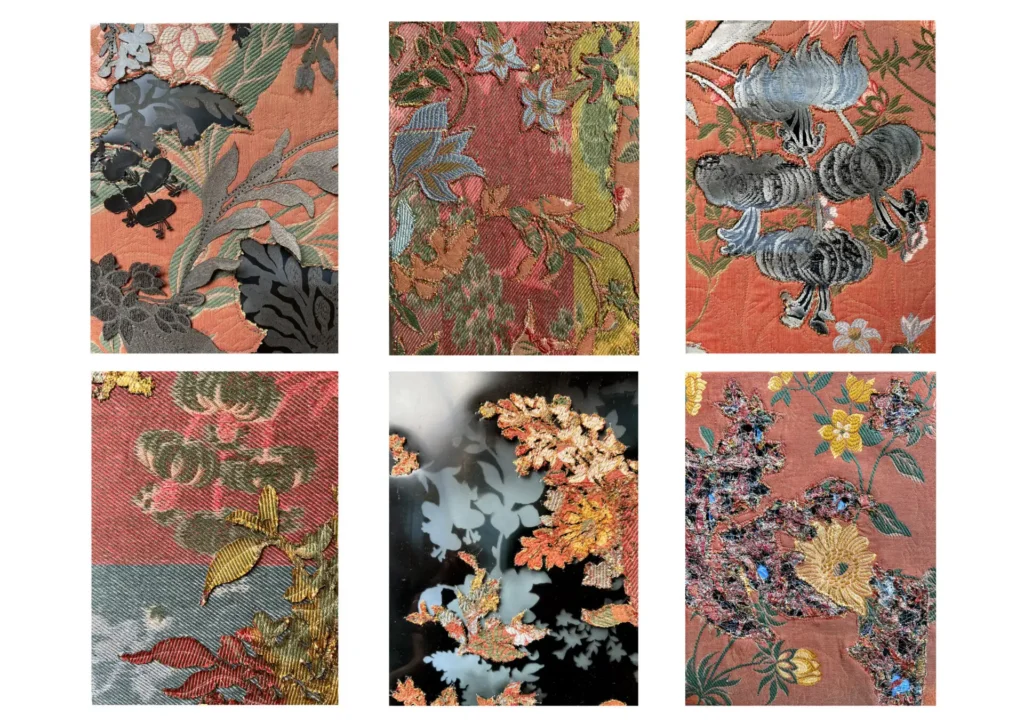
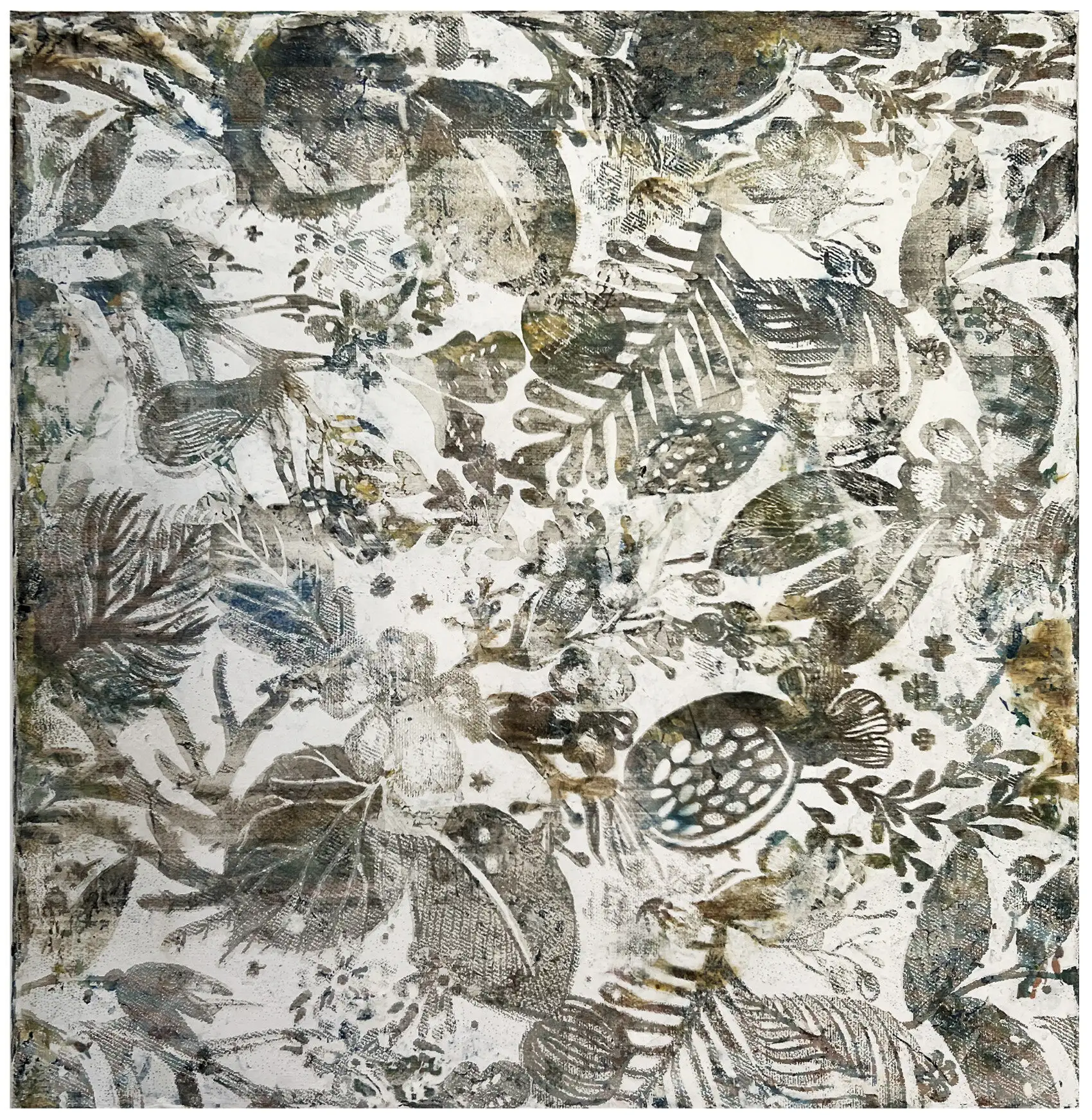
No Waste #G9; 2022; discarded fabric and X-rays, threads, cardboard; sewing, embroidery, free-motion yarn and fiber lace, laser engraving (fabric patterns), laser cutting and engraving (X-rays), gluing; 50 x 51.5 x 1 in.
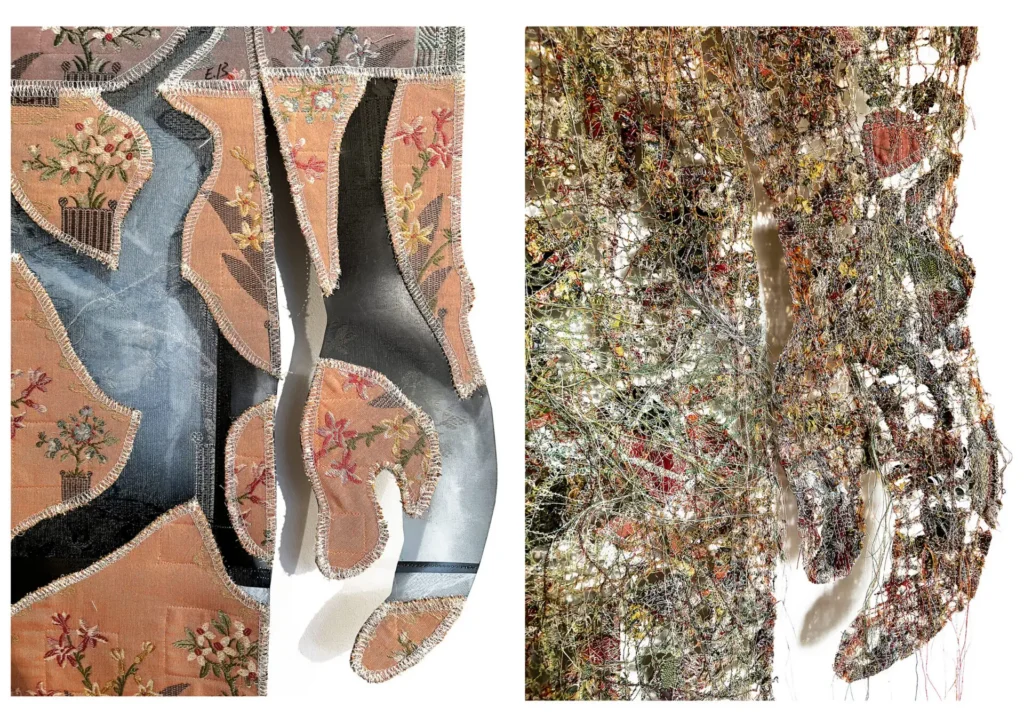
Étoffe-de-la-peau; 2023; recovered samples of textiles, X-Rays, threads; laser cutting, engraving, overlock, sewing; 84.5 x 25.5 x 2 in. (each body) Modular installation mural or installed in the space.
Letting the material lead
Amarger works in three media: X-ray film, paper, and textile, all of it recovered. She believes “matter retains the memory of everything it has been through. A piece of cloth has been woven, printed, worn, and finally tossed away, and it carries all of that with it.”
That history rarely dictates what she makes. What guides her is the physical stuff: grain, texture, flaws. She may begin with an idea, but said the material “can resist, suggest something else, and force me to modify what I had planned.” Sometimes the finished piece looks nothing like what she first imagined.
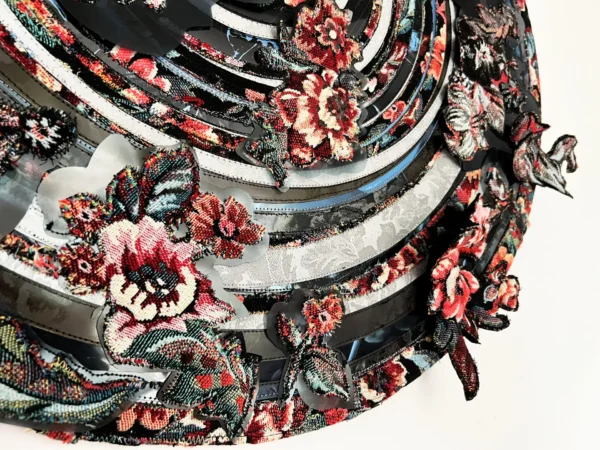
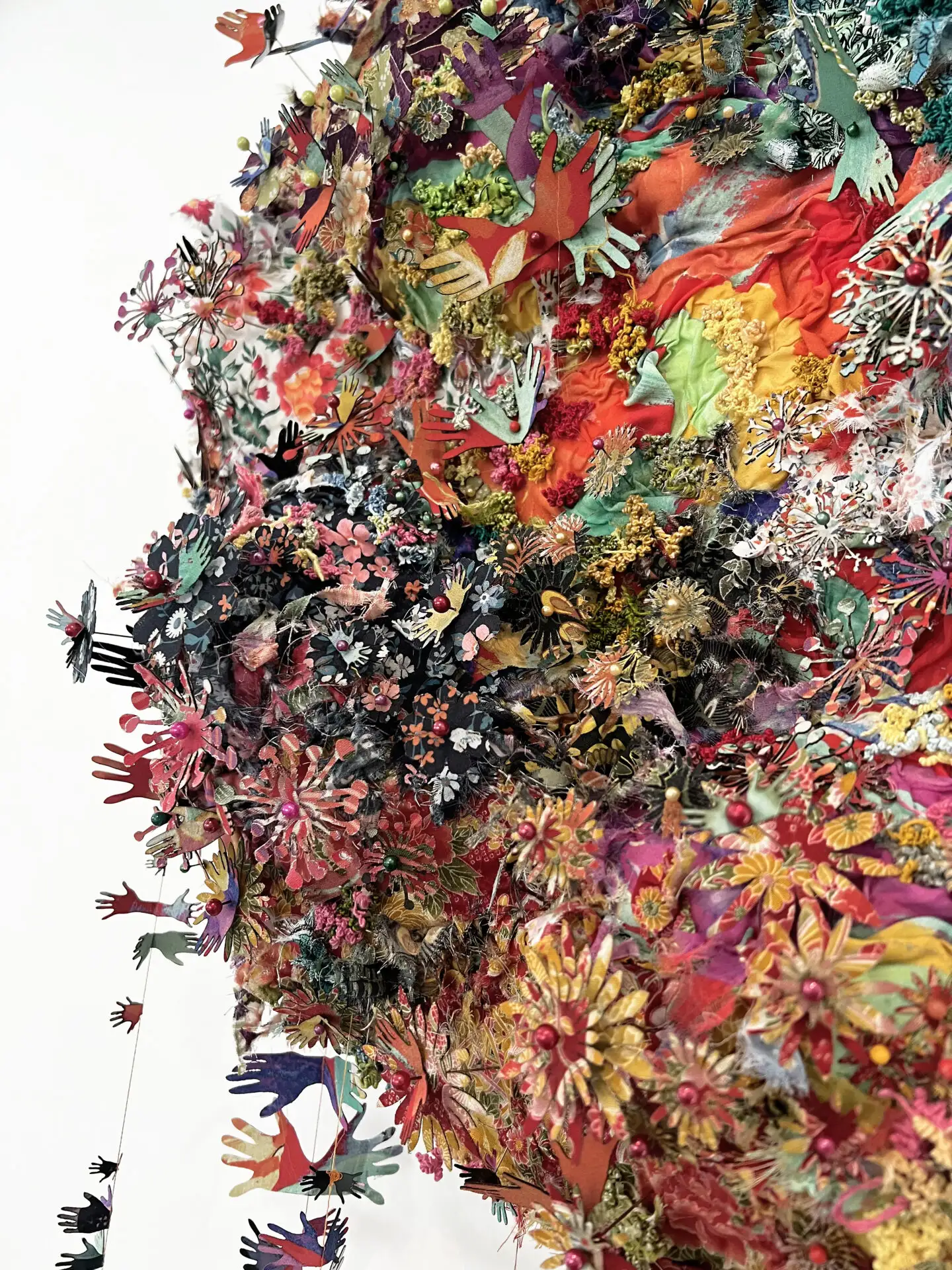
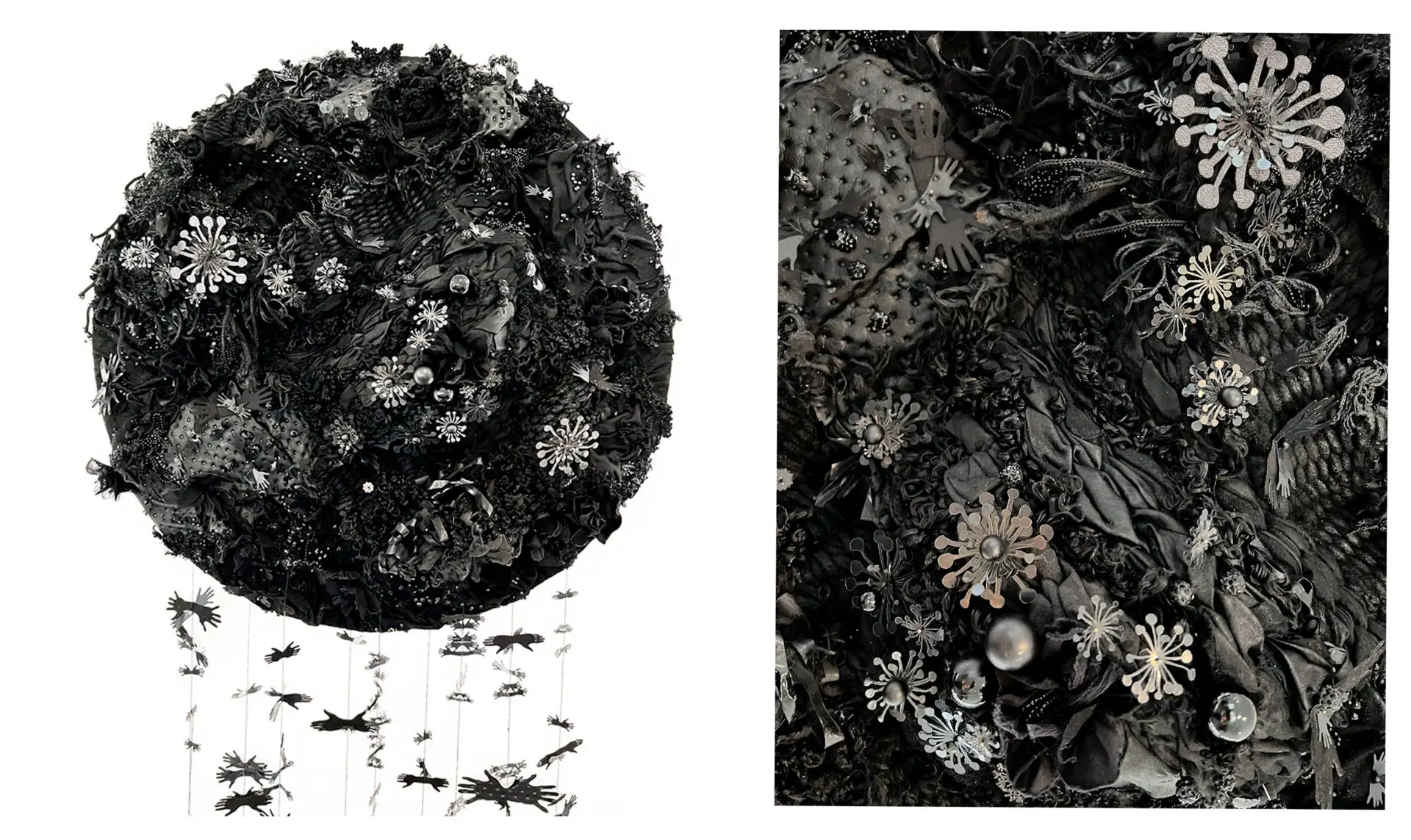
The Other Side of the Visible: States in Transition; 2026; Jacquard, silver reflective and velvet fabrics, wadding, reclaimed X-rays, wood; sewing, collage, padding (creating relief and volume), hand and laser cutting, laser engraving (fabrics and X-rays); 29.5 x 29.5 x 3.5 in. (circle)
Work only with what is discarded
Using only recovered materials is a real limit, and Amarger credits it with most of her innovations. Small industrial textile samples, too tiny for a single large work, pushed her toward series and installations. A sewing machine she first approached as “a monster” is now, some days, a pleasure. She has recently taken up machine embroidery and hand beading photographs. “A few years ago, this would have been unimaginable,” she said.
Her current project began with obsolete wool from the Gobelins tapestry works. A weaver early in her career, she has felted the wool into a dense, heavy ground and is combining it with untouched skeins, scraps from earlier works, X-ray insects, and new X-ray silhouettes. A year in, this project will become an installation.
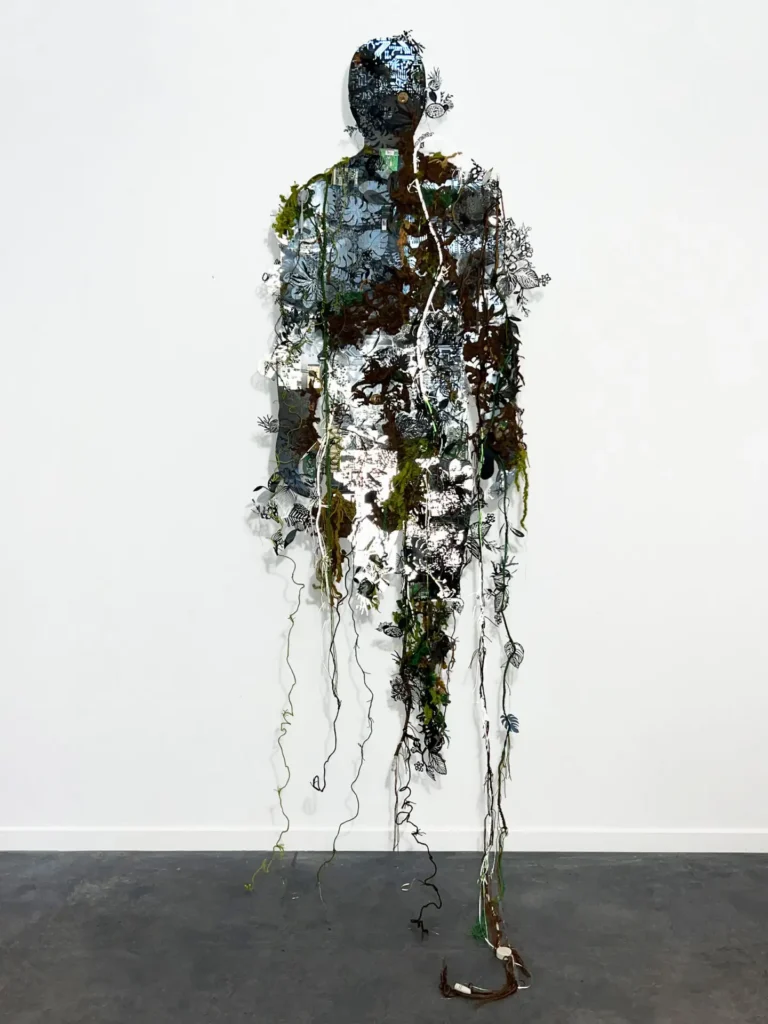
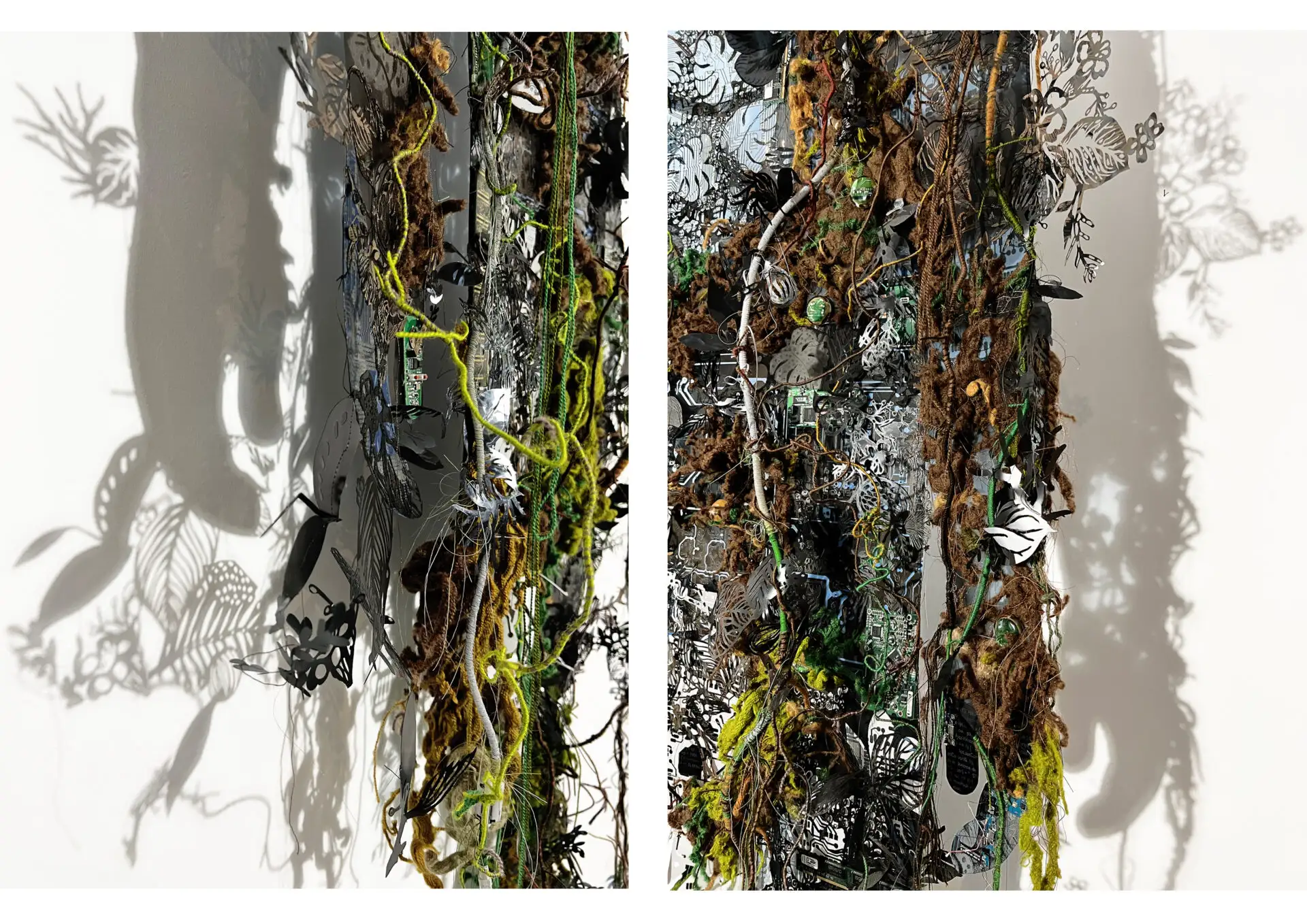
Her newer pieces, such as Nature Codée, weave circuit boards in among the X-rays, cloth, and wool threads, but Amarger doesn’t see this as a move toward technology. An X-ray was already a meeting of body and machine. In a circuit board, she sees what she sees in a leaf or a nervous system: lines, networks, pathways. “It is always a question of anatomy, ” she said. “What was destined to disappear is still full of possibilities,”
Encoded Nature; 2025; recovered skeins of Gobelins wool, electronic components, cables, X-rays, reflective materials, threads, remains of previous works; felting, wrapping, sewing, free motion, laser cutting and engraving (X-rays); 84.5 x 35.5 x 6 in.
***
Cami Smith is the Fiber Art Now media manager, community engagement coordinator, and a mixed-media artist.