Flóra Carlile-Kovács’s first attempts at felting were a disaster. As a teenager, she taught herself nearly every fiber art, from weaving to lacemaking. But, when she tried felting, she made every mistake available: too much water, too much soap, poor wool, ugly colors, uneven felt riddled with holes.
Ten years later, she met the combination fine merino, silk, and hand-dyed color, and everything changed. A few workshops taught her the basics, the material’s possibilities captivated her and she kept exploring and experimenting on her own. Felt doesn’t have to lie flat. It can be sculpted in space, shaped into seamless garments, and combined with other materials to build rich surfaces. More than 20 years later, the Seattle artist still hasn’t gotten bored. “After working on small-scale (jewelry), I love switching to large-scale work and vice versa,” she said.
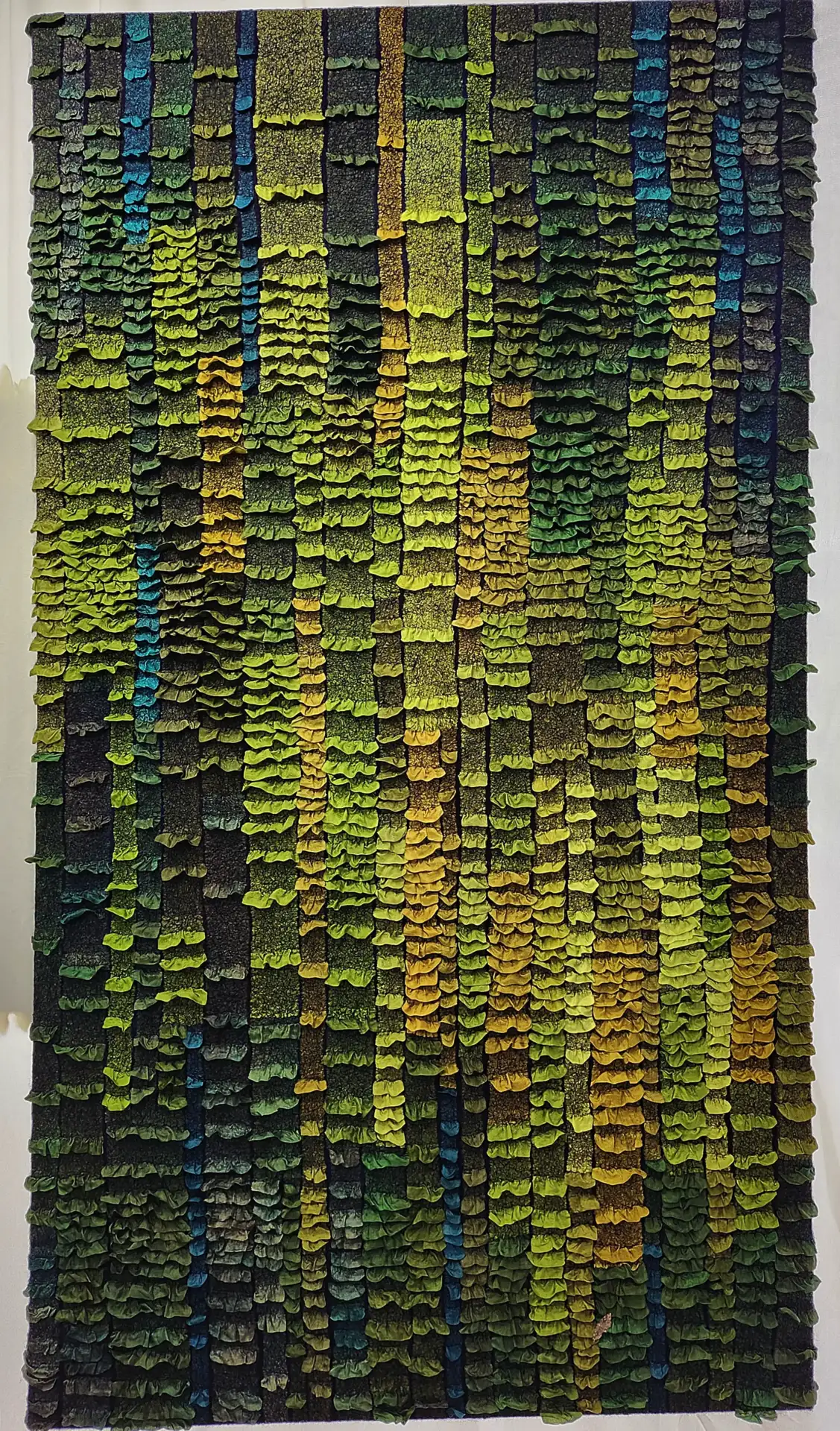
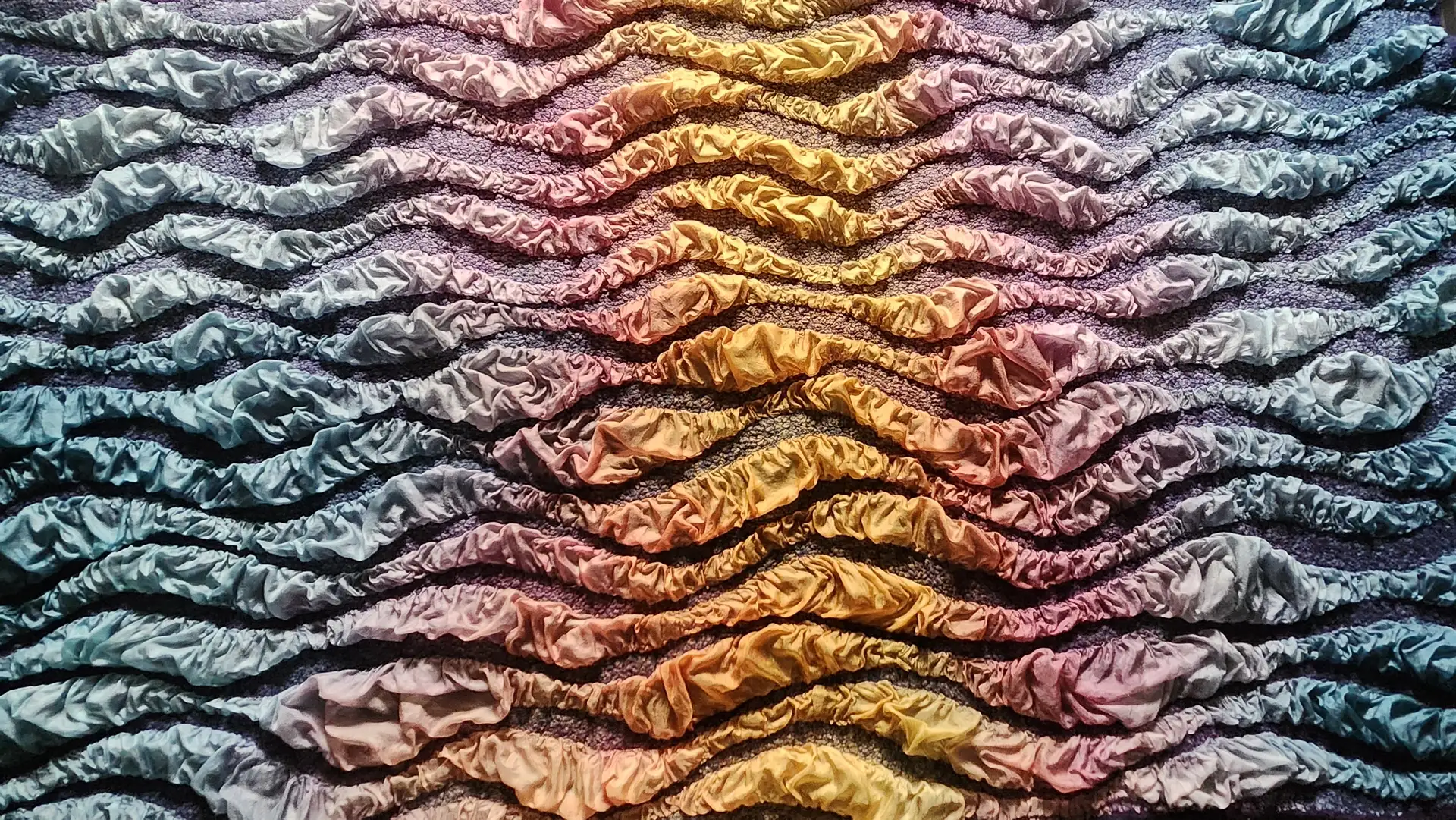
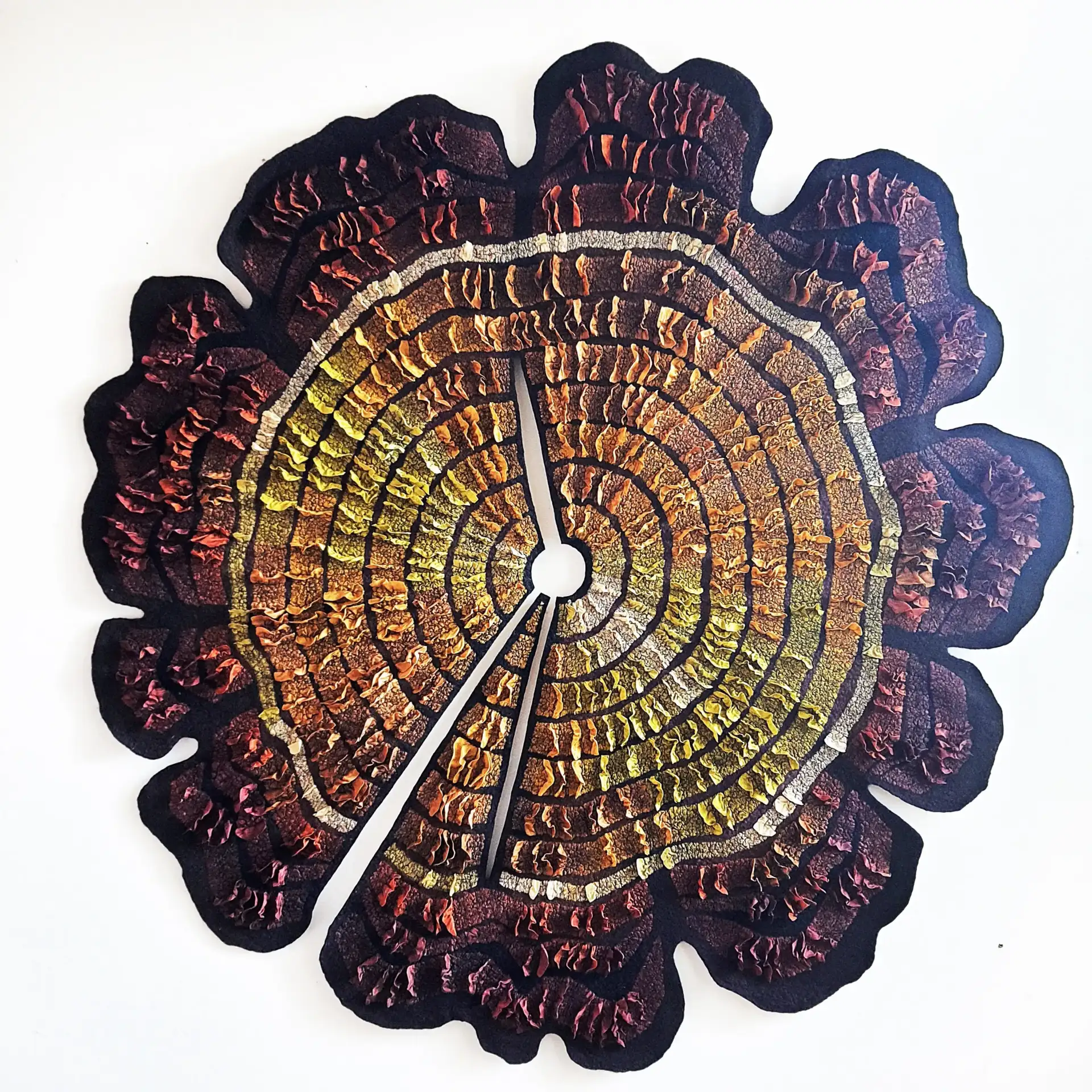
Her recent work pairs wool with silk fabric and fiber, and the contrast is the point. Wool felt is smooth and matte and absorbs light. Silk adds texture and an ethereal sheen that reflects light. In some pieces, Carlile-Kovács pleats the silk before felting. The rhythm, height, density, and direction of the pleats build an abstract, almost pixelated image across the surface.
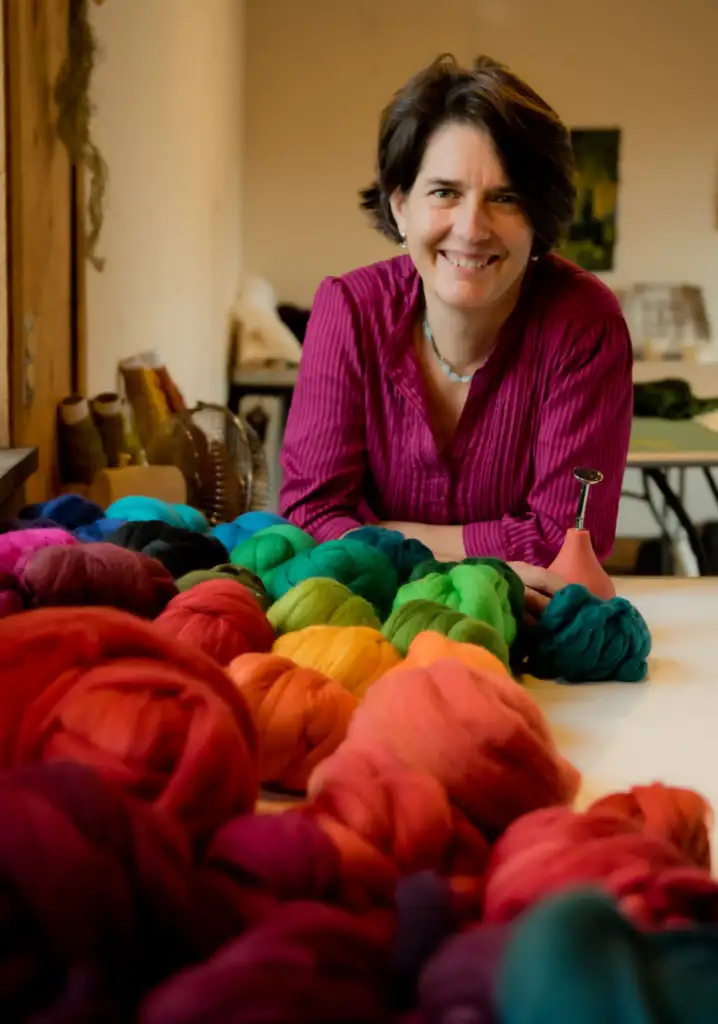
Flóra Carlile-Kovács. Photo credit Loma Smith
Learning from Lichen
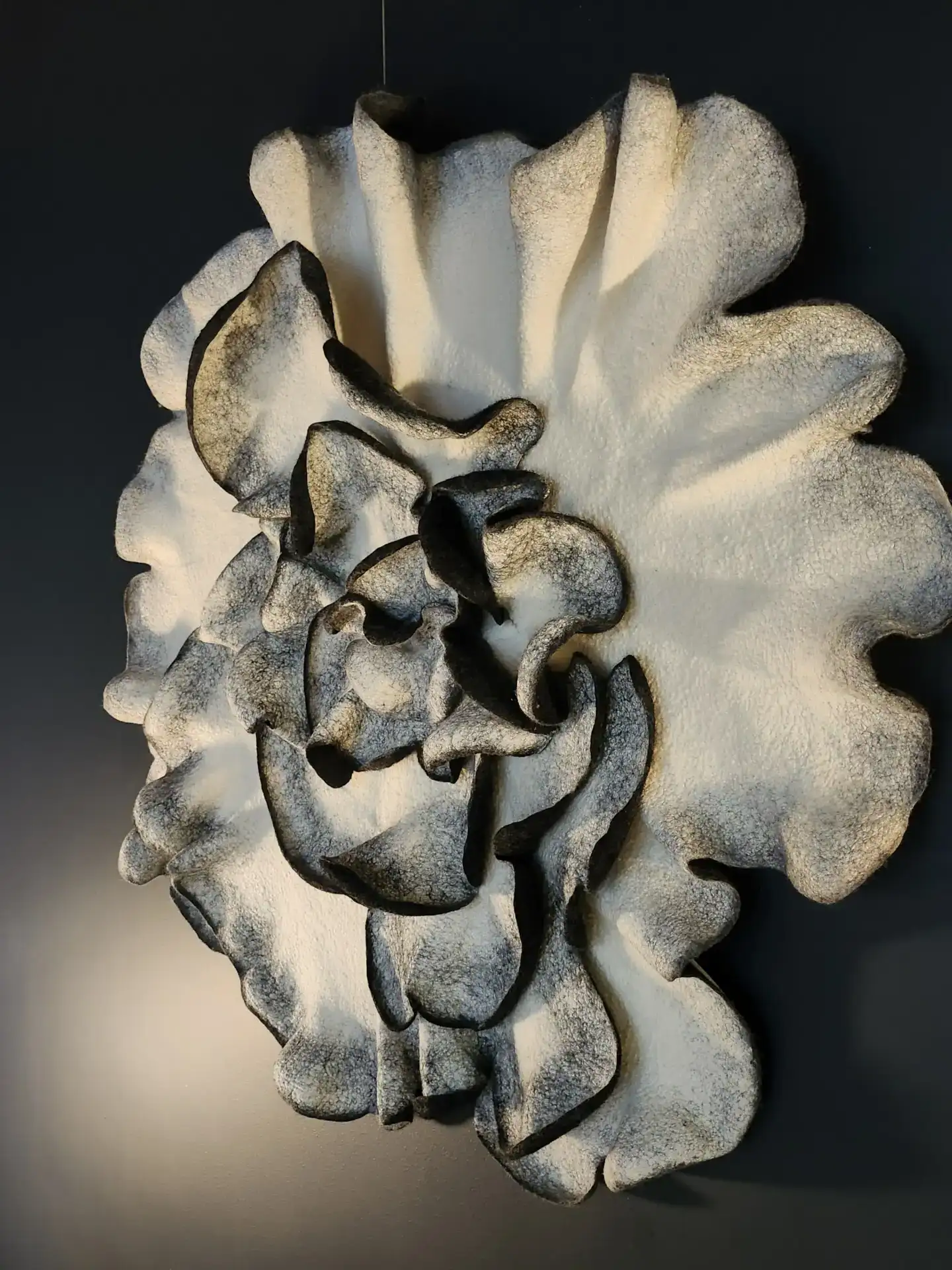
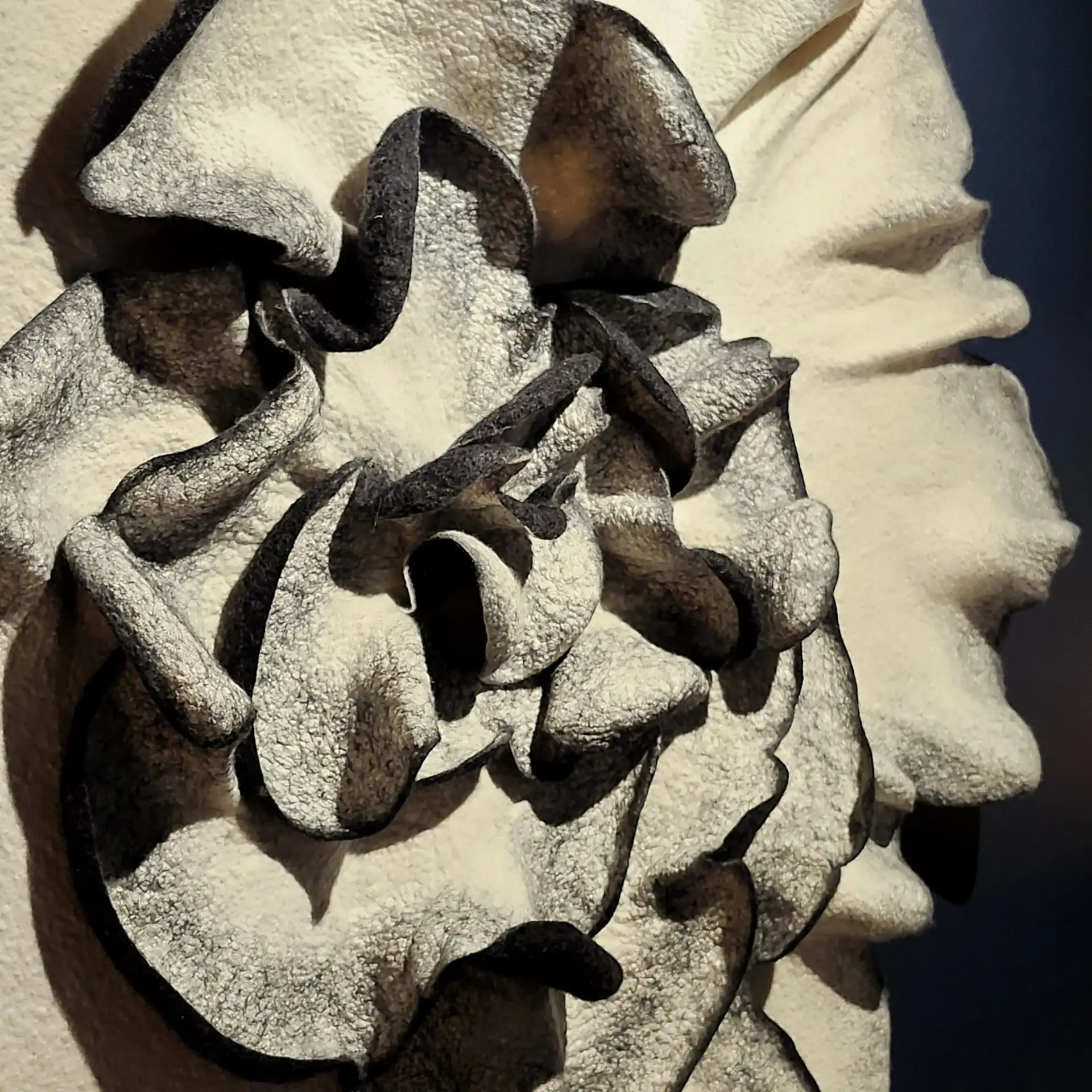
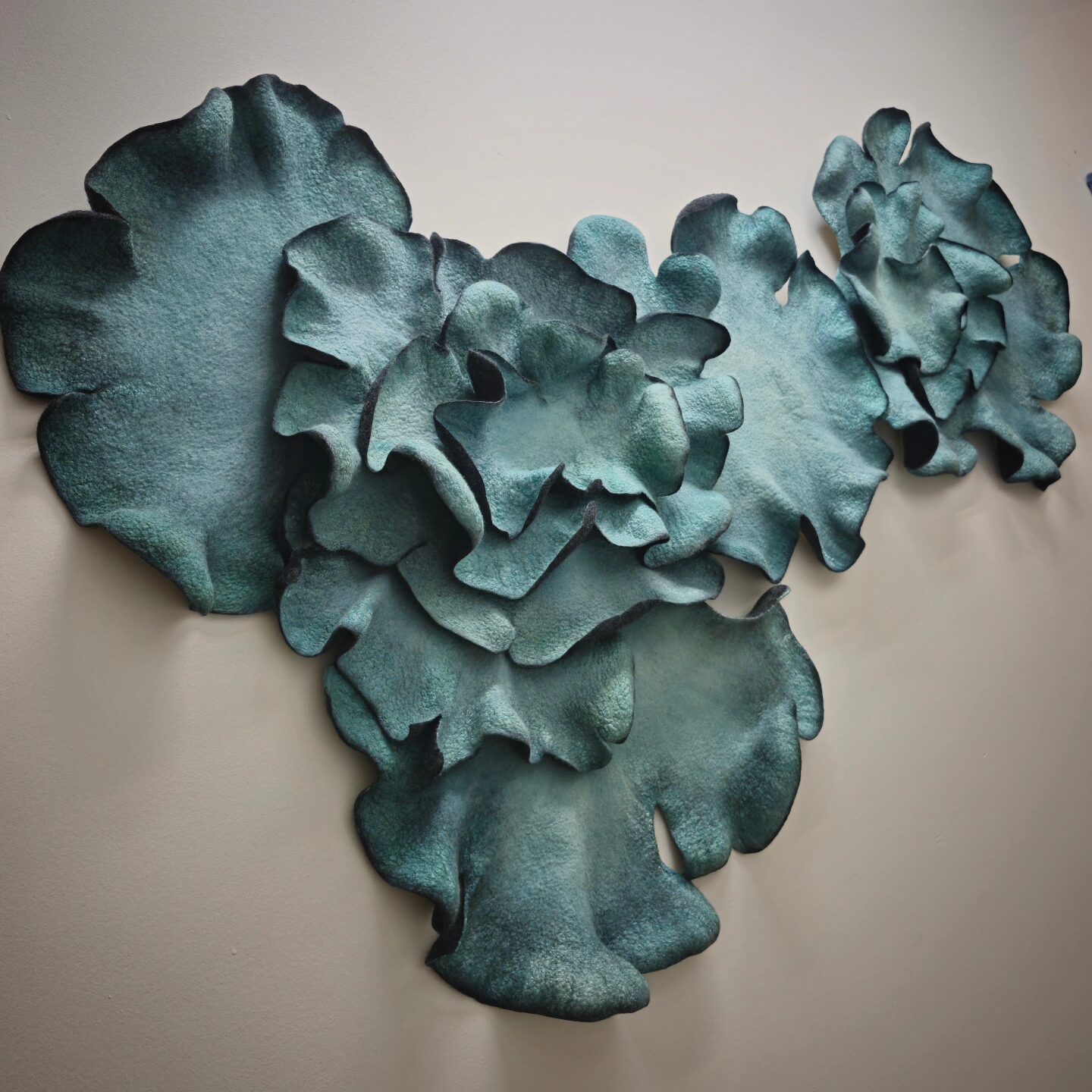
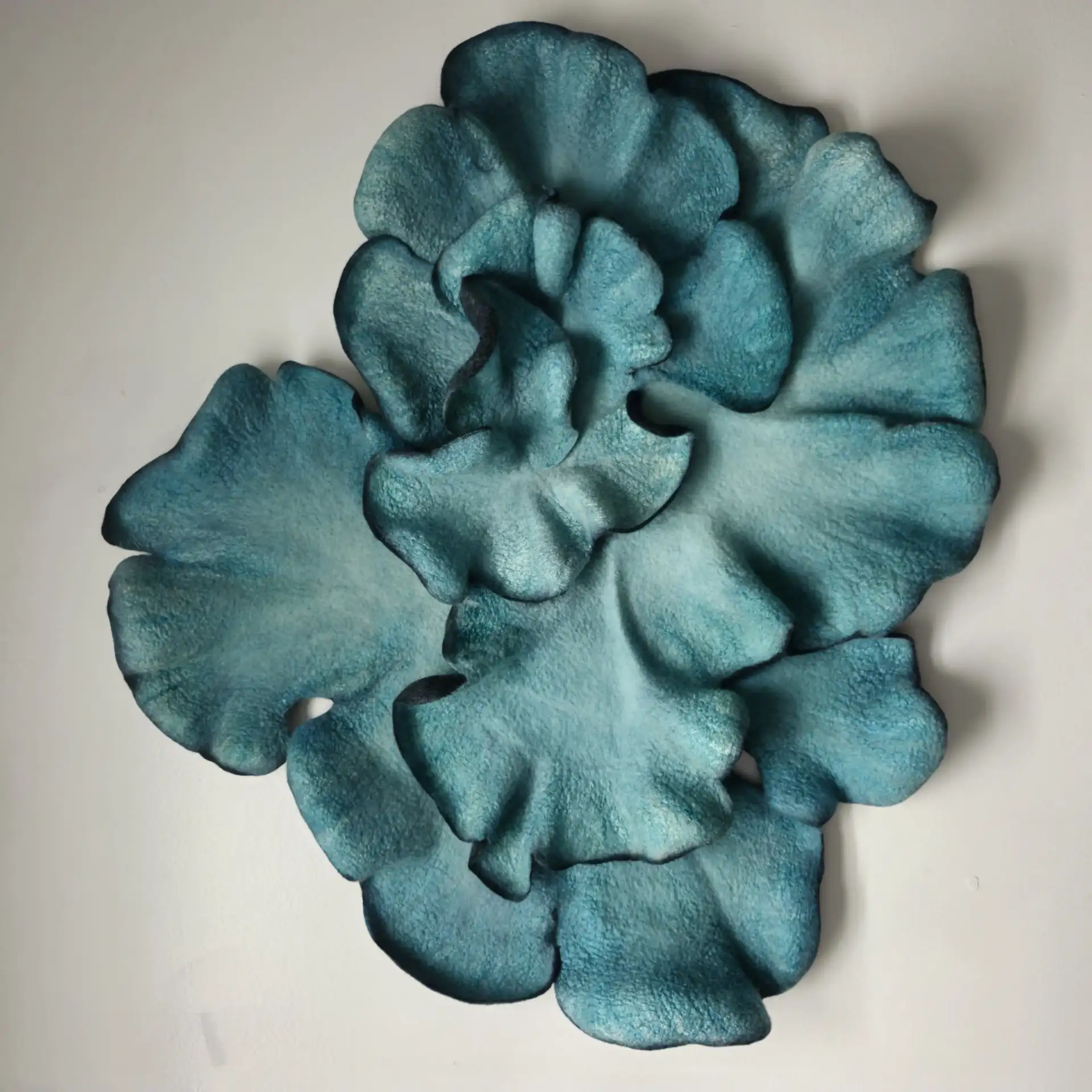
Her current favorite work is the Umbilicaria series, inspired by lichen. Lichen is not a single organism but a partnership. Algae feed the fungi carbohydrates, and the fungi shelter the algae and gather moisture and nutrients from rain and dust. Together they grow about a millimeter a year, and some lichens are among the oldest living things on earth, estimated at 9,000 to 10,000 years old. The shrubby and leafy species are so sensitive that scientists use them to measure air pollution.
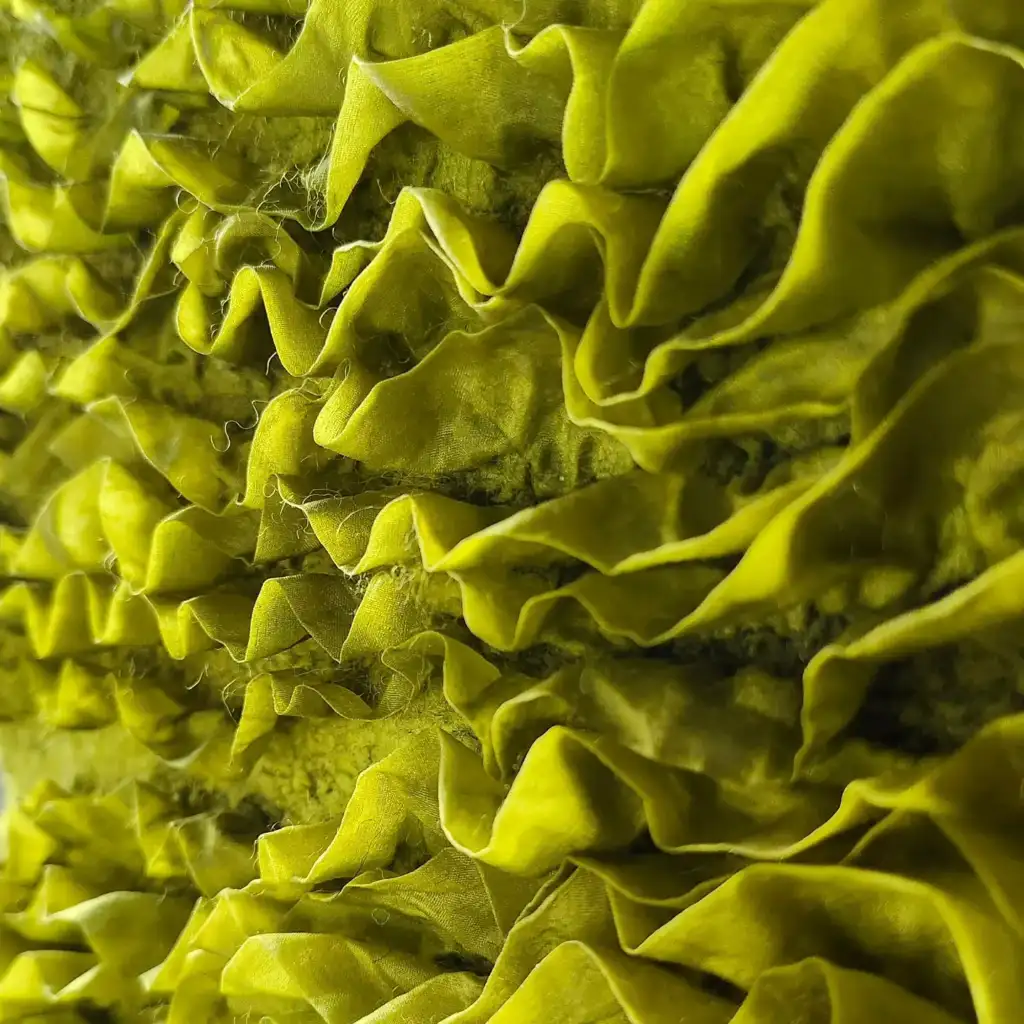
Lichen; 2024; silk, wool; wet felted; 48 x 96 x 2 in. (detail)
Lichen; 2024; silk, wool; wet felted; 48 x 96 x 2 in. (detail)
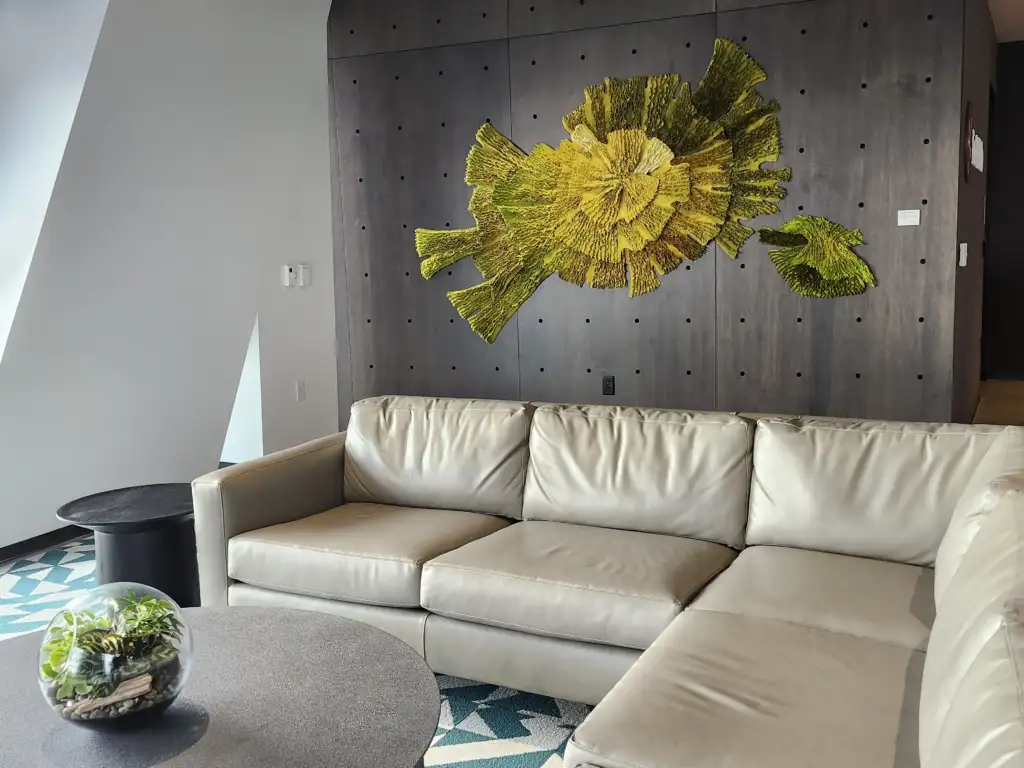
Carlile-Kovács saw her own process in that partnership. In a commission for the Seattle skyscraper, the F5 Tower, she merged silk and wool through felting into a single organic, structural piece. As the wool shrunk, it supported the silk and drew it into heavy textures and small, ruffled pleats. Two materials became one, just as algae and fungi do.
Felt as Community
Carlile-Kovács has taught felt making at every level since 2005, and she leads annual felt tours to Hungary, where she was born. One student in her rug-making workshop summed up the experience this way: “I came here expecting to make a rug. I am going home belonging to a community.”
Felt is the most ancient textile technique; it needs no spinning, no tools, and was traditionally made in groups. “In the workshops we can experience the joy of working together and creating with our hands,” said Carlile-Kovács. She calls this a basic human need; one we must cultivate in an age of isolation.
Her workshops also teach Kyrgyz rug making, a tradition in which mothers and relatives felt symbols of good wishes into a bride’s rug, a blessing she keeps for life. For Carlile-Kovács, knowing where a craft originates is the foundation for pushing it somewhere new. “Once we understand the technique, the process, and the materials, we can challenge them,” she said.