Jamie Curtismith: Building Systems, Defying Categories
Cami Smith
| Organizations
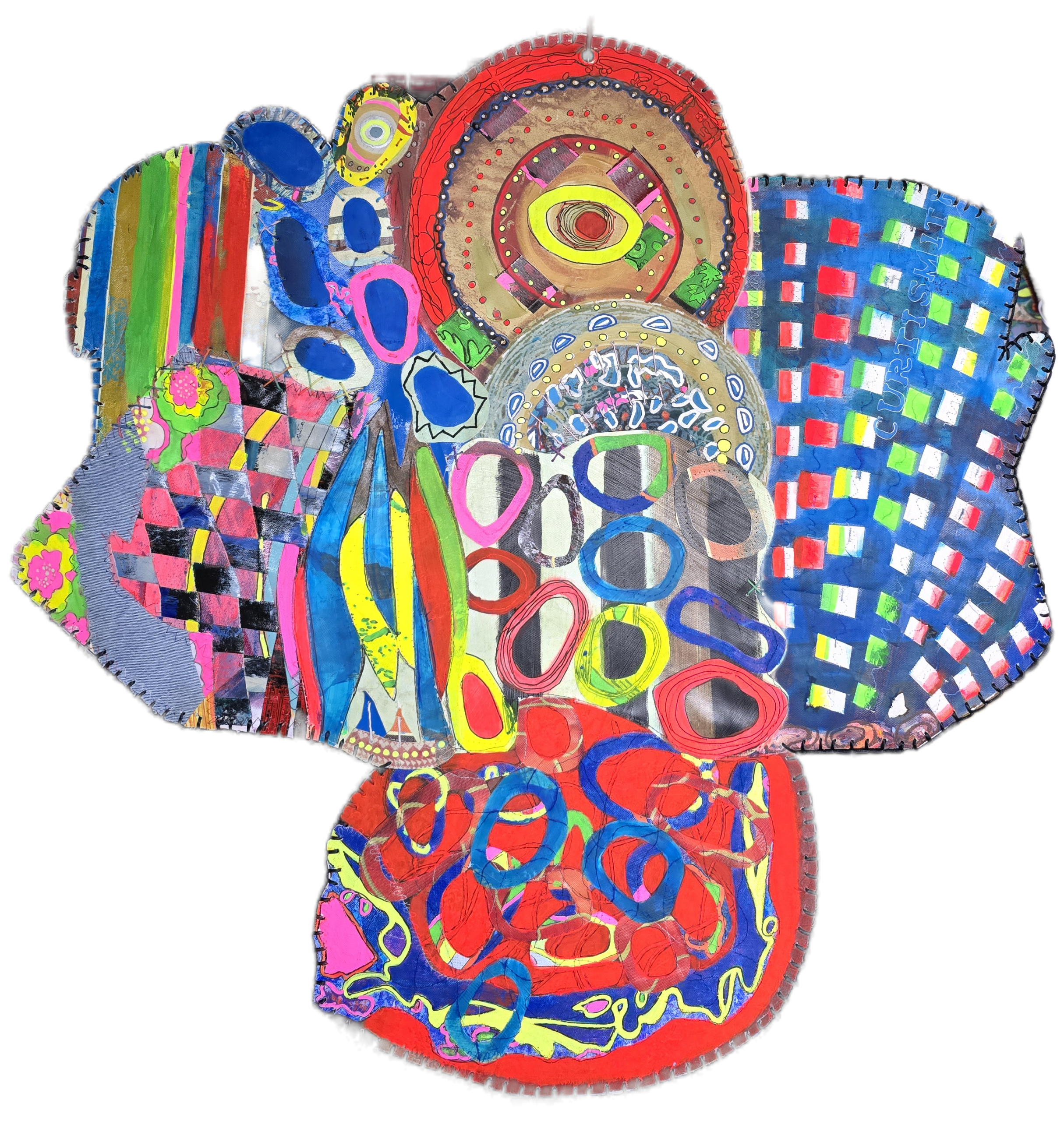
Some artists work within boundaries; Jamie Curtismith dismantles them. A Pacific Northwest mixed-media maximalist, Curtismith builds what she calls Canvas Skins—layered, stitched compositions made from fragments of her own archived artwork, torn apart and reassembled into dense, tactile surfaces that operate as much physically as they do visually. Her materials include oils, acrylics, watercolor, inks, pastels, graphite, aerosols, yarn, beadwork, and found objects. Her background includes a degree in aeronautical engineering and a Master of Business Administration. All of it shows up in her work.
For Curtismith, maximalism is not an aesthetic choice, it is a philosophical position. “Maximalism, for me, is not excess for its own sake. It is an accumulation of truth.” Her work holds multiple narratives simultaneously rather than resolving them into a single clean statement. Layers carry information and tension. Some are legible, some are obscured, some compete for attention. The viewer navigates rather than passively receives. “The density is not decoration,” she says. “It is an accurate reflection of a world that does not simplify cleanly.”
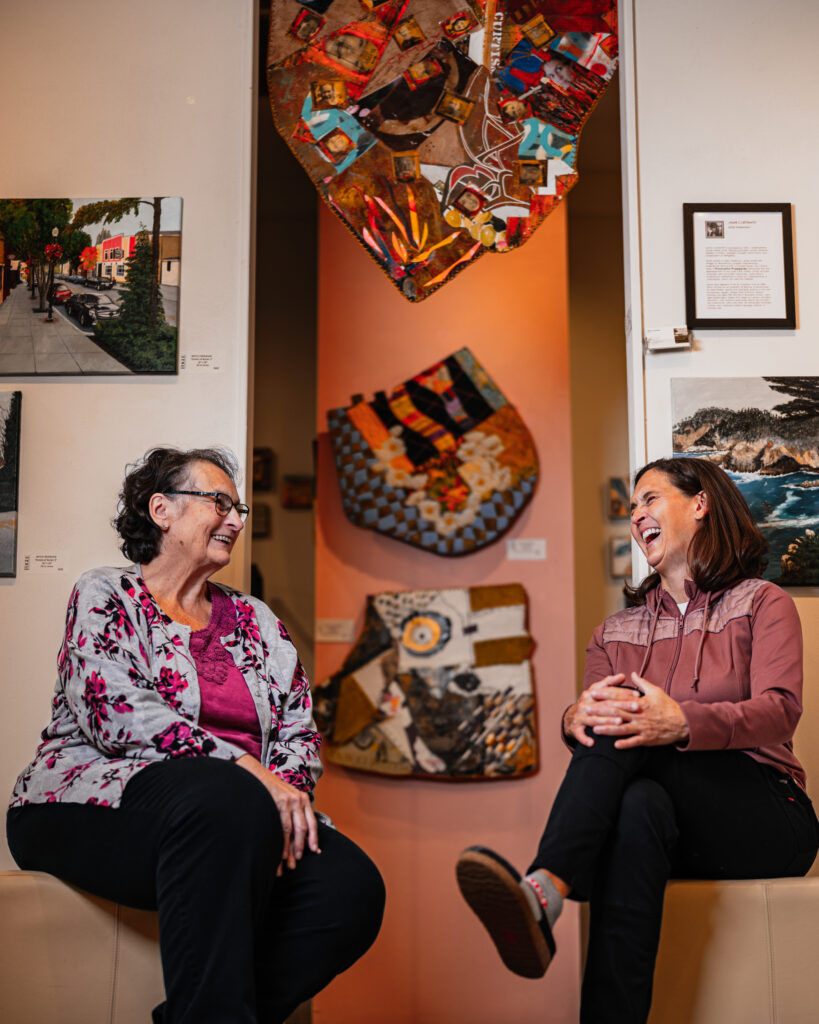
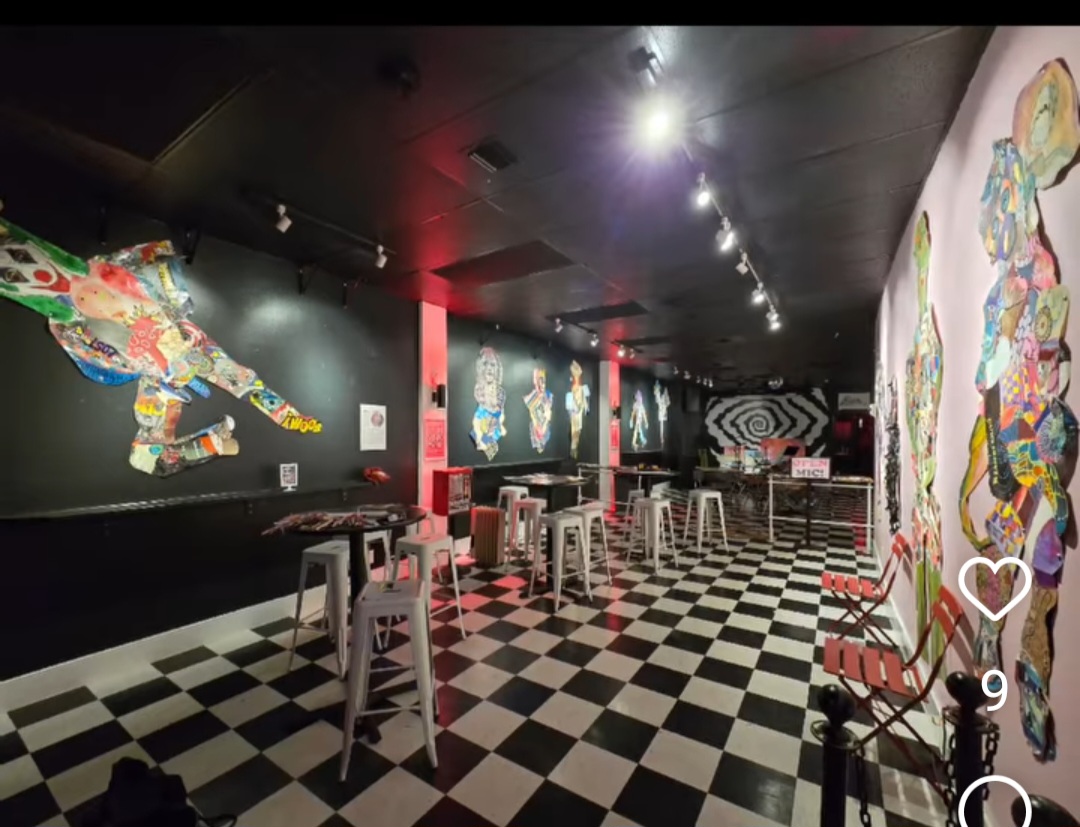
Alice Curtis and Jamie Curtismith with Flip Art at Fogue Gallery, Georgetown.
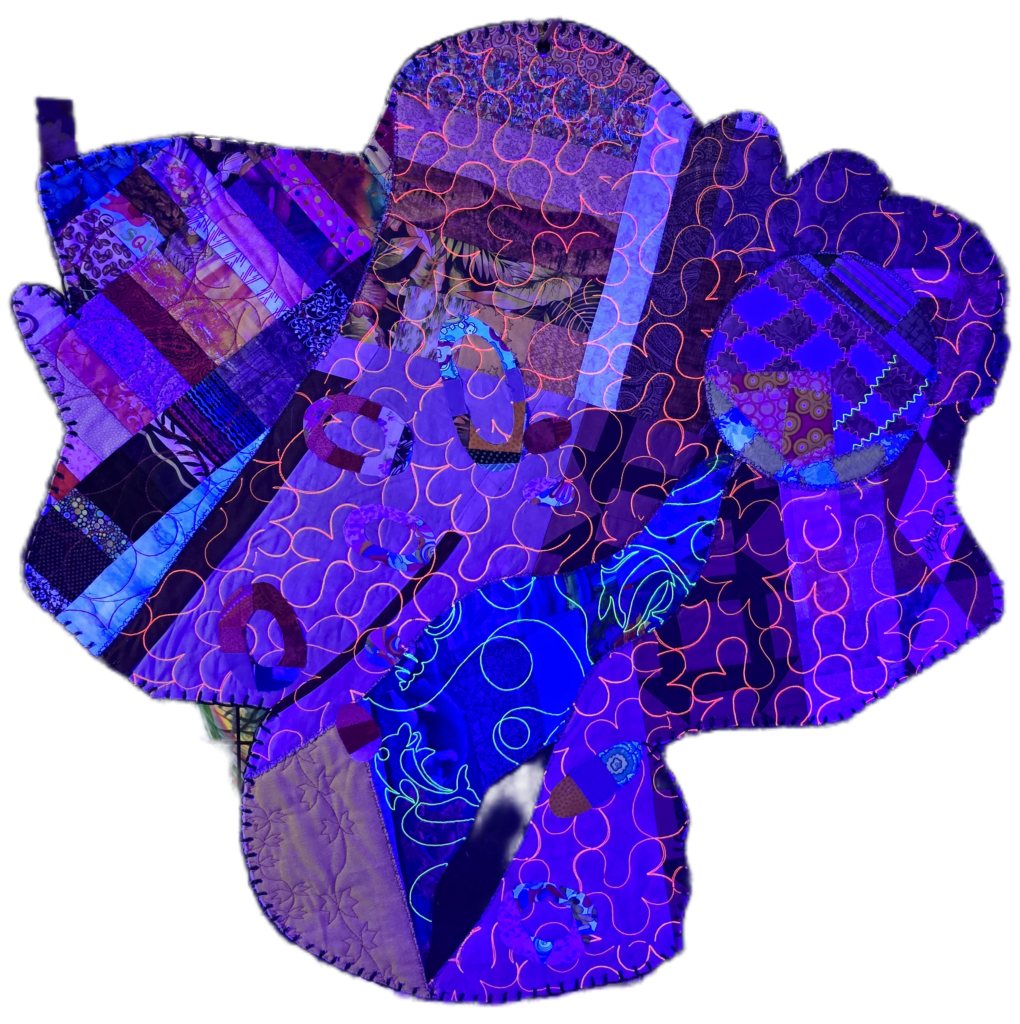
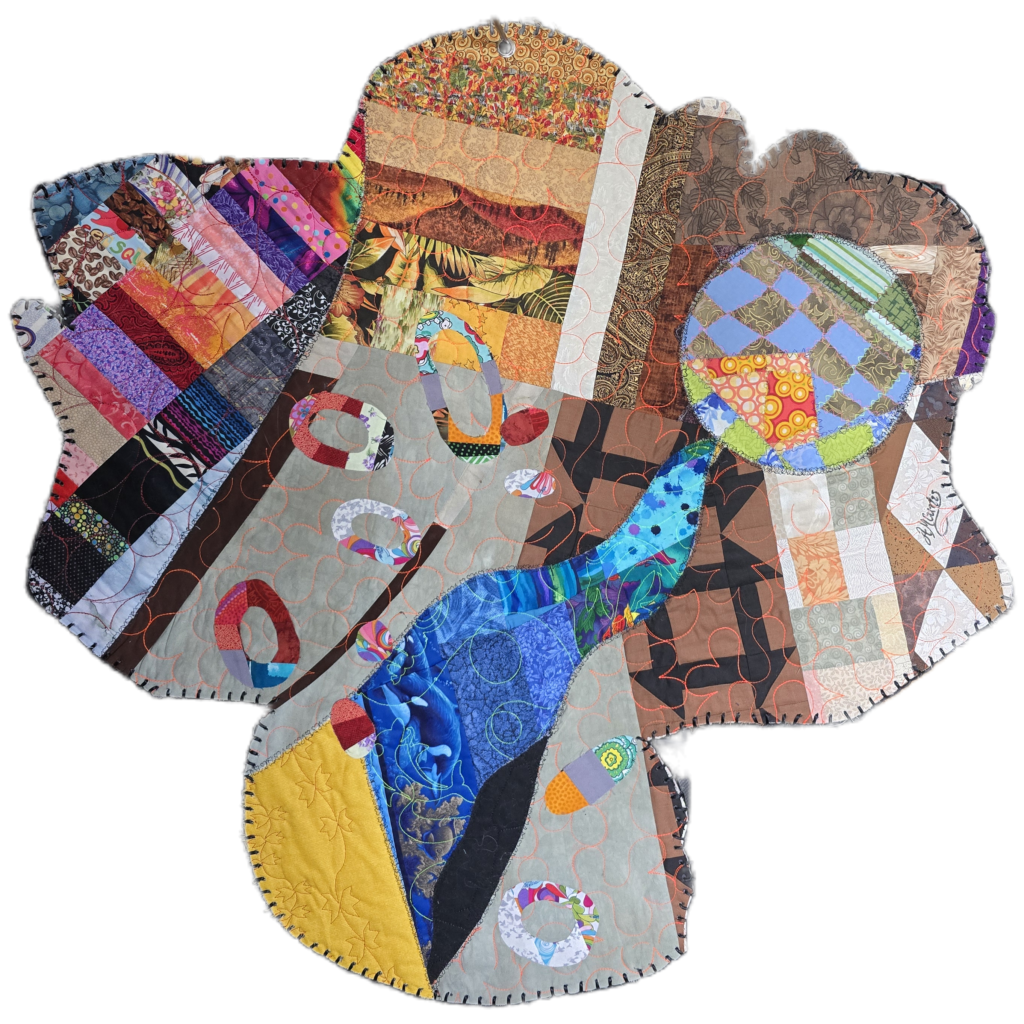
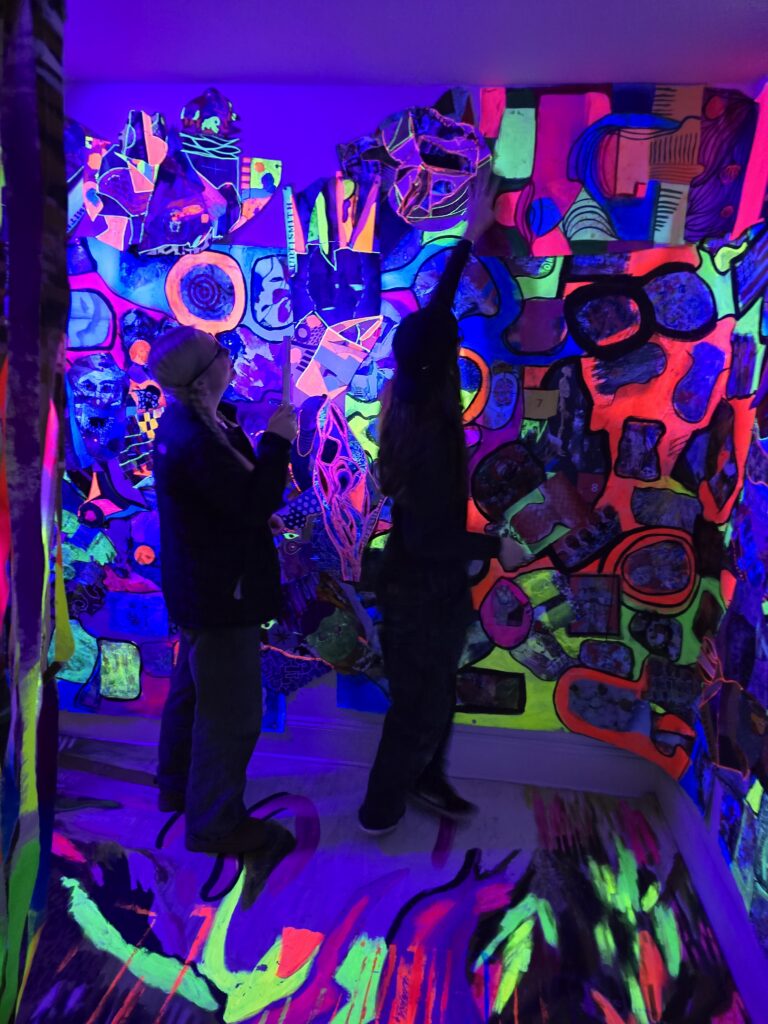
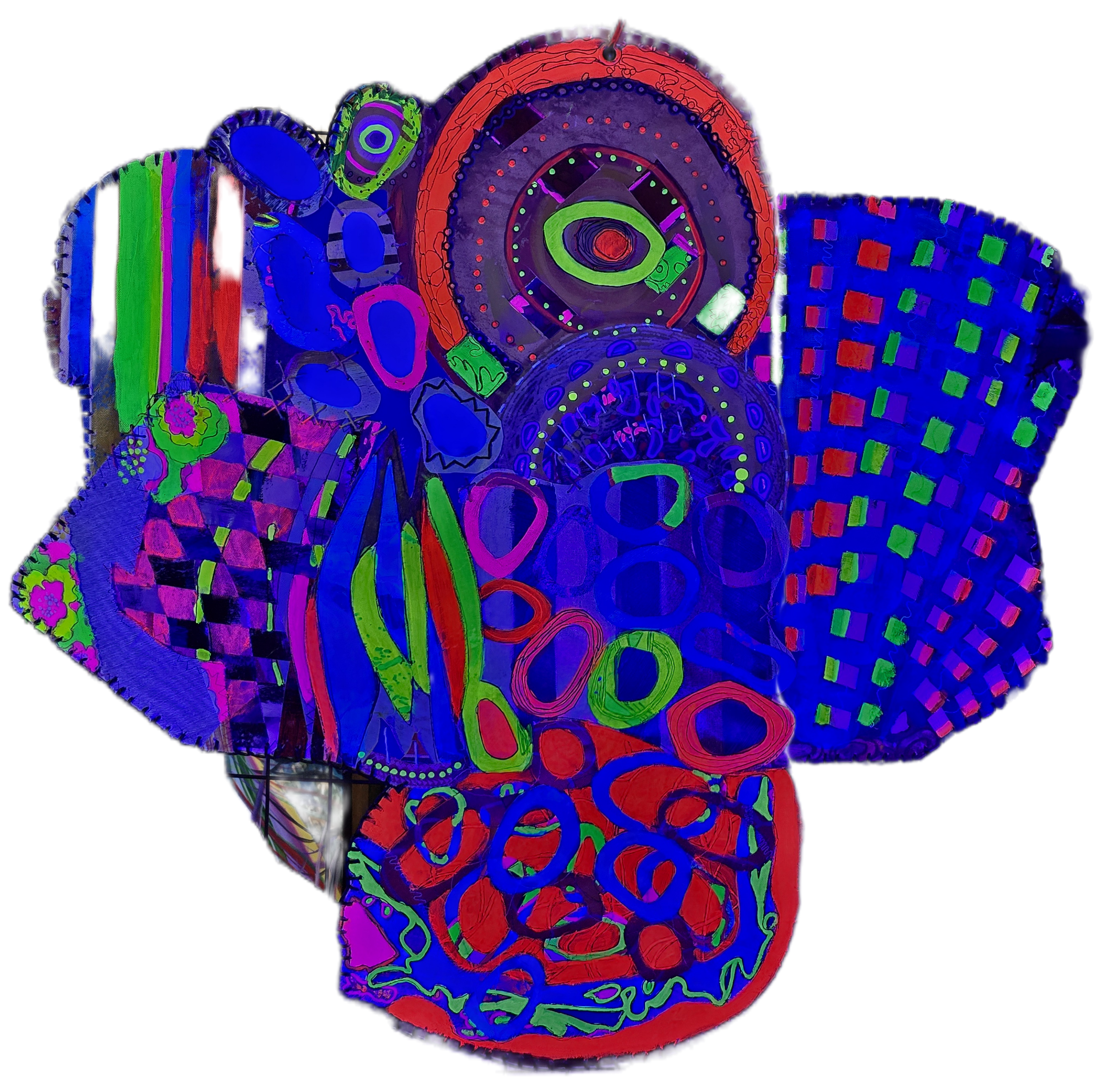
This complexity extends to how her work behaves under different lighting conditions. Illumination, for Curtismith, is not a finishing effect—it is another layer built into the piece from the beginning. Under standard light, certain forms dominate. Under blacklight, concealed marks and embedded gestures come forward. Backlighting reveals internal structures otherwise hidden. “When the lights go down, the work reveals what was always there but not fully visible,” she said. The shift in lighting turns the viewer into an active participant, someone who must move, adjust, and reconsider what they thought they understood.
Totem from the Flip Series shown under blacklight.
Totem from the Flip Series shown with regular lighting.
Her Flip the Art series adds another dimension entirely—literally. Created in collaboration with her mother Alice Curtis, a textile artist and master quilter, these double-sided, magnetic works bring together three generations of making: her mother’s quilting on one side, her own mixed-media canvas work on the other, and her children’s marks woven throughout. “Handing someone a piece from that series feels like handing them a living archive, she said.” No single layer dominates. No single reading is fixed.
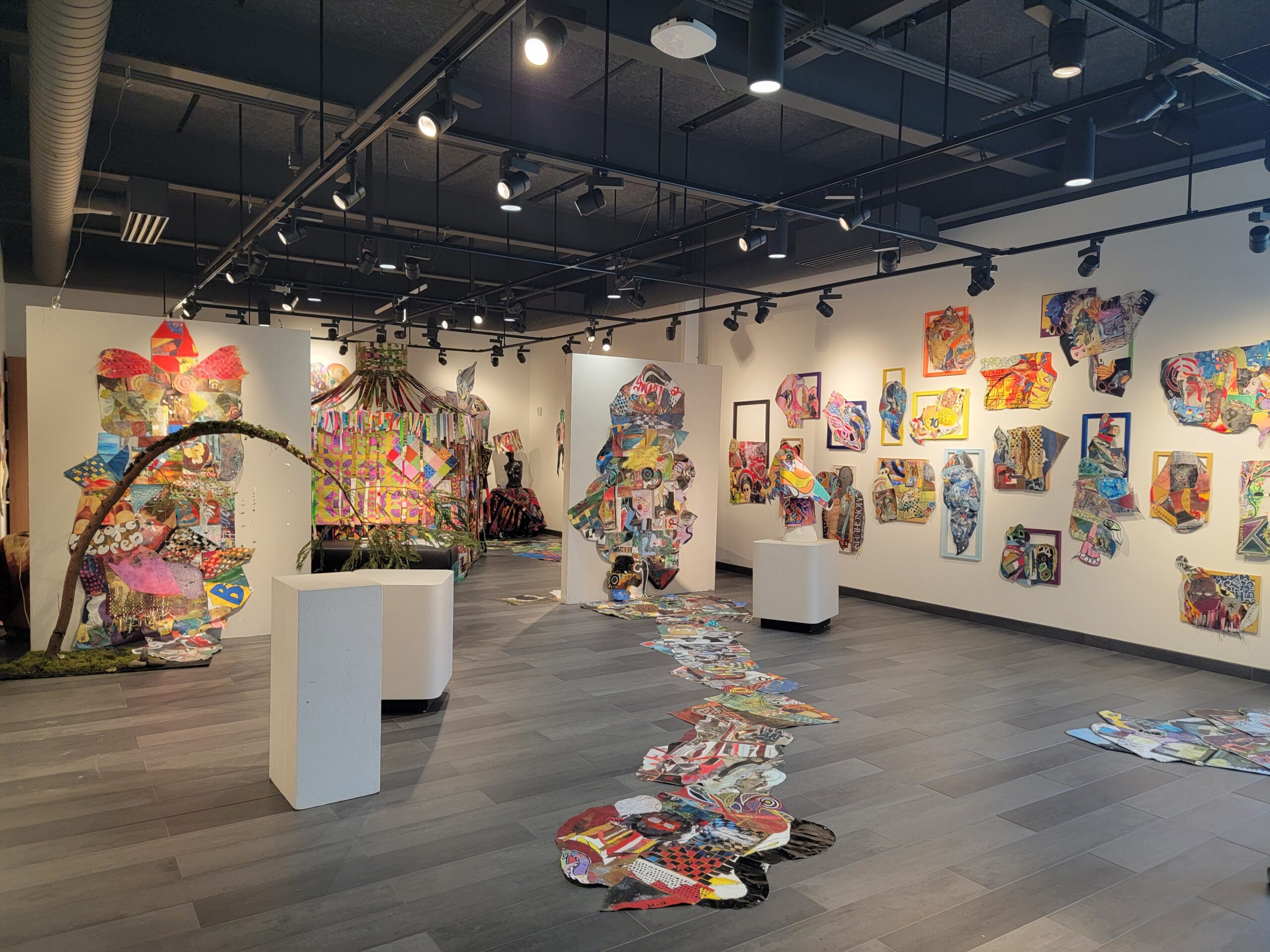
The Illumination Room; 2025; Art Zowie Gallery, Seattle, Washington.
with Tatum Smith and Maci Hudson.
Curtismith’s creative crochet line extends this ethos into the body and into the street. Born in direct response to the No Kings movement, her Granny Square Deconstructed line carries a tagline that captures her sensibility perfectly: “It’s like going to war being hugged by your grandmother,” she said.” For Curtismith, the question is never where fashion ends and art begins. “The question is whether the work holds meaning, intention, and presence. If it does, it functions as art regardless of where it exists.”
Engineering taught her how systems behave under constraint. Finance taught her how value is constructed—and distorted. Art allows her to interrogate both. “The canvas is simply where those structures can be made visible, questioned, and reconfigured.”