This month’s artist spotlight features the work of Lynne Francis-Lunn, a paper weaver whose sculptural vessels explore structure, language, and the emotional tone of the world around us. Francis-Lunn approaches technique as a set of creative tools—materials she can reach for to bring an idea to life. This curiosity recently led her to a “Skins, Skeletons, and Suminagashi” workshop with Mo Kelman at the National Basketry Organization’s 2025 conference, where she began experimenting with building internal armatures and applying expressive skins. That shift opened new pathways for thinking about form, volume, and the visible and invisible forces shaping her concepts.
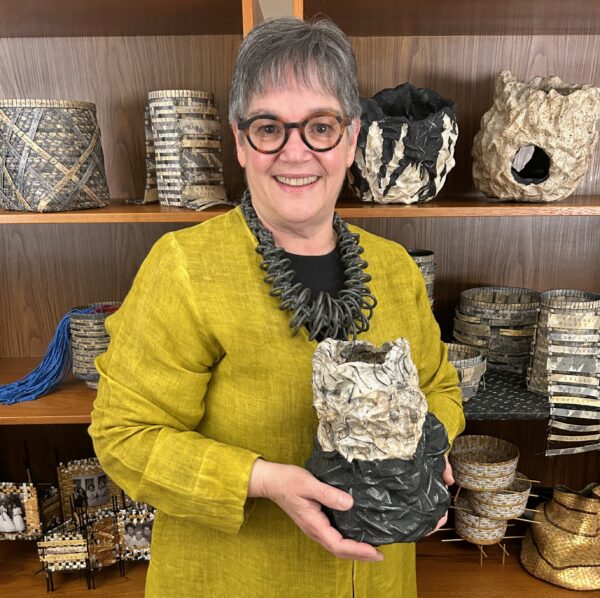
Lynne Francis-Lunn in her studio, 2025. Photo credit Peter Lunn.
Francis-Lunn describes herself as someone who is always learning. Techniques expand her vocabulary and give her options. Her work is deeply concept driven, and having multiple construction methods at her fingertips allows her to choose the one that best communicates the idea she’s trying to examine. Sometimes that means creating a structured, text-based vessel; other times it means constructing an armature that holds chaos, tension, or uncertainty in its form.
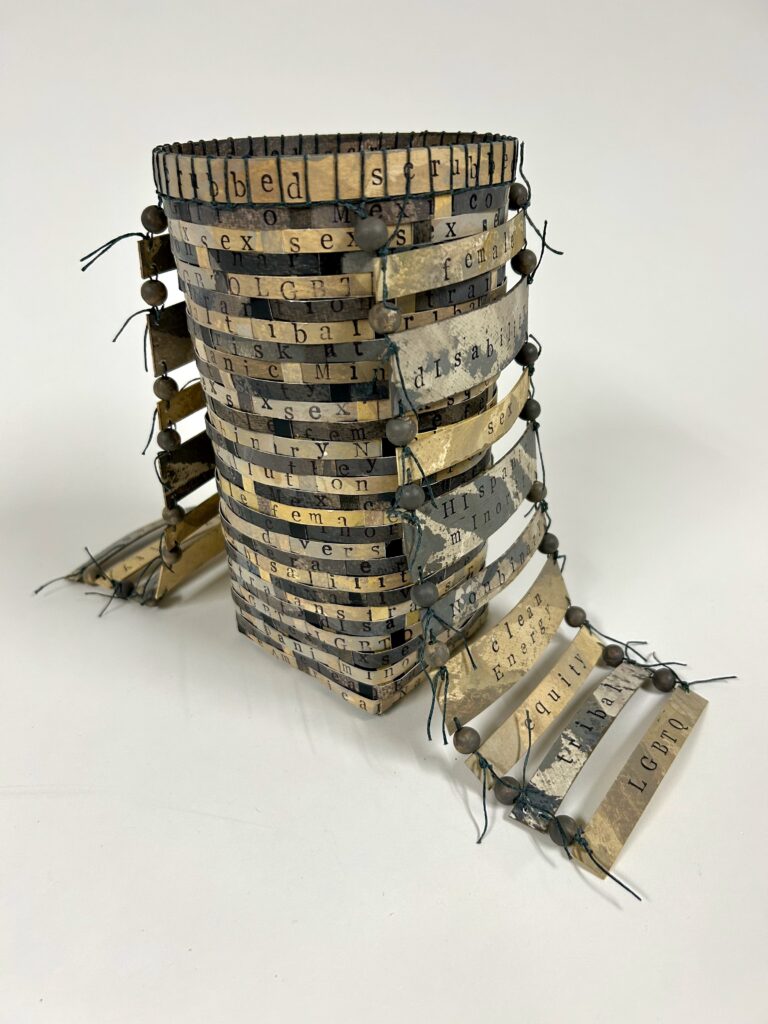
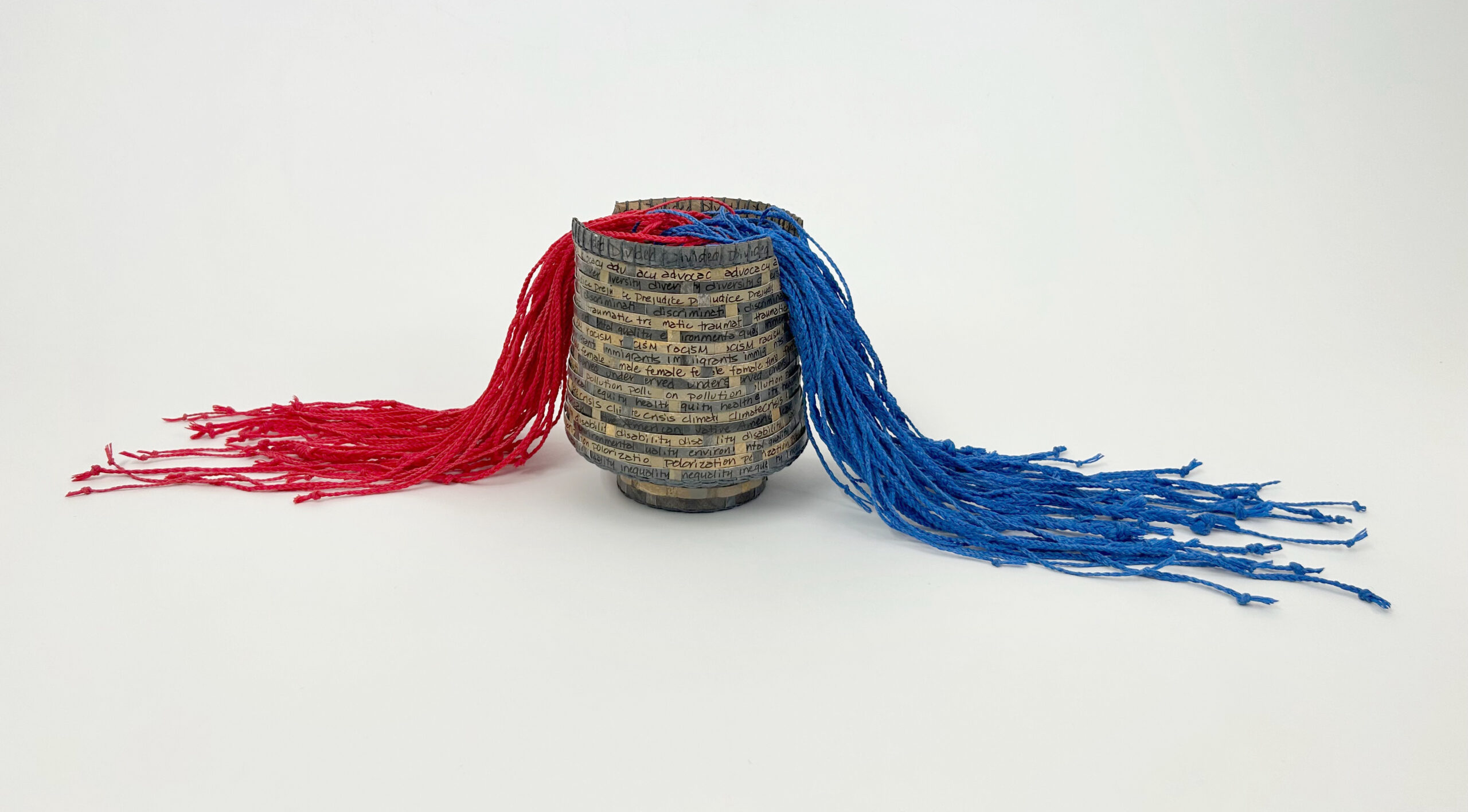
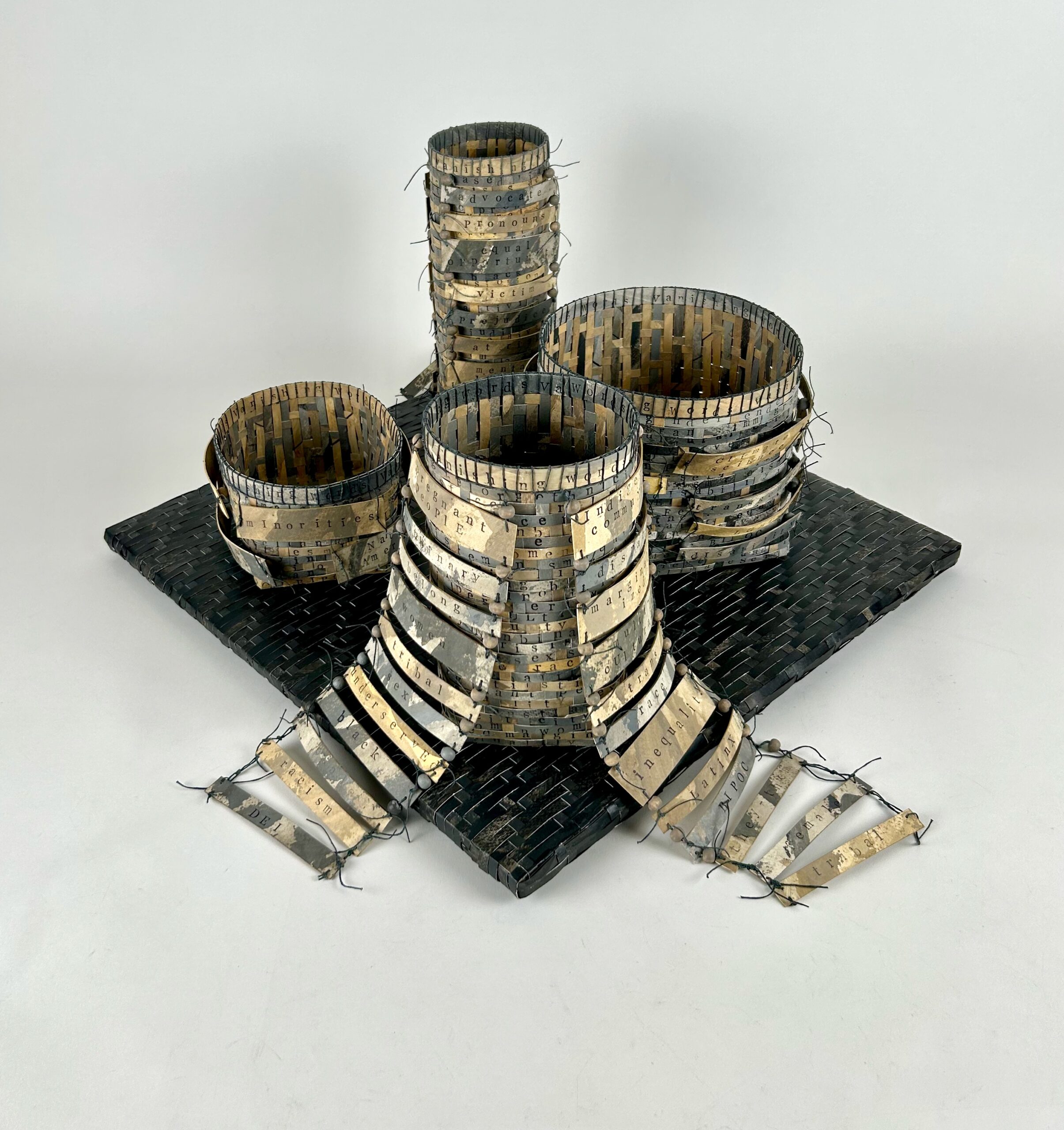
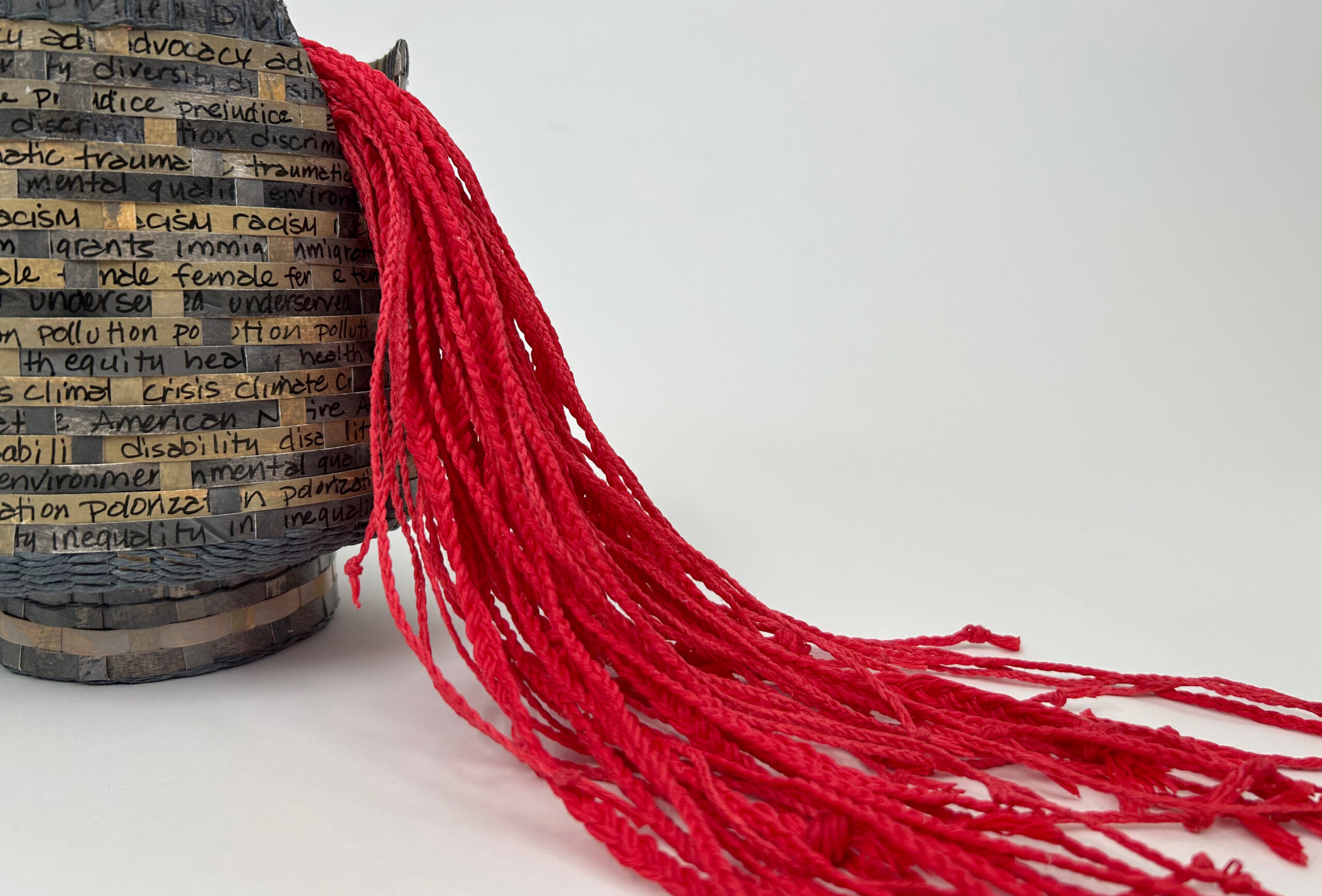
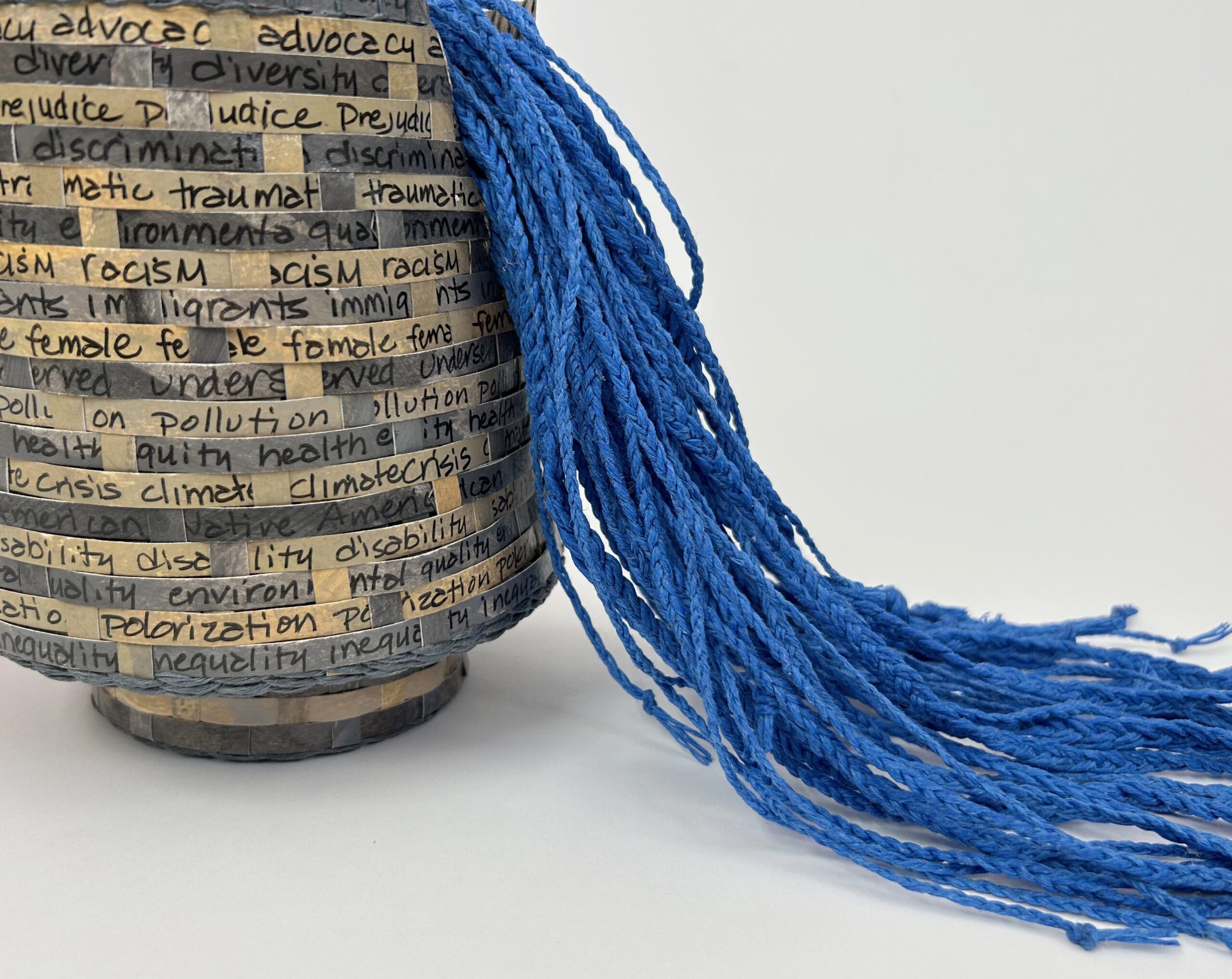
This movement between techniques is especially clear when she compares her two ongoing bodies of work. In her Vanishing Words series, she begins by painting paper and adding text to the surface. She then weaves the sheets using a plaiting technique that creates a rigid structure. The words—some visible, some partially obstructed—are the driving force behind the series. Plaiting becomes a way to hold language in place while acknowledging how meaning can fray, shift, or become hidden.
Scrubbed; 2025; paper, acrylic, wood, waxed linen, ink; plaited; 8 x 10 x 4.75 in.
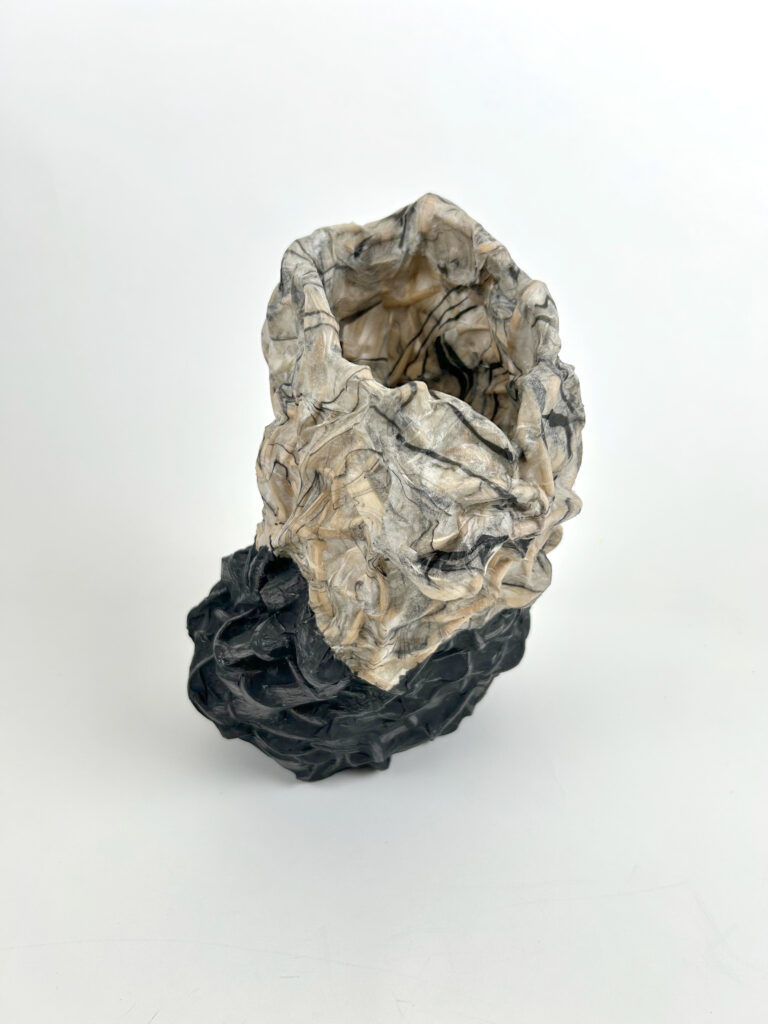
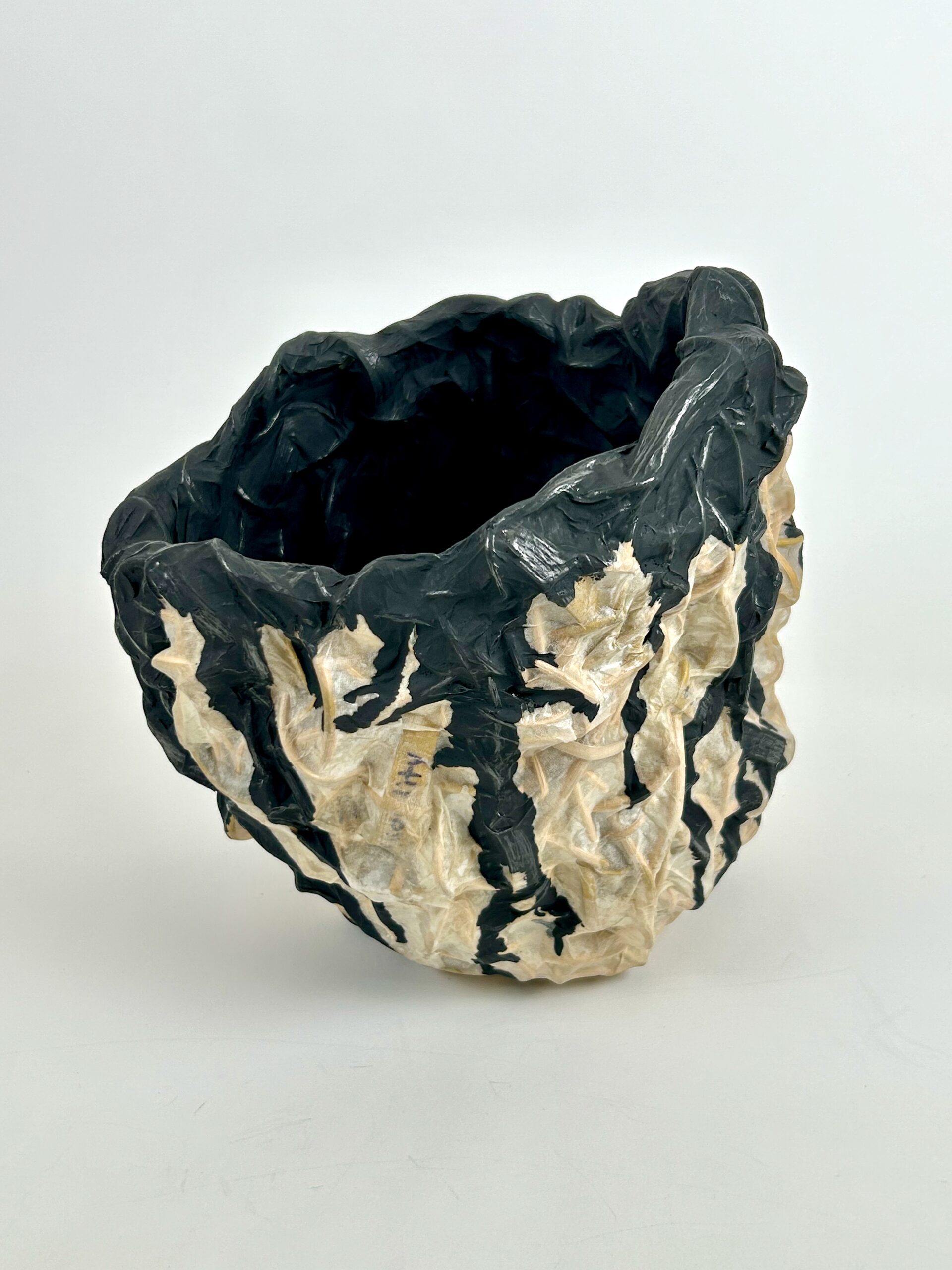
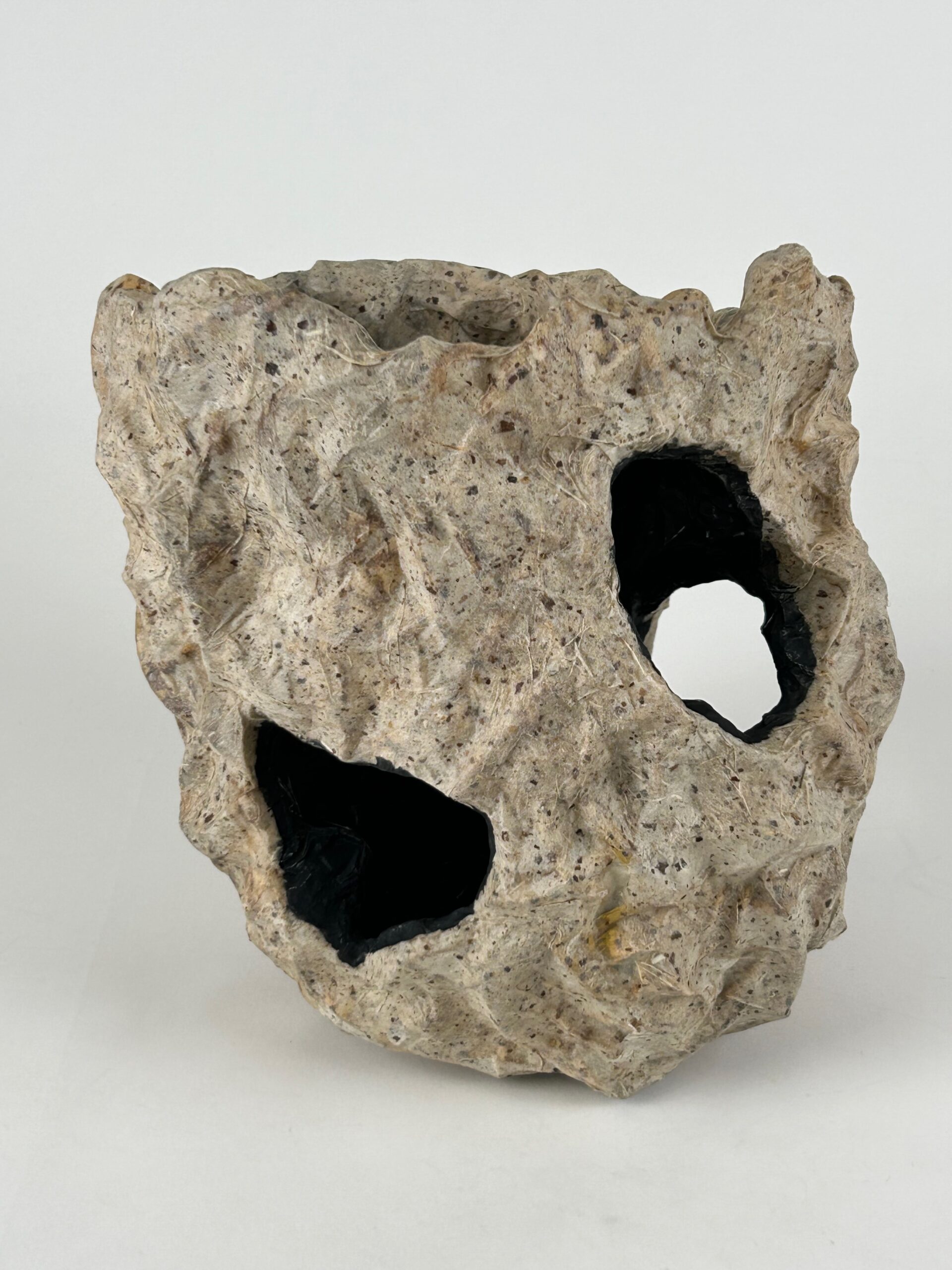
Sinking into Chaos; 2025; reed, paper, cane, graphite, ink; random weave armature, suminigashi marbled paper skin, painted; 10 x 7 x 6 in.
In her Armatures and Skins series, the focus shifts. Here, Francis-Lunn is thinking about form, volume, and texture—and about the sense of disorder she sees reflected in today’s political climate. To capture that feeling, she uses a random weave structure to build organic armatures, then applies skins that alter the surface and mood. Each method brings different opportunities and limitations, and Francis-Lunn embraces both. Her goal is for viewers to look deeply—beyond the immediate visual appeal—to discover the layers of intention beneath the surface.
Although she began her fiber journey on the loom, Francis-Lunn eventually fell in love with paper. Paper gives her the freedom to control surface, color, texture, and finish. It lets her create her own starting point every time. She paints it, marks it, prints on it, and transforms it before weaving it into something entirely new.
Her work often carries political ideas—not as slogans, but as reflections of the moment. She describes her pieces as responses made in real time, observations captured physically before the feeling or urgency fades. In a world where political noise is constant, her vessels become quiet containers for thought.
Through it all, Francis-Lunn’s studio remains her happy place. When an idea moves from her sketchbook into three-dimensional form, that transformation brings her joy—a reminder of why she weaves and why these vessels continue to evolve alongside her.