Layers of Curiosity: The Sketchbook World of Helen Wells
Cami Smith
| Artist Feature
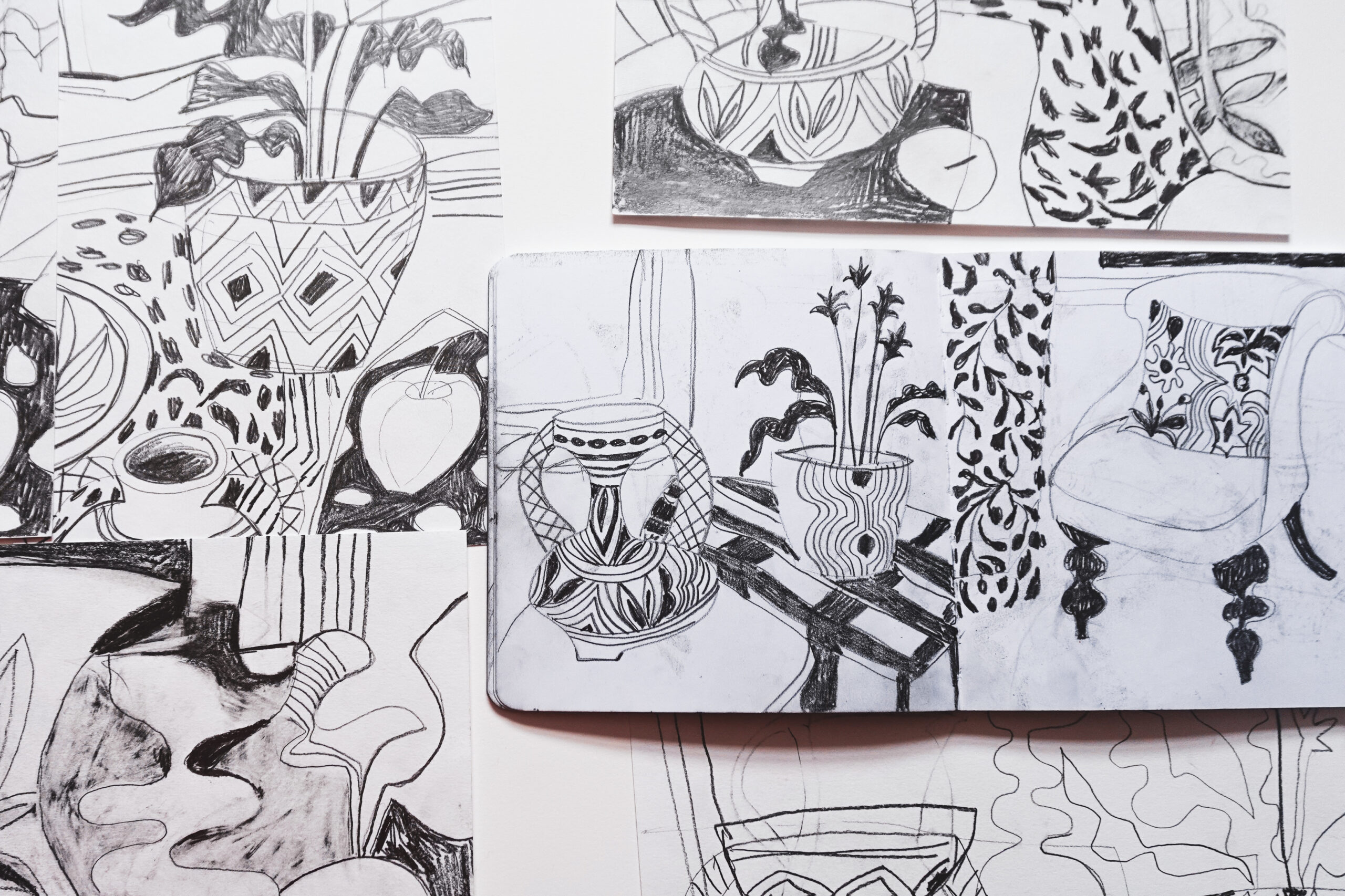
This month, Fiber Art Now is delighted to feature UK-based artist, author, and teacher Helen Wells. Known for her inspirational sketchbook blogs and videos, Wells has encouraged thousands of artists worldwide to see their sketchbooks as spaces for discovery and play. From her tiny studio on the South Coast of England, Wells creates vibrant, expressive works that blend intuitive marks with thoughtful design—drawing inspiration from nature, vintage textiles, and everyday beauty. Her book Expressive Sketchbooks (Quarry, 2020) has inspired artists around the world. Wells credits her sketchbook practice with helping her become a professional artist later in life.
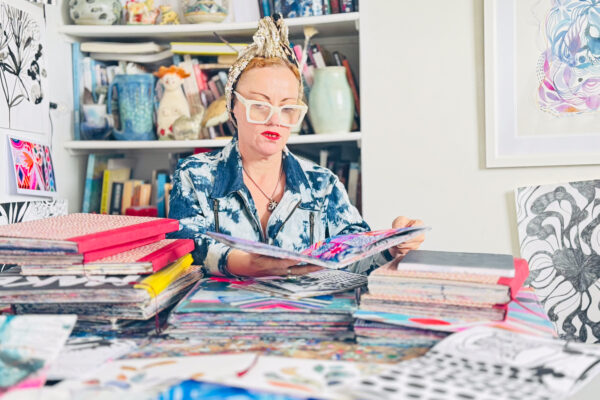
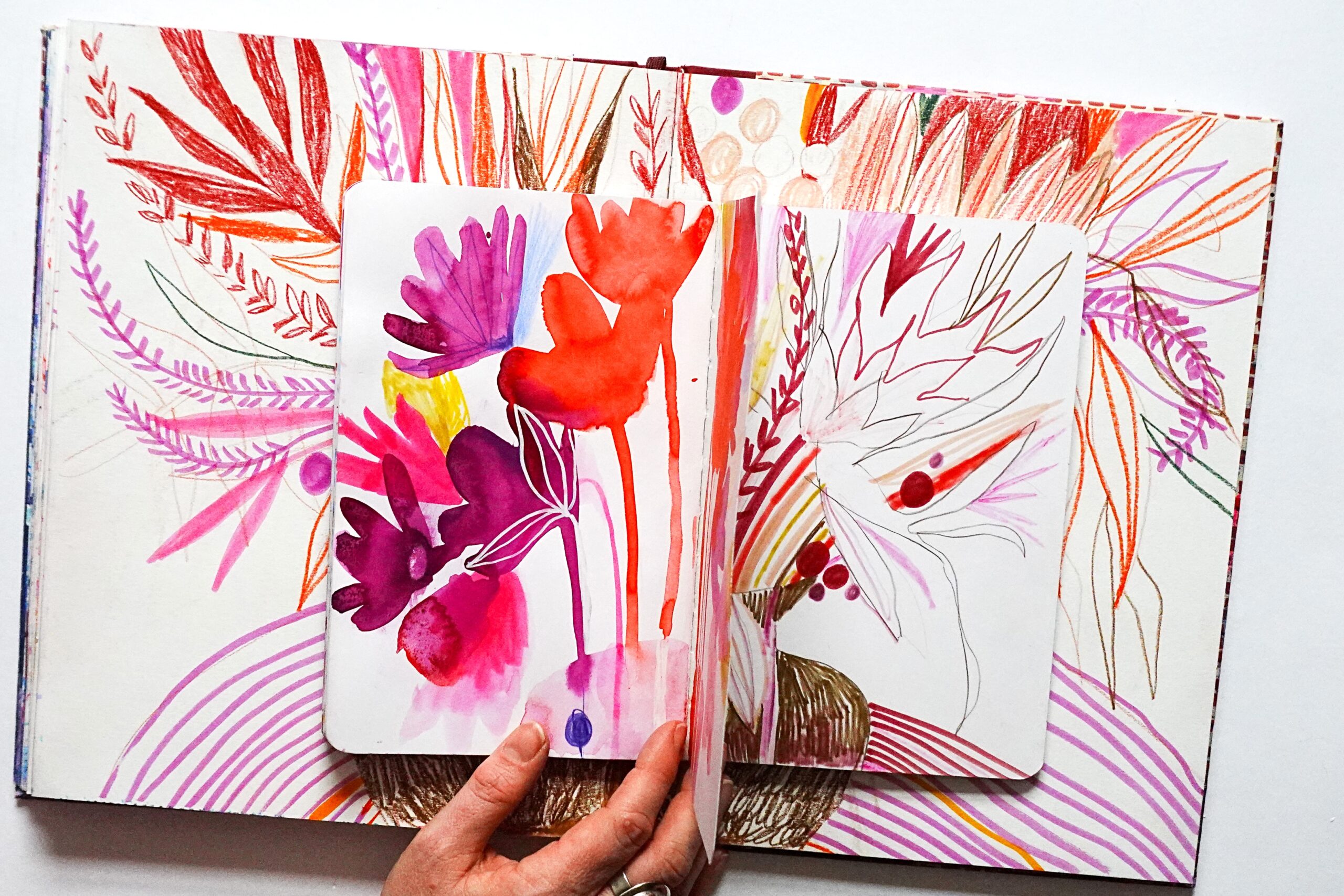
Helen Wells looking through sketchbooks in her studio.
About eight years ago, Wells made the conscious decision to share all of her sketchbook explorations—not just the beautiful pages, but the mistakes and missteps as well. She believes it is important to reveal the “creative compost” that fuels a body of work, letting others peep behind the curtain to see the trial, error, and thought processes that bring ideas to life.
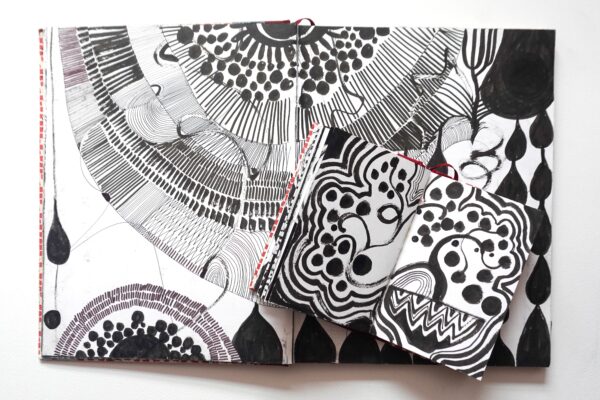
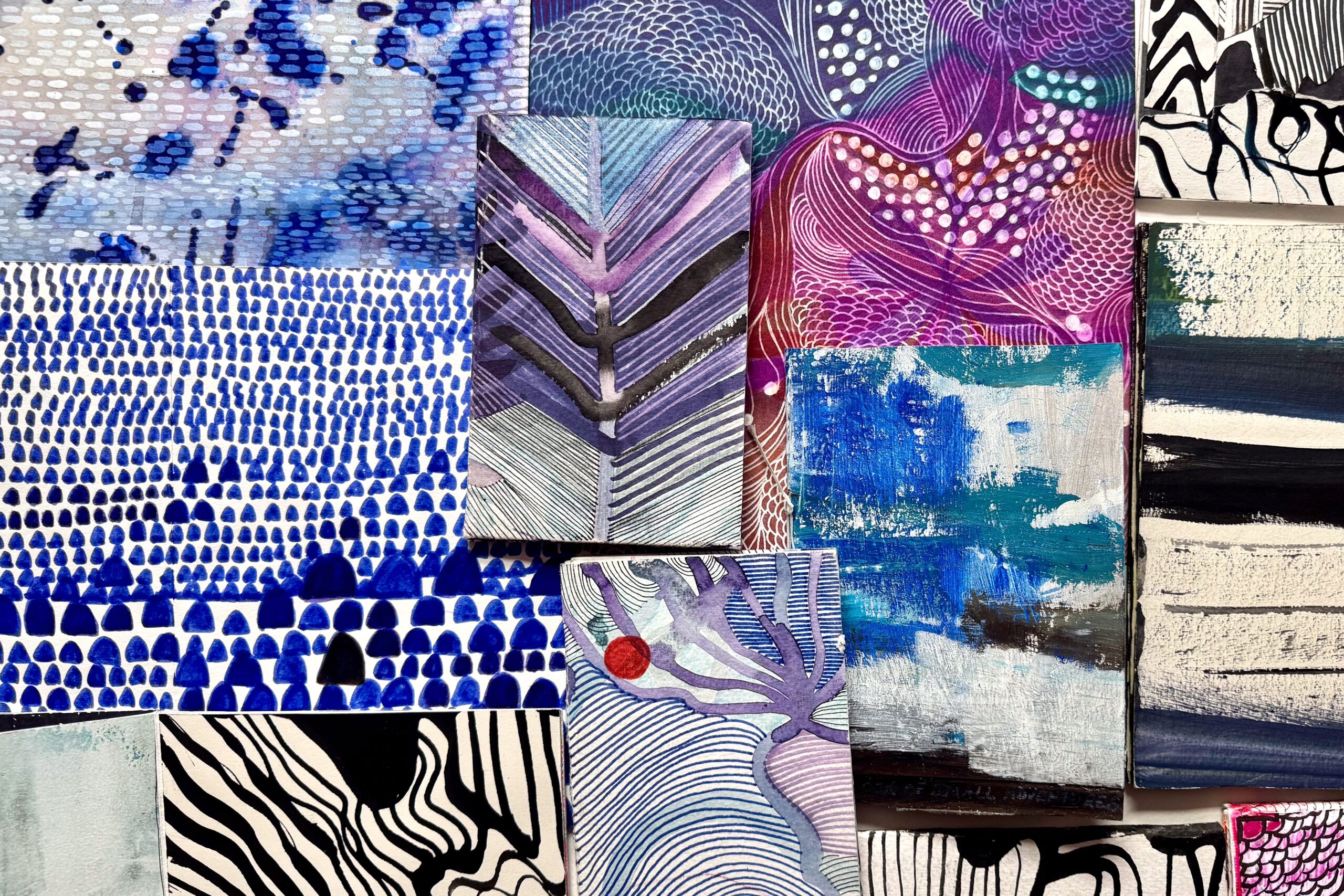
Lately, she has been fascinated by the concept of layering. She has been creating small art books built from layers of paper and paint, a practice that mirrors her ongoing curiosity about layering materials, meaning, and personal marks. This approach allows her to explore how images, textures, and ideas build upon one another to create new resonance.
For Wells, sketchbooks are a “record of curiosity.” They act as maps of creativity, containing clues and signposts to her own artistic preferences. Looking back through her books has become a kind of treasure hunt. She finds herself pulling techniques, colors, or compositional ideas from different pages and combining them into something entirely new, informed by the past but alive in the present.
Her practice is guided by powerful questions. The simple phrase “What if?”—a carryover from her days teaching creative thinking—continues to open possibility and play. What if I mix these materials, paint over that, or use this tool in a new way? Another question she values is “What do I love in this?” Rather than focusing on flaws, she finds it more generative to notice the qualities that give her joy, helping to build confidence and momentum.
Wells encourages artists to let go of the pressure for perfect pages. She believes a sketchbook should be a safe place for experiments, mistakes, and even a bit of weirdness. After all, you have to make a lot of art to get to the art you love, and discovery matters more than outcome.
While sharing sketchbooks can feel vulnerable, Wells has found the experience rewarding. Opening her pages has helped her learn more about herself, connect with others, and encourage fellow artists to find joy in their own practice.
She leaves us with one last question: How do I want creating in my sketchbook to feel, and how can I invite more of this feeling into my practice? For Wells, the answer reminds us that there is no right way to use a sketchbook—only the way that best supports and encourages our own creativity.