Lacing Communities Together: Reclaiming the Makers History Forgot
Cami Smith
| Exhibitions, Organizations
Walk through almost any museum, and you’ll find lace. Cuffs, ruffs, and collars so intricate they once cost the equivalent of acres of land. You’ll find the names of the kings and queens who wore them. You’ll find the painters who immortalized them. What you won’t find are the names of the people who made them.
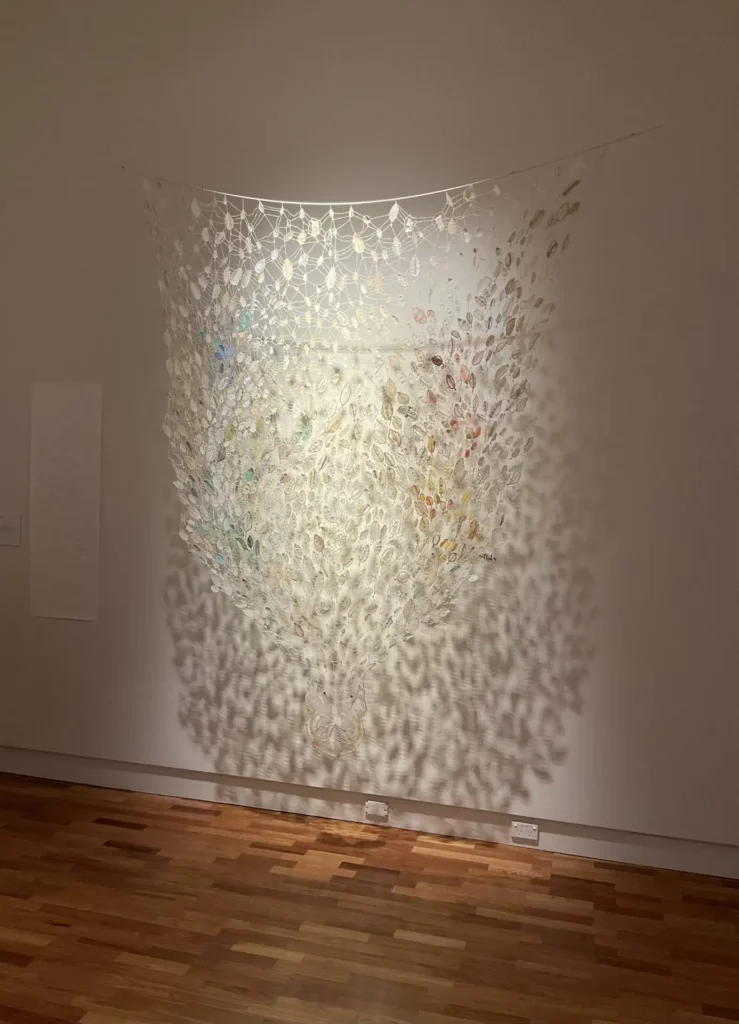
Maggie Hensel-Brown, Radiance; 2023; community lace project featuring 750 pieces of lace made by 411 contributors; needle lace; 98.5 x 90.5 x in.
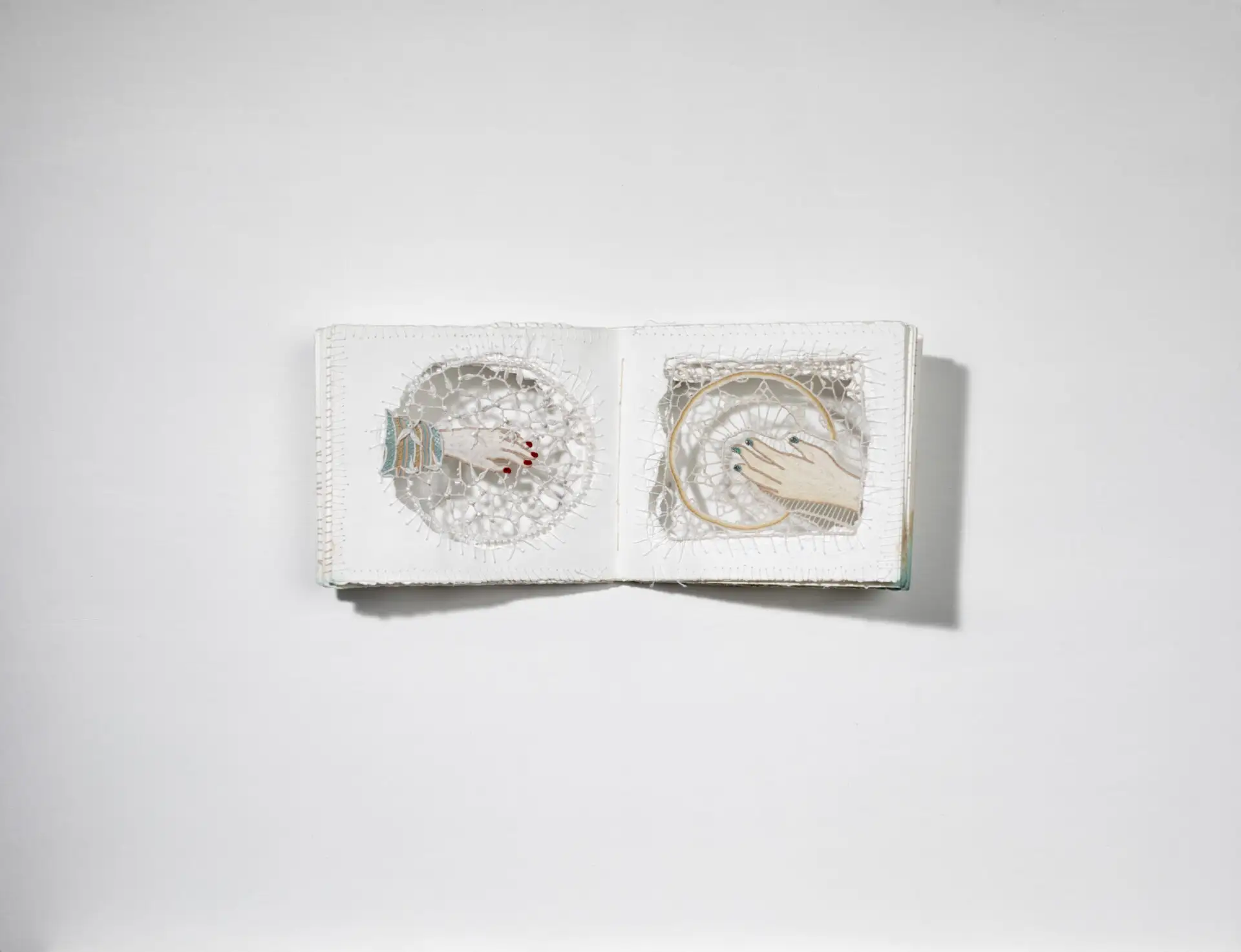
That invisibility is at the heart of a remarkable new project unfolding along the Columbia River: Lacing Communities Together. This project is a collaboration between the Columbia Gorge Museum and Australian lace artist Maggie Hensel-Brown,part community art project, part act of historical repair.
“The very heart of lacemaking’s existence is invisible, the makers,” said Louise Palermo, executive director of the Columbia Gorge Museum. The museum holds handmade lace in its own collections. The objects survived—the stories of the people who created them did not.
Artist Hensel-Brown came to this project through personal geography. She grew up visiting the Pacific Northwest, and she still returns as often as she can. “I love the tall pines and the grey skies,” she said. Back home in Melbourne, she lives along the Yarra River, swimming, walking, stitching. This project, for her, is a chance to link two rivers with one artwork.
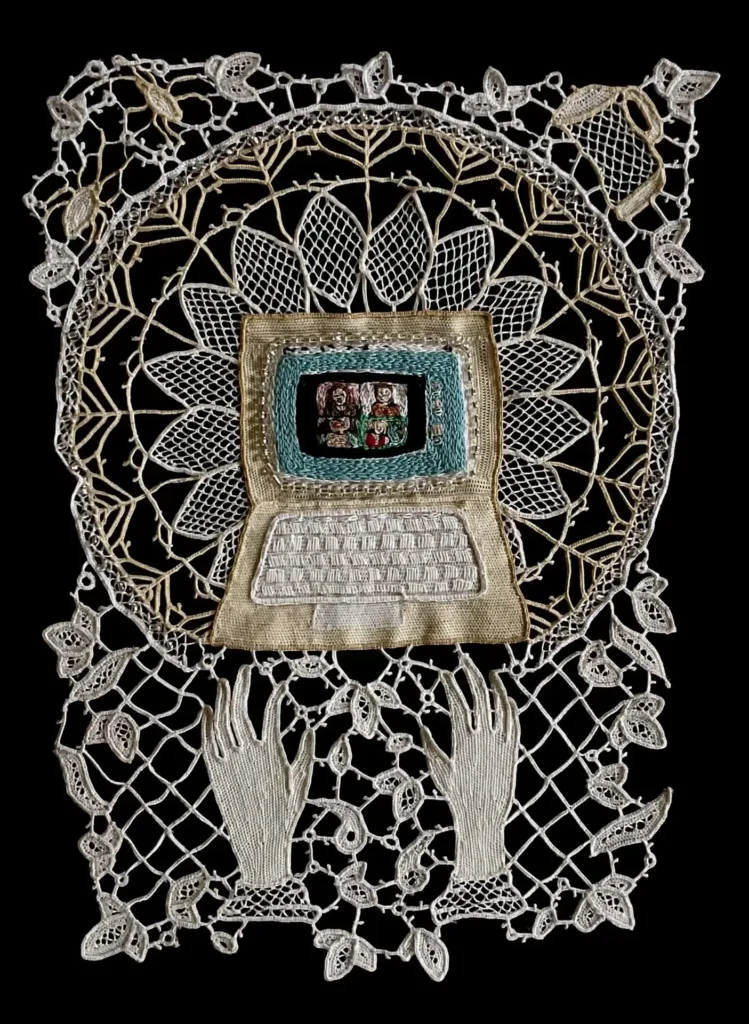
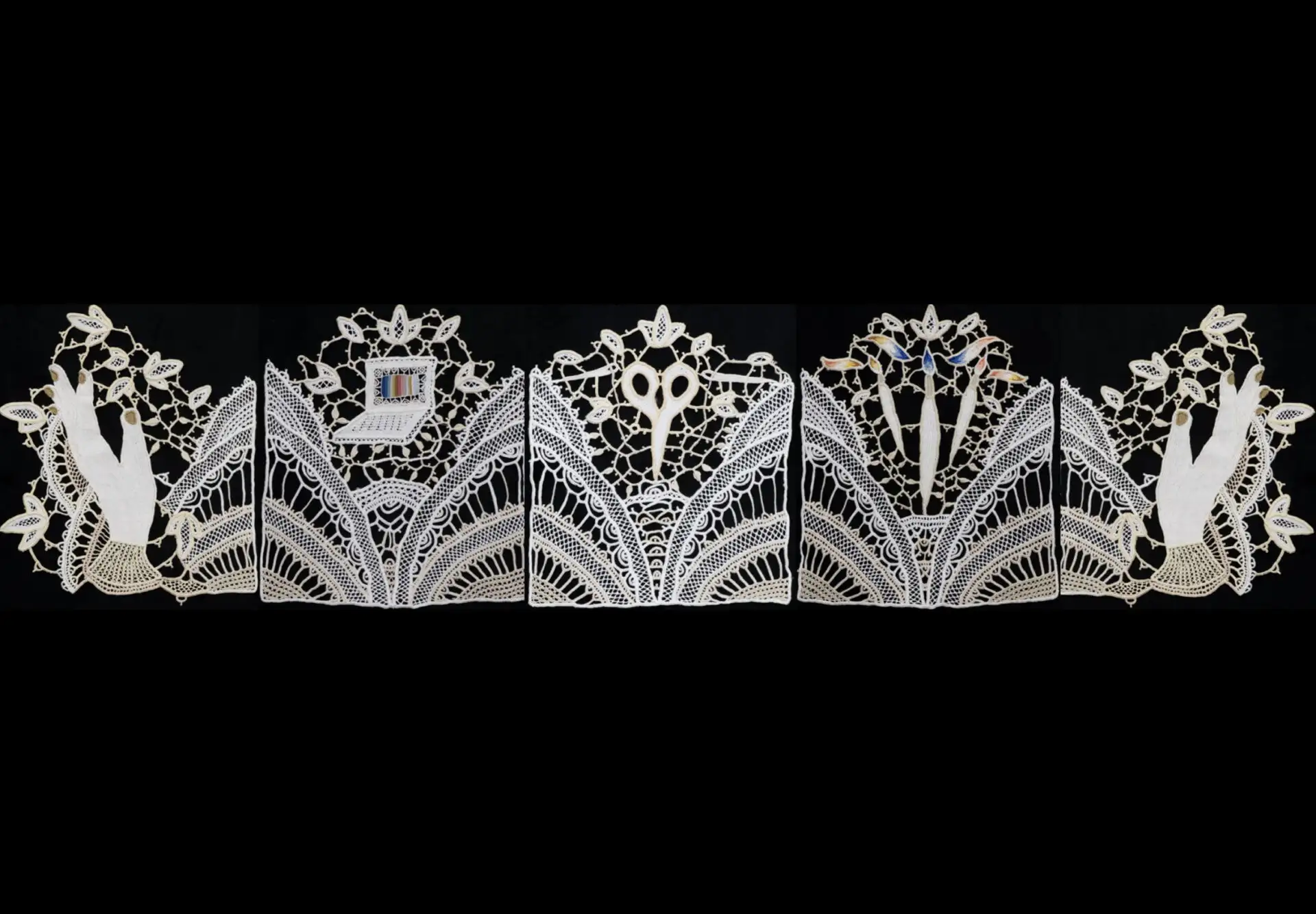
Maggie Hensel-Brown, Zoom; 2021; silk thread, glass beads; needle lace; 6.75 x 5 in.
She designed the project around a triangle, a shape that tessellates, locking together into something larger than any single piece. Each participant makes their own lace triangle, interpreted through the lens of the Pacific Northwest. The triangles then join into a final installation that is, structurally, a metaphor for exactly what it’s building.
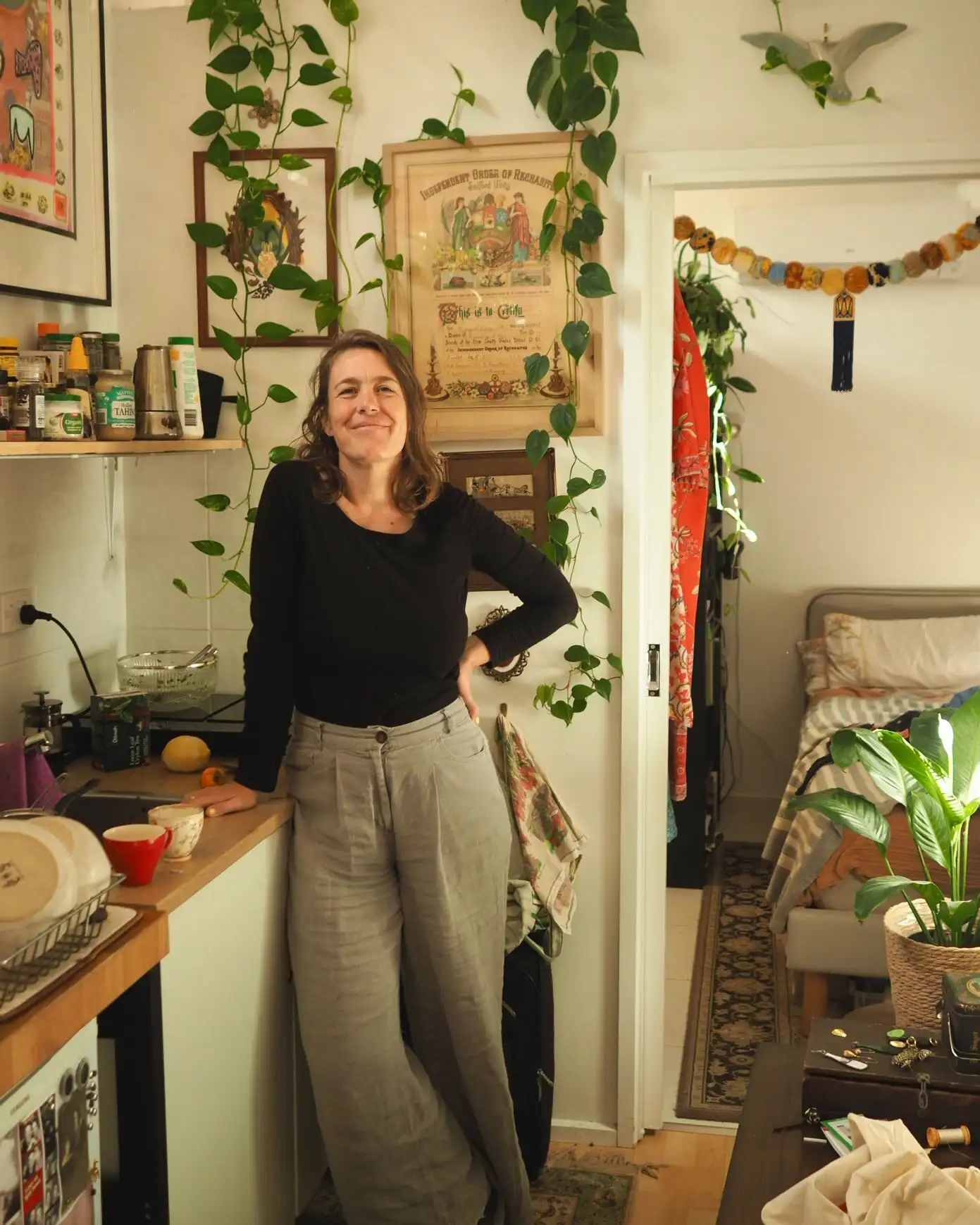
Maggie Hensel-Brown in her studio.
Maggie Hensel-Brown in her studio.
Maggie Hensel-Brown Radiance; 2023; community lace project featuring 750 pieces of lace made by 411 contributors; needle lace; 98.5 x 90.5 x in.
Hensel-Brown is also refreshingly direct about perfection, or rather, the overrated idea of it. “I genuinely think that imperfections make an artwork better,” she said. “Every time I have studied a piece of lace, it is the knots, the mends, and the lumps that capture my attention. Those parts are evidence of the hands of the artist; they link the maker with the viewer.”
In a community piece of this scale, that philosophy becomes a design principle. Every knot and twist becomes a visible mark of a specific hand. The whole becomes greater than the sum of its parts precisely because those parts are imperfect, individual, and human.
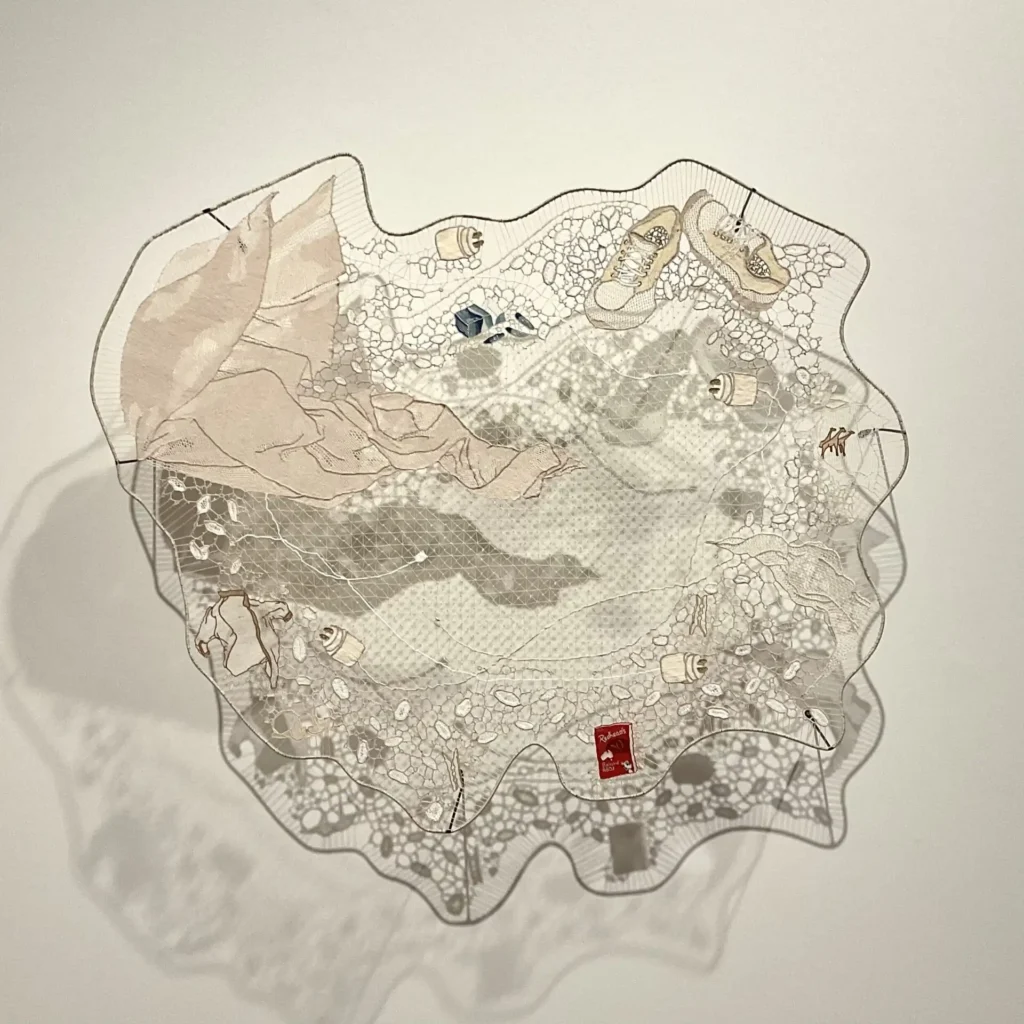
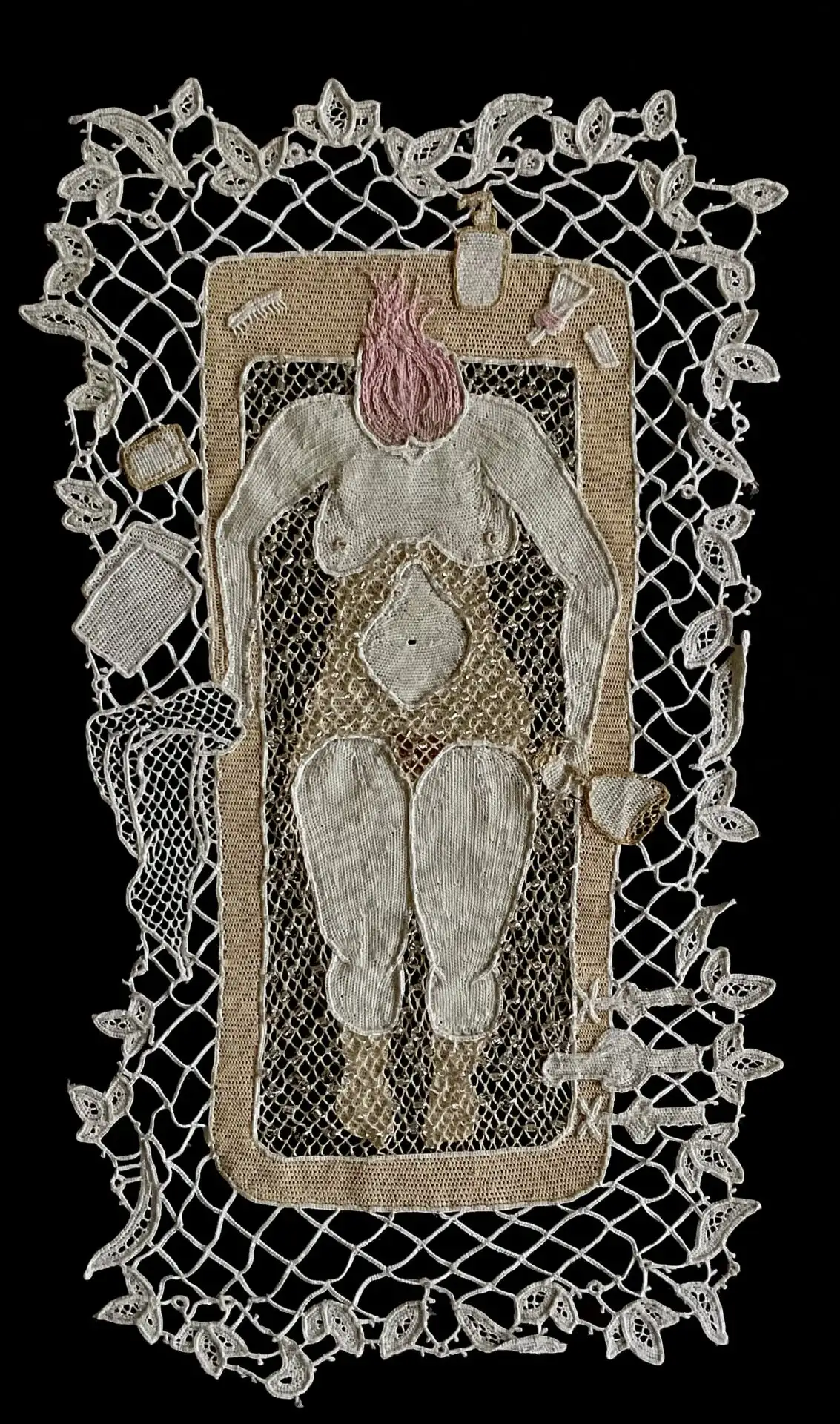
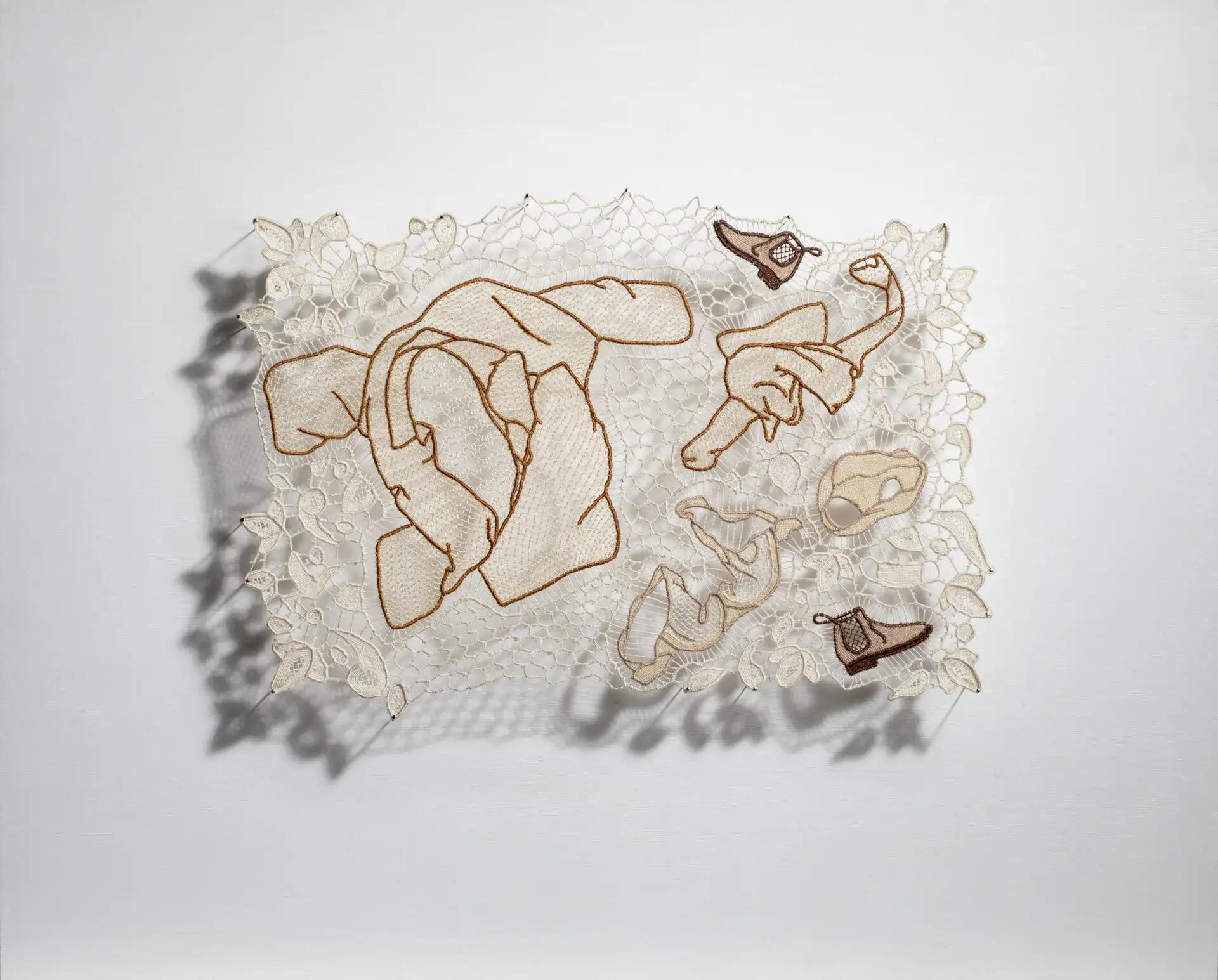
Maggie Hensel-Brown, Not Useful, Not Beautiful; 2023; silk, cotton and linen threads, glass beads; needle lace; 47.25 x 39.5 in.
Created for the Australian Textile Triennial 2023
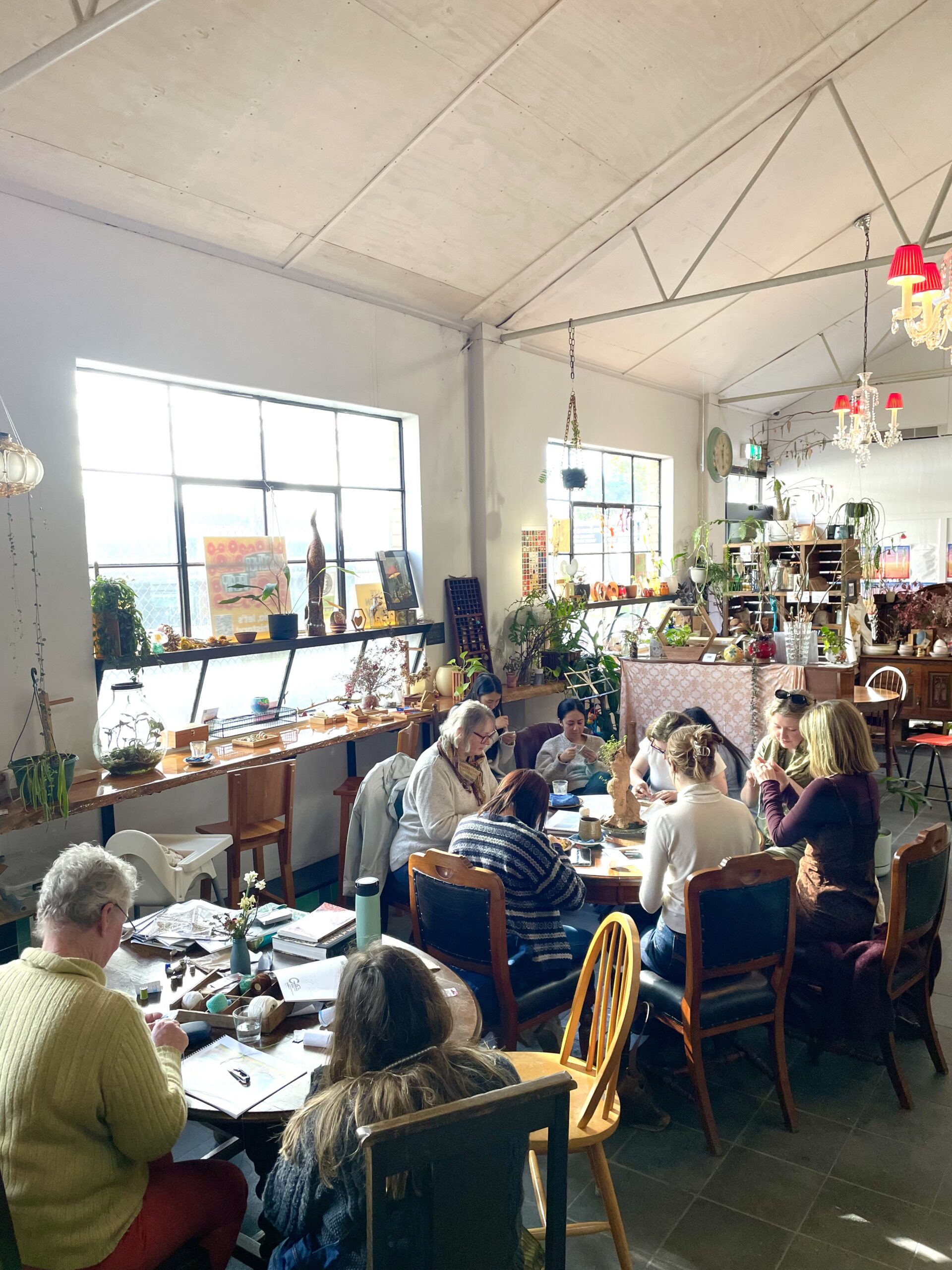
You don’t need to be an experienced lacemaker to participate. There are five instructional videos. They will accept finished triangles forever, but to be in this installation, they must receive finished triangles by August 24, 2026. The installation opens on September 12th and will be open through 2026.
Maybe your family has a lace story hovering at the edge of memory, a grandmother’s tablecloth, a collar in a photograph, a skill passed down and quietly lost. Lacing Communities Together is an invitation to remember the hands that created these treasures.